Shortbread Cookies
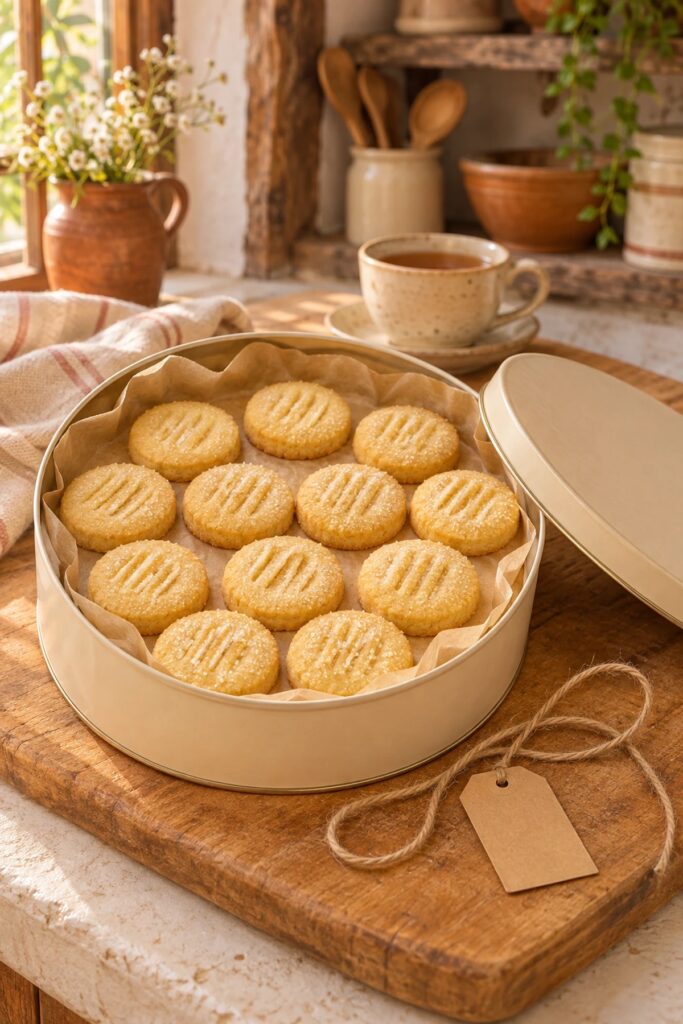
Shortbread cookies are buttery, crisp-tender rounds with a fine, sandy crumb that melts the moment you bite into them, and they are made from just butter, sugar and flour.
There is no egg, no baking powder and no long ingredient list. The butter does all the work, which is why good butter, a gentle hand and a short chill are what separate a tender, golden cookie from a hard or greasy one.
This recipe makes about 30 shortbread cookies from one batch of dough. You cream the butter and sugar, mix in the flour just until it comes together, roll the dough, cut rounds and bake them at 325°F (165°C) until the edges barely turn golden.
The dough chills while you do something else, and the cookies keep for a week in a tin, so these shortbread cookies are an easy choice for holiday cookie trays, gift boxes and quiet afternoons with a cup of tea.

Why You’ll Love These Shortbread Cookies
Three main ingredients. These shortbread cookies need only butter, sugar and flour, plus a pinch of salt and a little vanilla, and you already have most of it in the kitchen.
A tender, sandy crumb. The high ratio of butter to flour gives shortbread cookies a crisp edge and a fine crumb that dissolves instead of crunching.
Easy to shape. The dough rolls out cleanly between sheets of parchment and holds a sharp edge, so you can cut rounds, hearts, stars or simple fingers.
Made to keep. These shortbread cookies stay crisp in a tin for a week, and both the dough and the baked cookies freeze well, so you can bake ahead for the busiest weeks of the year.

Perfect For
Shortbread cookies are the quiet star of the holiday cookie tray. They sit happily next to jam-filled and spiced cookies, and they are the first thing people reach for with coffee or tea. They are also a natural choice for gift tins, cookie exchanges, bake sales and teacher gifts, because they are sturdy, buttery and easy to pack.
They are not only for December. A plate of shortbread cookies suits an afternoon tea, a baby shower or a simple dessert with fresh berries, and the plain dough is a good base for lemon, chocolate or cinnamon sugar. You will find more cookie ideas for the season on my Holiday Recipes page.
Shortbread Cookies at a Glance
| Flavor | Rich, buttery and lightly sweet with a pinch of salt |
| Texture | Crisp edges and a fine, sandy crumb that melts in your mouth |
| Difficulty | Easy |
| Prep Time | 20 minutes |
| Chill Time | 45 minutes (30 for the dough, 15 for the cut cookies) |
| Bake Time | 16 to 18 minutes |
| Total Time | 1 hour 43 minutes, including chilling and cooling |
| Servings | About 30 cookies (2-inch rounds) |
| Method | Rolled and cut, baked |
| Cuisine | Scottish-inspired |
| Best For | Holiday cookie trays, gifts and tea time |
Before You Start
Soften the butter, but not too much. Take the butter out of the refrigerator 30 to 45 minutes ahead. It should be cool to the touch and leave a dent when you press it, around 65°F (18°C). Unsalted butter is best kept in the refrigerator and left out only briefly to soften, so don’t leave it on the counter all day.
Use good butter. Butter is the main flavor in shortbread cookies, so choose one you enjoy. A European-style butter with a higher fat content gives an even richer cookie.
Measure the flour carefully. Spoon the flour into the cup and level it, or weigh 250 g. Too much flour makes the cookies dry and crumbly, and too little makes them spread.
Plan the chill. The dough rests for 30 minutes and the cut cookies for another 15, so start early if you are baking for a party.
Line your pans. Use two baking sheets lined with parchment paper, and keep a rolling pin, a 2-inch round cutter and a fork within reach.
What Makes These Shortbread Cookies Work
A High Ratio of Butter to Flour
Shortbread has a lot of butter and no liquid, so very little gluten forms. That is what makes shortbread cookies tender and sandy instead of chewy, and it is why you mix the flour in only until the dough comes together.
Creaming Just Enough
Beating the butter and sugar for 2 to 3 minutes makes the mixture pale and smooth. Go much longer and you whip in too much air, which can make the cookies puff and then spread in the oven.
Chilling Twice
Chilling the dough makes it easy to roll, and chilling the cut cookies before baking keeps the butter cold so the shapes hold their edges. Cold butter melts slowly in the oven, which gives shortbread cookies a clean outline and a tender center.
A Low, Gentle Oven
Shortbread cookies bake at 325°F (165°C) because the goal is to dry them through without browning the butter too much. The edges should turn pale gold, while the tops stay almost the same color as the raw dough.

Ingredient Notes and Substitutions
With so few ingredients, each one counts. Here is what to use and which swaps work for shortbread cookies.
Butter. Use unsalted butter so you control the salt, and make sure it is softened but still cool. Salted butter also works: skip the added salt. Margarine and spreads contain water and make the cookies less tender, so I don’t recommend them. If you enjoy kitchen projects, my homemade butter makes a lovely, fresh-tasting shortbread.
Sugar. Granulated sugar gives these shortbread cookies a fine crunch and a slightly sandy bite. For a more melt-in-your-mouth texture, replace the ½ cup (100 g) of sugar in the dough with ⅔ cup (80 g) of powdered sugar.
Flour. Plain all-purpose flour is all you need. For an even more delicate crumb, replace 2 tablespoons (16 g) of the flour with 2 tablespoons of cornstarch.
Salt. A quarter teaspoon of fine salt brings out the butter and balances the sweetness. Don’t skip it.
Vanilla. Pure vanilla extract gives the shortbread cookies a warm background flavor. You can leave it out for a purely buttery cookie.
Ingredients for Shortbread Cookies
These amounts make about 30 shortbread cookies, 2 inches wide and ⅓ inch thick.
- 1 cup (226 g) unsalted butter, softened
- ½ cup (100 g) granulated sugar
- 1 teaspoon (5 ml) pure vanilla extract
- ¼ teaspoon (1.5 g) fine salt
- 2 cups (250 g) all-purpose flour, plus a little for dusting
- 1 tablespoon (12 g) granulated sugar, for sprinkling

Kitchen Equipment Needed
• Stand mixer or hand mixer – creams the butter and sugar
• Large mixing bowl – holds the dough
• Rolling pin – rolls the dough to an even thickness
• Parchment paper – keeps the dough from sticking and lines the baking sheets
• 2-inch round cookie cutter – cuts even rounds
• Fork – pricks the cookies
• Two baking sheets – bake the whole batch at once
• Cooling rack – cools the shortbread cookies evenly
• Kitchen scale – weighs the butter and flour
How to Make Shortbread Cookies
Here is how to make shortbread cookies from the first beat of the butter to the last cooled cookie. Each step ends with what you should see, so you know you are on track.
Step 1: Cream the Butter and Sugar
Beat the softened butter and ½ cup (100 g) of sugar in a large bowl on medium speed for 2 to 3 minutes. Stop once to scrape down the bowl.
What you should see: A pale, smooth, creamy mixture that holds soft peaks but is not fluffy or airy.

Step 2: Add the Vanilla and Salt
Add the vanilla and salt and beat for 20 more seconds, just until they disappear into the butter.
What you should see: A smooth, creamy mixture with no streaks.
Step 3: Mix in the Flour
Add the flour all at once and mix on the lowest speed. The mixture will look sandy and dry at first, so keep mixing for about 1 minute, until the crumbs begin to clump. Stop as soon as the dough comes together.
What you should see: Soft, crumbly clumps that hold together when you squeeze a handful, with no dry flour left in the bowl.
Step 4: Shape and Chill the Dough
Turn the dough onto a clean surface and press it into two flat disks, each about 1 inch thick. Wrap them in plastic wrap and refrigerate for 30 minutes.
What you should see: Two smooth, firm disks that feel cool and are no longer sticky.
Step 5: Roll Out the Dough
Let one disk stand on the counter for 5 minutes. Roll it between two sheets of parchment paper to ⅓ inch (8 mm) thick, dusting with a little flour if needed. Keep the other disk in the refrigerator.
What you should see: A smooth, even sheet with no cracks at the edges, about as thick as a pencil.
Step 6: Cut the Cookies
Peel off the top sheet of parchment and cut rounds with a 2-inch cutter, cutting as close together as you can. Place the shortbread cookies 1 inch (2.5 cm) apart on a parchment-lined baking sheet. Gather the scraps, press them together, chill briefly and roll once more.
What you should see: Clean-edged rounds that lift away from the parchment without sticking.
Step 7: Prick and Sprinkle
Prick each round two or three times with a fork, which lets steam escape so the cookies stay flat. Sprinkle the tops lightly with the remaining 1 tablespoon (12 g) of sugar.
What you should see: Evenly spaced rounds with neat fork marks and a light, glittering coat of sugar.

Step 8: Chill the Cut Cookies
Refrigerate the baking sheets for 15 minutes while the oven heats to 325°F (165°C). Cold butter helps the shortbread cookies keep their shape.
What you should see: Firm, cold cookies that feel stiff when you tap the edge.
Step 9: Bake the Shortbread Cookies
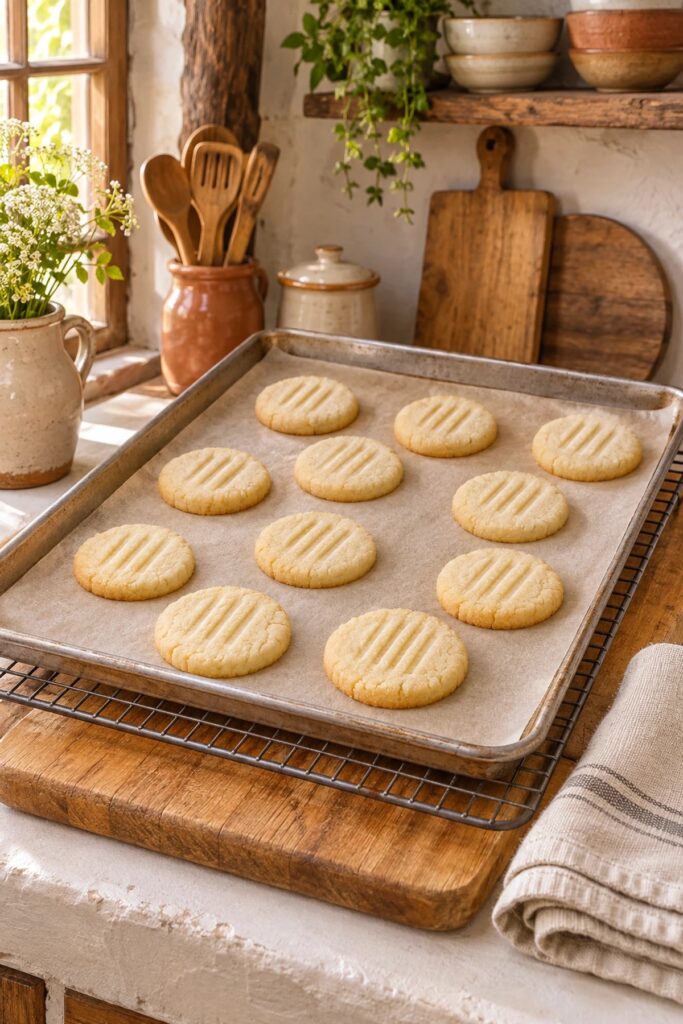
Bake the cookies on two racks, in the upper and lower thirds of the oven, for 16 to 18 minutes, switching the sheets and turning them front to back halfway through. Remove them when the edges are pale golden.
What you should see: Pale, set tops that are almost the color of the raw dough, with golden edges and a slightly sandy look.
Step 10: Cool the Cookies
Let the shortbread cookies cool on the baking sheet for 5 minutes, because they are fragile while hot. Then transfer them to a rack and cool completely, about 20 minutes.
What you should see: Firm cookies that snap cleanly when you break one and feel crisp, with a tender crumb inside.
How to Know It’s Done
Use these checkpoints to see when each stage of your shortbread cookies is ready, so you do not have to guess.
| What to Check | Ready When |
|---|---|
| Creamed butter and sugar | Pale, smooth and creamy, not fluffy |
| Dough | Soft, crumbly clumps that hold together when squeezed |
| Rolled dough | ⅓ inch thick, smooth and crack-free |
| Cut cookies | Firm and cold, with sharp edges |
| Baked cookies | Pale golden edges and pale tops, firm to the touch |
| Cooled cookies | Crisp and snap cleanly, with a sandy crumb |
If the edges are deep brown, the shortbread cookies baked too long and will taste toasted instead of buttery. Pale gold is the goal.
Tips for the Best Shortbread Cookies
Mix only until the dough comes together. Overworking the dough develops gluten and makes shortbread cookies tough. Stop as soon as the crumbs clump.
Keep everything cool. If the dough gets soft while you work, slide it back into the refrigerator for 10 minutes. Cold dough is easier to cut and bakes into sharper shapes.
Roll to an even thickness. Cookies of the same thickness bake at the same speed, so they all finish together. Roll between parchment sheets for the most even result.
Rotate the sheets. Bake on two oven racks and switch the sheets, front to back, halfway through the bake. Ovens have hot spots, and rotating helps every cookie brown evenly.
Cool them on the pan first. Shortbread cookies are very fragile for the first few minutes. Let them set on the hot sheet before moving them to a rack.
Common Mistakes and How to Fix Them
These are the mistakes that most often hurt shortbread cookies, with a quick fix for each one.
| Butter too soft or melted The cookies spread and turn greasy. | Use butter that is cool and gives slightly when pressed, and chill the cut cookies for 15 minutes before baking. |
| Overmixing the dough The cookies are tough instead of tender. | Mix the flour on low speed only until the dough clumps, then stop. |
| Skipping the chill The shapes lose their edges in the oven. | Chill the dough for 30 minutes and the cut cookies for 15 more. |
| Rolling unevenly Some cookies burn while others stay pale. | Roll between parchment sheets to an even ⅓ inch, using two rulers or a rolling pin with guide rings. |
| Overbaking The cookies are brown, hard and taste toasted. | Bake at 325°F (165°C) and take them out when the edges are pale gold. |
Variations
Once you know the basic recipe, these easy changes keep your shortbread cookies interesting.
Lemon Shortbread Cookies
Rub the zest of 1 lemon into the sugar with your fingertips before creaming it with the butter. The zest gives the cookies a bright, fresh flavor.
Chocolate-Dipped Shortbread Cookies
Melt 4 ounces (115 g) of semi-sweet chocolate and dip half of each cooled cookie, then set it on parchment until firm. If you love chocolate and cookies together, try these next to my peppermint bark.
Cinnamon Sugar Shortbread Cookies
Mix the sugar for sprinkling with ½ teaspoon of ground cinnamon before you scatter it over the cookies. The topping gives a gentle spice and a little crunch.
Shortbread Fingers
Roll the dough into a rectangle, cut it into fingers about 1 by 3 inches and prick each one with a fork. Bake for 18 to 20 minutes for a classic tea-time shape.
Serving Suggestions
Serve shortbread cookies with hot tea, coffee or a glass of cold milk, or set them next to a bowl of fresh berries for an easy dessert. They are lovely beside a mug of tiramisu latte or a cup of pumpkin spice latte in the colder months.
For a holiday cookie tray, put these shortbread cookies next to jam-filled thumbprint cookies and linzer cookies, and add soft snowball cookies, spiced gingerbread cookies and a few spritz cookies for different shapes and textures. If you are choosing recipes for a cookie exchange, browse my list of the best Christmas cookies for more ideas.
For a French-inspired sweet table, add a plate of palmiers and madeleines, and if you love a buttery shortbread base in a bar, try my pecan pie bars.
Storage
Store the cooled shortbread cookies in an airtight container at room temperature for up to 1 week. Keep them away from soft cookies, because crisp cookies absorb moisture from soft ones and lose their snap.
Place a sheet of parchment between layers if you stack them in a tin, so the sugar on top does not rub off. If the cookies lose their crispness, warm them on a baking sheet at 300°F (150°C) for 5 minutes and let them cool.
Freezing
Shortbread cookies freeze well. For make-ahead dough, wrap each disk tightly in plastic wrap and then foil and freeze for up to 3 months. Thaw the dough overnight in the refrigerator before rolling.
To freeze baked shortbread cookies, cool them completely, layer them in a freezer container with parchment between the layers and freeze for up to 3 months. Thaw them, uncovered, at room temperature for about 30 minutes.
Frequently Asked Questions
What makes shortbread cookies crisp and tender?
The high ratio of butter to flour, with no eggs or liquid, keeps gluten low, so the shortbread cookies bake into a crisp, sandy cookie. Mixing the flour in only until the dough comes together keeps them tender.
Why did my shortbread cookies spread?
The butter was probably too soft, or the cut cookies were not chilled before baking. Use cool, softened butter and refrigerate the shaped cookies for 15 minutes before they go into the oven.
Can I make shortbread cookies without a cookie cutter?
Yes. Press the dough into a rectangle, cut it into squares or fingers with a sharp knife and prick each piece with a fork. You can also cut rounds with the rim of a small glass.
Can I use salted butter?
Yes. Use salted butter and leave out the added ¼ teaspoon of salt, and taste the dough before you add anything else.
Can I make the dough ahead of time?
Yes. Wrap the disks and refrigerate them for up to 2 days, or freeze them for up to 3 months. Let the dough stand for 5 to 10 minutes before rolling.
How do I know when shortbread cookies are done?
Look at the edges: they should be pale gold, while the tops stay pale and look dry. The cookies will firm up as they cool, so do not wait for them to brown.
Can I use powdered sugar instead of granulated sugar?
Yes. Use ⅔ cup (80 g) of powdered sugar in place of the ½ cup (100 g) of granulated sugar in the dough for a finer, more melting texture. Keep the granulated sugar for sprinkling.
Final Thoughts
Shortbread cookies are proof that a few good ingredients are enough. Butter, sugar and flour become a tender, golden cookie when you keep the butter cool, mix the dough gently and take the cookies out of the oven while they are still pale.
Once you have made this recipe, it becomes the base for lemon, chocolate, cinnamon sugar and every shape you like, and it is the kind of cookie you can bake ahead and tuck into a tin, ready for guests or gifts.
Which shape did you cut yours into, and did you keep them plain or dip them in chocolate? Share your favorite way to serve shortbread cookies in the comments.
If you try this recipe, please leave a star rating along with your comment below. It takes a few seconds and helps other readers find the recipe.

Shortbread Cookies
These shortbread cookies are buttery, crisp-tender rounds made from just butter, sugar and flour, with a pinch of salt and vanilla. With 20 minutes of prep, a short chill and 18 minutes in the oven, they are the perfect balance of rich, crumbly and easy, and one batch makes about 30 cookies. Pack these shortbread cookies into tins for gifts or set them on the holiday cookie tray, because they keep for a week.
Ingredients
- 1 cup (226 g) unsalted butter, softened
- ½ cup (100 g) granulated sugar
- 1 teaspoon (5 ml) pure vanilla extract
- ¼ teaspoon (1.5 g) fine salt
- 2 cups (250 g) all-purpose flour, plus a little for dusting
- 1 tablespoon (12 g) granulated sugar, for sprinkling
Instructions
- Beat the softened butter and ½ cup (100 g) of sugar for 2 to 3 minutes until pale and creamy.
- Add the vanilla and salt and beat for 20 seconds.
- Add the flour and mix on low speed for about 1 minute, just until the dough comes together in soft clumps.
- Press the dough into 2 disks about 1 inch thick, wrap them and refrigerate for 30 minutes.
- Let one disk stand for 5 minutes, then roll it between parchment sheets to ⅓ inch (8 mm) thick.
- Cut 2-inch rounds and place them 1 inch apart on parchment-lined baking sheets. Reroll the scraps once.
- Prick each cookie with a fork 2 or 3 times and sprinkle with the remaining 1 tablespoon (12 g) of sugar.
- Refrigerate the sheets for 15 minutes while the oven heats to 325°F (165°C).
- Bake for 16 to 18 minutes, switching the sheets halfway, until the edges are pale golden.
- Cool on the sheet for 5 minutes, then transfer to a rack and cool completely.
Notes
- Butter: Use cool, softened unsalted butter that leaves a dent when pressed. If you use salted butter, skip the added salt.
- Mixing: Mix the flour on low speed only until the dough comes together. Overmixing makes the cookies tough.
- Chilling: Chill the dough for 30 minutes and the cut cookies for 15 minutes. Cold butter keeps the shapes sharp.
- Thickness: Roll to ⅓ inch (8 mm) for about 30 cookies. Thinner cookies bake faster, so check them earlier.
- Make ahead: Refrigerate the dough disks for up to 2 days, or freeze them wrapped for up to 3 months.
- Storage: Store cooled cookies in an airtight container at room temperature for up to 1 week, or freeze for up to 3 months.
- Nutrition: Values are per plain cookie (1 of 30), made with unsalted butter and granulated sugar.
Nutrition Information:
Yield: 30 Serving Size: 1 cookieAmount Per Serving: Calories: 99Total Fat: 6gSaturated Fat: 4gCholesterol: 16mgSodium: 20mgCarbohydrates: 10gFiber: 0gSugar: 4gProtein: 1g