French Sablés
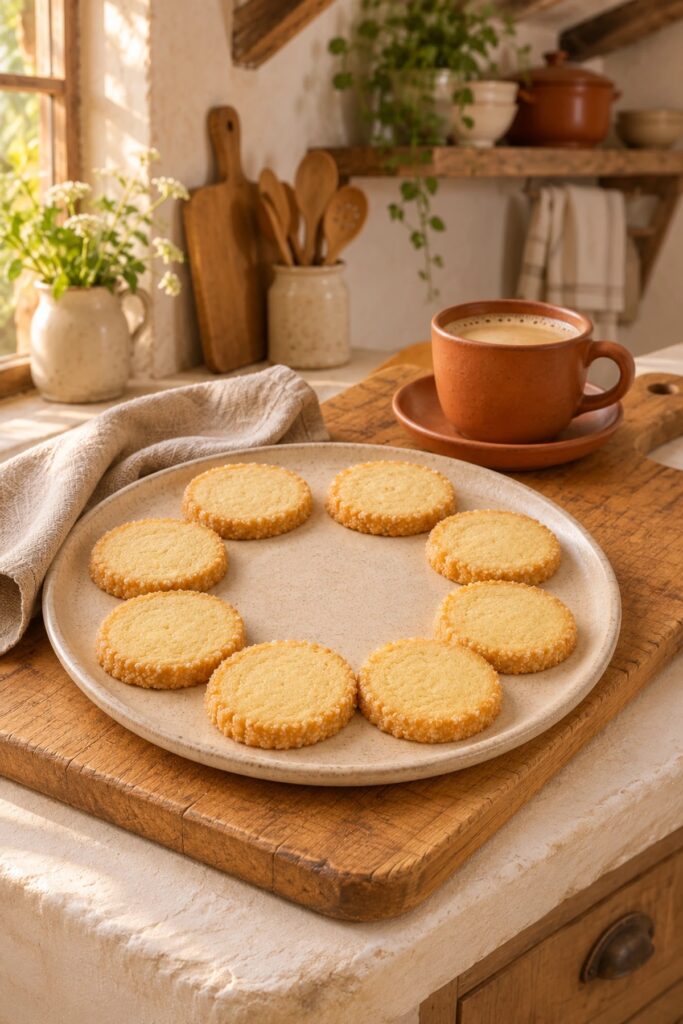
French sablés are small, round butter cookies with a crisp, sparkling sugar rim and a crumb so fine and sandy that it almost dissolves on your tongue. The name says it all: sablé means “sandy” in French.
What sets French sablés apart from other butter cookies is a little richness from egg yolks and a soft, tender bite from powdered sugar. The dough is mixed gently, rolled into logs and chilled, so when it is time to bake, you simply slice and go.
This is the kind of cookie I grew up with in France, where a paper bag of sablés from the bakery was the most ordinary treat in the world. At home they are just as easy: one bowl, about 25 minutes of hands-on work and a long, quiet chill in the refrigerator.
Because the logs wait patiently in the fridge or freezer, French sablés are perfect for the holiday baking season, for gift tins and for any afternoon when you want warm, buttery cookies with very little effort.

Why You’ll Love These French Sablés
A melt-in-your-mouth texture. Egg yolks and powdered sugar give French sablés a finer, more delicate crumb than most butter cookies, with crisp edges and a tender center.
Slice-and-bake convenience. You shape the dough into logs, chill them and slice off as many cookies as you need. No rolling pin, no cookie cutters and no scraps to reroll.
A pretty sugar rim. Rolling the logs in coarse sugar before slicing gives every cookie a sparkling, crunchy edge. In France, this style is called sablés diamants, or “diamond” sablés.
Made for planning ahead. The logs keep for 3 days in the refrigerator and for months in the freezer, so you can have fresh cookies ready in about 20 minutes whenever you need them.

Perfect For
French sablés belong on every holiday cookie tray. Their simple round shape and golden sugar edge sit nicely next to jam-filled, spiced and frosted cookies, and they are sturdy enough to stack in a tin, ship to family or tuck into gift boxes for neighbors and teachers.
French sablés are also a lovely everyday cookie. Serve them with coffee or tea, set them beside a bowl of fresh berries or ice cream, or bring a box to a baby shower, a book club or a quiet weekend brunch. For more ideas for the season, browse my holiday recipes.
French Sablés at a Glance
| Flavor | Rich and buttery, lightly sweet, with a hint of vanilla and salt |
| Texture | Fine and sandy, crisp at the edges, with a crunchy sugar rim |
| Difficulty | Easy |
| Prep Time | 25 minutes |
| Chill Time | 2 hours (or up to 3 days) |
| Bake Time | 36 minutes (two sheets, 15 to 18 minutes each) |
| Total Time | 3 hours 21 minutes, including chilling and cooling |
| Servings | About 48 cookies |
| Method | Slice and bake |
| Cuisine | French |
| Best For | Holiday cookie trays, gift tins and afternoon coffee |
Before You Start
Soften the butter just enough. Take the butter out of the refrigerator about 30 minutes ahead. It should bend without breaking and leave a dent when you press it, but still feel cool. Butter that is warm or shiny makes a greasy dough that slumps in the oven.
Bring the egg yolks to room temperature. Separate the eggs while they are cold, because the yolks come away from the whites more cleanly, then let the yolks sit for 15 to 20 minutes. Save one egg white for brushing the logs.
Weigh the flour if you can. French sablés depend on the balance of butter and flour. A kitchen scale gives you exactly 250 g. If you use cups, spoon the flour into the cup and level it without packing.
Plan for the chill. The logs need at least 2 hours in the refrigerator to firm up enough for clean slices. You can make the dough a day or two ahead and bake when it suits you.
Clear some fridge space. Each log is about 8 inches long, so make room on a flat shelf where the logs can rest without being squashed.
What Makes These French Sablés Work
Egg Yolks for Richness
Most shortbread has no egg at all. French sablés use two egg yolks, which add fat, color and a gentle richness. Yolks also help the dough hold together, so it slices cleanly instead of crumbling.
Powdered Sugar for a Fine Crumb
Part of the sugar is powdered sugar, which dissolves quickly into the butter. That is what gives French sablés their smooth, delicate, sandy texture. The granulated sugar adds a little crunch and helps the edges brown.
Gentle Mixing
You beat the butter and sugar only until smooth, not until light and fluffy. Less air means French sablés stay flat and compact, with that classic close crumb, instead of puffing up and spreading.
A Cold Log and a Sugar Rim
Chilling the dough firms the butter, so the slices keep their round shape in the oven. Brushing the cold log with egg white and rolling it in coarse sugar gives each slice its sparkling, crunchy border.

French Sablés vs. Shortbread
The two cookies are close cousins, and both are built on butter, sugar and flour. Classic shortbread cookies use only those three main ingredients, which makes them crisp, dense and very buttery.
French sablés add egg yolks and often powdered sugar. The yolks make them a little richer and more tender, and the powdered sugar gives them a finer, sandier crumb. They are also usually shaped as a log and sliced, while shortbread is often rolled and cut or pressed into a pan.
If you love one, you will almost certainly love the other. They look lovely side by side on a cookie tray, and the difference in texture is easy to taste.
Ingredient Notes and Substitutions
French sablés have very few ingredients, so each one matters. Here is what to choose and which swaps work.
Butter. Use unsalted butter so you can control the salt. A European-style butter with a higher fat content makes the cookies even richer. If you only have salted butter, reduce the added salt to ⅛ teaspoon. If you enjoy kitchen projects, my homemade butter works beautifully here.
Sugars. The mix of granulated and powdered sugar gives the best texture. You can use all granulated sugar (¾ cup, 150 g total), but the crumb will be a little coarser and crunchier. Using all powdered sugar makes very soft, fragile cookies that are harder to slice.
Egg yolks. Use yolks from large eggs, about 18 g each. If you are short one yolk, the dough will be drier and more crumbly, so add 1 to 2 teaspoons of cold milk to bring it together.
Flour. Plain all-purpose flour is all you need. Avoid bread flour, which makes the cookies tough, and cake flour, which makes the dough too soft to slice neatly.
Salt and vanilla. A half teaspoon of fine sea salt brings out the butter and is part of the classic French flavor. Pure vanilla extract adds warmth, or you can use the seeds from half a vanilla bean.
Coarse sugar. Sanding sugar or turbinado sugar gives French sablés the most sparkle and crunch. Granulated sugar also works, with a finer, softer rim.
Ingredients for French Sablés
These amounts make two logs and about 48 cookies, each about 1½ inches wide.
For the Dough
- 1 cup (226 g) unsalted butter, softened but cool
- ½ cup (100 g) granulated sugar
- ½ cup (60 g) powdered sugar
- ½ teaspoon (3 g) fine sea salt
- 2 large egg yolks (36 g), at room temperature
- 1 teaspoon (5 ml) pure vanilla extract
- 2 cups (250 g) all-purpose flour
For the Sugar Rim
- 1 large egg white (30 g), lightly beaten
- ⅓ cup (65 g) sanding sugar or turbinado sugar

Kitchen Equipment Needed
• Stand mixer or hand mixer – beats the butter and sugars until smooth
• Large mixing bowl – holds the dough
• Rubber spatula – scrapes the bowl and folds in the last of the flour
• Kitchen scale – weighs the flour and divides the dough evenly
• Plastic wrap or parchment paper – wraps the logs for chilling
• Pastry brush – brushes the logs with egg white
• Rimmed baking sheet or tray – holds the coarse sugar for rolling
• Sharp, thin knife – slices the cold logs cleanly
• Two baking sheets lined with parchment paper – bake the cookies
• Wire cooling rack – cools the French sablés evenly
How to Make French Sablés
Here is the whole process, from the first turn of the mixer to the last cooled cookie. Each step ends with what you should see, so you always know you are on track.
Step 1: Beat the Butter and Sugars
Put the softened butter, granulated sugar, powdered sugar and salt in a large bowl. Beat on medium-low speed for about 1 minute, scraping the bowl once, just until the mixture is smooth and creamy. Don’t beat it until fluffy; you want as little air as possible.
What you should see: A smooth, creamy, pale yellow mixture with no lumps of butter or dry sugar, and no light, whipped look.
Step 2: Add the Egg Yolks and Vanilla
Add the egg yolks one at a time, followed by the vanilla, beating on low speed for about 20 seconds after each addition. Scrape the bowl so everything is evenly mixed.
What you should see: A glossy, evenly colored mixture with no streaks of yolk.
Step 3: Mix in the Flour
Add the flour all at once and mix on the lowest speed for 30 to 40 seconds, just until it disappears. If a few dry bits remain at the bottom, fold them in by hand with the spatula. Overmixing at this stage makes French sablés tough instead of tender.
What you should see: A soft, moist dough that looks a little crumbly but holds together firmly when you press a piece between your fingers.
Step 4: Shape the Logs
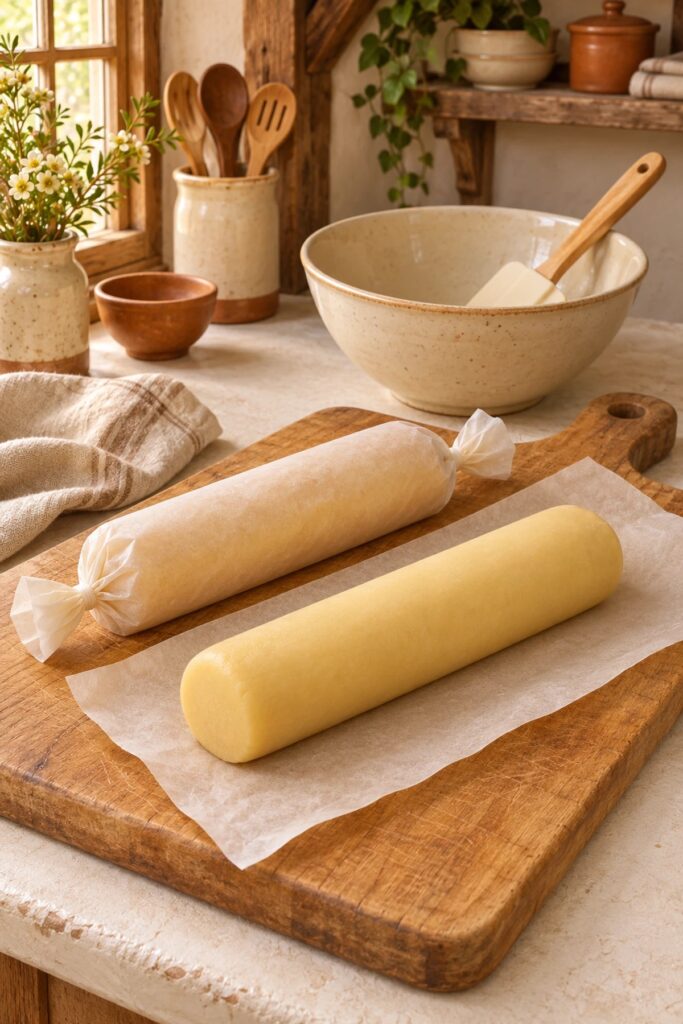
Turn the dough onto the counter and divide it in half, about 340 g each. Shape each half into a log about 1½ inches (4 cm) thick and 8 inches (20 cm) long, then roll it inside a sheet of plastic wrap or parchment to smooth the surface and press out any air pockets. Twist the ends closed.
What you should see: Two smooth, evenly round logs of the same length and thickness, with no cracks or flat sides.
Step 5: Chill the Logs
Refrigerate the logs for at least 2 hours, or up to 3 days. Turn them a quarter turn once or twice during the first 30 minutes so they don’t develop a flat bottom. Slipping each wrapped log into an empty paper towel tube is a simple way to keep slice-and-bake logs round while they chill.
What you should see: Firm, cold logs that feel solid all the way through when you press them gently.
Step 6: Brush and Roll in Sugar
Heat the oven to 350°F (175°C) with a rack in the center, and line two baking sheets with parchment paper. Unwrap one log, brush it all over with the beaten egg white and roll it in the coarse sugar spread on a rimmed tray, pressing gently so the sugar sticks. Keep the second log in the refrigerator for now.
What you should see: A log evenly coated on all sides with a sparkling layer of sugar, with no bare patches.

Step 7: Slice the Cookies
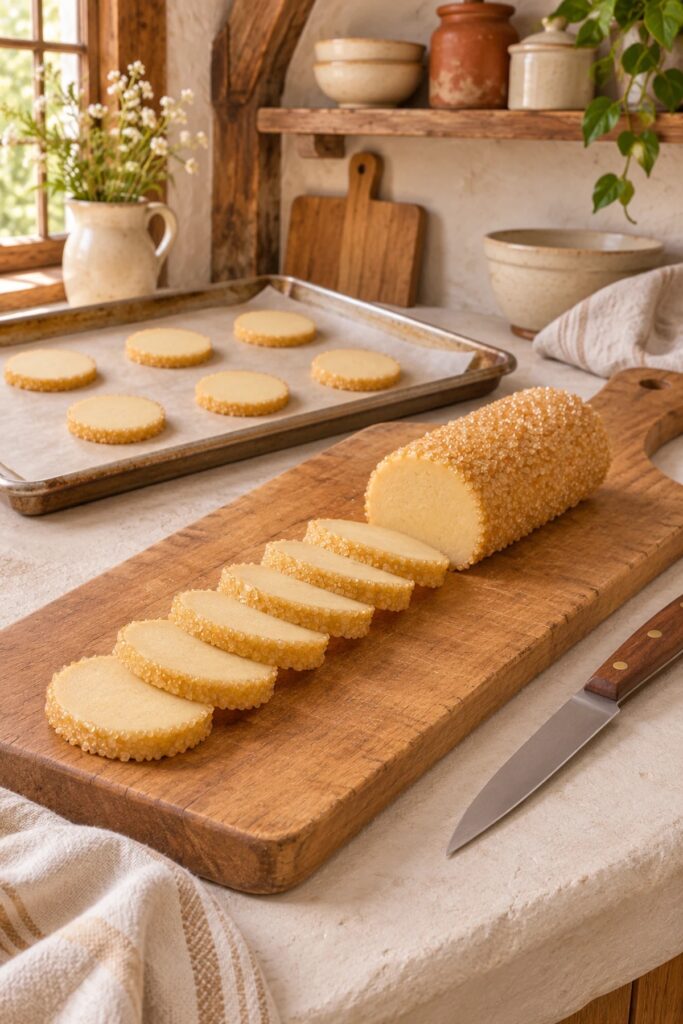
Use a sharp, thin knife to cut the log into slices ⅓ inch (8 mm) thick, cutting straight down in one smooth motion instead of sawing. Give the log a quarter turn every few slices so it stays round. Place the slices on the prepared baking sheet about 1 inch (2.5 cm) apart.
What you should see: Neat, even rounds with clean edges and a complete ring of sugar around each one.
Step 8: Bake the French Sablés
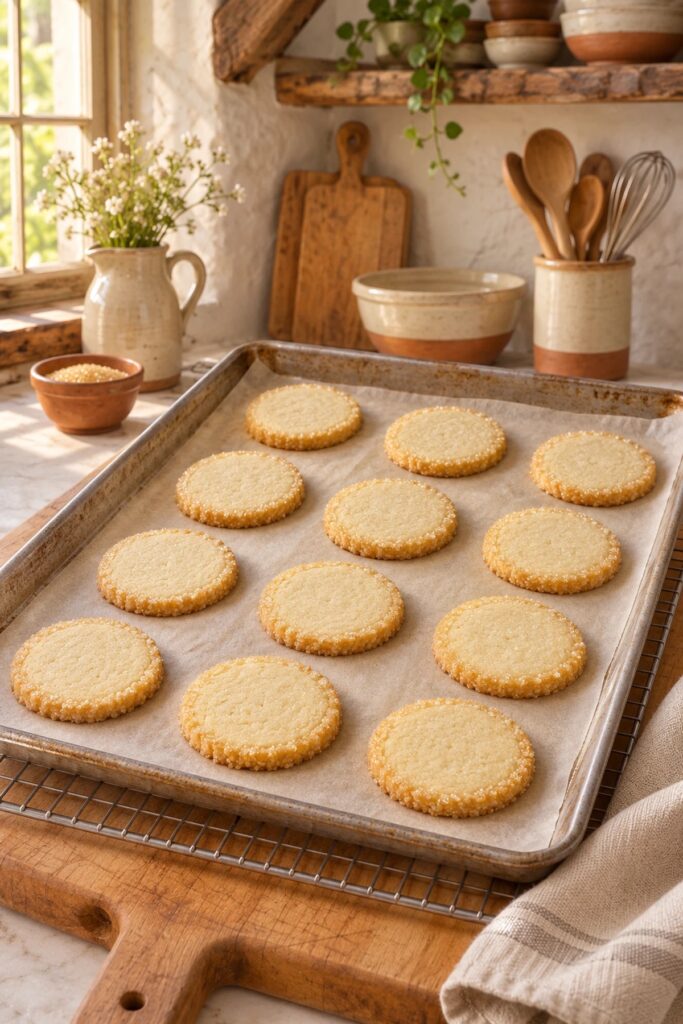
Bake one sheet at a time for 15 to 18 minutes, turning the sheet front to back halfway through. While the first sheet bakes, coat and slice the second log. French sablés are ready when the edges and bottoms are light golden and the tops look pale, matte and set.
What you should see: Flat, round cookies that have barely spread, with golden edges, a sparkling golden rim of sugar and pale, dry-looking tops.
Step 9: Cool Completely
Let the cookies rest on the baking sheet for 5 minutes, because they are fragile while hot. Then move them to a wire rack and let them cool completely, about 20 minutes. French sablés become crisp as they cool.
What you should see: Firm cookies that snap cleanly when you break one, with a fine, sandy crumb inside.
How to Know They’re Done
Use these checkpoints at each stage of your French sablés, so you don’t have to guess.
| What to Check | Ready When |
|---|---|
| Butter and sugars | Smooth and creamy, not light or fluffy |
| Finished dough | Soft and moist, holds together when pressed |
| Chilled logs | Firm all the way through, still round |
| Sliced cookies | ⅓ inch thick, clean edges, full sugar rim |
| Baked edges | Light golden, with a golden sugar rim |
| Baked tops | Pale, matte and set, not shiny |
| Cooled cookies | Crisp, snap cleanly, sandy crumb |
If the tops still look shiny or feel soft at the end of the bake time, give them 1 to 2 more minutes. If the edges turn deep brown, the oven may run hot; lower the temperature by 15°F (about 10°C) for the next sheet.
Tips for the Best French Sablés
Keep the butter cool. Soft but cool butter is the secret to French sablés that hold their shape. If your kitchen is warm, chill the dough for 10 minutes before shaping the logs.
Don’t skip the long chill. A fully cold log slices into clean rounds that keep their edges in the oven. A soft log squashes under the knife and bakes into ovals.
Slice evenly. Cookies of the same thickness bake at the same speed. If it helps, mark the log every ⅓ inch with the tip of the knife before you cut.
Bake one sheet at a time. The center rack gives the most even heat, so every cookie gets the same golden edge and pale top.
Weigh the dough for the logs. Dividing the dough by weight gives you two identical logs, so both batches bake in the same time.
Common Mistakes and How to Fix Them
These are the problems that most often affect French sablés, with a simple fix for each.
| Mistake | How to Fix It |
|---|---|
| Beating the butter until fluffy The cookies puff, spread and lose their fine crumb. | Beat the butter and sugars on medium-low only until smooth and creamy, about 1 minute. |
| Overmixing after adding the flour The cookies turn tough and hard. | Mix on the lowest speed just until the flour disappears, then finish by hand. |
| Slicing a soft log The slices squash and bake into ovals. | Chill the logs for at least 2 hours, and return a log to the fridge if it softens while you work. |
| Crumbling slices The cookies break apart as you cut them. | Let a very cold or frozen log stand for 5 to 10 minutes, then cut with a sharp knife in one motion. |
| Overbaking The cookies taste toasted instead of buttery. | Take them out when the edges are light golden and the tops are still pale and matte. |
Variations
Once you know the basic dough, French sablés are easy to change with the seasons.
Salted Butter Sablés
In Brittany, butter cookies are often made with salted butter. Use salted butter, leave out the added salt and sprinkle a few flakes of sea salt on each slice before baking.
Lemon Sablés
Rub the finely grated zest of 1 lemon into the granulated sugar with your fingertips before you beat it with the butter. The cookies taste bright and fresh, and they are lovely with tea.
Chocolate Sablés
Replace ¼ cup (30 g) of the flour with ¼ cup (20 g) of unsweetened cocoa powder, and add 2 tablespoons of finely chopped dark chocolate with the flour. Bake for the same time, watching the edges closely, since the color change is harder to see.
Almond Sablés
Replace ½ teaspoon of the vanilla with ¼ teaspoon of almond extract, and roll the logs in finely chopped sliced almonds mixed with the coarse sugar.
Serving Suggestions
Serve French sablés with a cup of coffee, a pot of tea or a mug of tiramisu latte. They are also a simple, elegant side for ice cream, fresh berries or a bowl of warm crêpes with jam on a slow weekend morning.
For a French-inspired dessert plate, add buttery madeleines and flaky palmiers. For a holiday cookie tray, place French sablés next to jam-filled linzer cookies and thumbprint cookies, soft snowball cookies and pretty spritz cookies. You will find even more ideas in my list of the best Christmas cookies.
Storage
Store the cooled French sablés in an airtight tin or container at room temperature for up to 1 week. Keep them separate from soft cookies, which would make them lose their crispness.
If you stack them, place a sheet of parchment between the layers so the sugar rims stay sparkling. If they soften, warm them on a baking sheet at 300°F (150°C) for 4 to 5 minutes and let them cool again.
Freezing
The unbaked logs are the best part of this recipe for planning ahead. Wrap each one tightly in plastic wrap and then in foil, and freeze for up to 3 months. Most cookie dough can be frozen for up to six months, but the butter flavor of French sablés is freshest within 3 months.
To bake from frozen, let a log stand at room temperature for 5 to 10 minutes, just until a knife cuts through it cleanly. Brush it with egg white, roll it in sugar, slice and bake as usual, adding 1 to 2 minutes if needed.
You can also freeze the baked cookies. Cool them completely, layer them in a freezer container with parchment between the layers and freeze for up to 3 months. Thaw them at room temperature in the closed container for about 30 minutes.
Frequently Asked Questions
What does sablé mean?
Sablé is French for “sandy.” It describes the fine, crumbly texture of the cookie, which comes from a high proportion of butter and gentle mixing.
What is the difference between French sablés and shortbread?
French sablés usually include egg yolks and often powdered sugar, which make them richer and more tender, with a finer crumb. Classic shortbread is made with only butter, sugar and flour, so it is denser and a little crisper.
Why did my French sablés spread in the oven?
The butter was likely too soft, the dough was beaten until fluffy or the logs were not cold enough. Use cool, softened butter, mix only until smooth and chill the logs for at least 2 hours.
Why does my log crumble when I slice it?
A log straight from the freezer, or one that is very cold, can crack under the knife. Let it stand for 5 to 10 minutes and use a sharp, thin knife with one smooth downward cut.
Can I make French sablés without coarse sugar?
Yes. Roll the logs in granulated sugar for a finer rim, or skip the egg white and sugar entirely for plain, simple sablés.
Can I make the dough ahead of time?
Yes. The wrapped logs keep for up to 3 days in the refrigerator or up to 3 months in the freezer, so you can slice and bake fresh French sablés whenever you like.
Can I use a whole egg instead of two egg yolks?
You can, but the cookies will be less rich and slightly more cake-like. The dough will also be softer, so give the logs a longer chill before slicing.
Final Thoughts
French sablés show how much a few simple ingredients can do. Cool butter, two egg yolks, a gentle hand with the mixer and a long chill turn into small, golden cookies with a sparkling rim and a crumb that melts away.
Once you have a log or two in the freezer, homemade cookies are never more than 20 minutes away. Keep your French sablés plain, or make them your own with lemon, chocolate or almonds as the seasons change.
Did you roll your logs in sparkling sugar, or bake a batch of chocolate or lemon sablés first? Tell me in the comments which version of these French sablés you’ll be keeping in your freezer this season.
If you try this recipe, please leave a star rating along with your comment below. It takes a few seconds and helps other readers find the recipe.

French Sablés
These French sablés are small, round butter cookies with a sparkling sugar rim and a fine, sandy crumb that melts in every bite. Made with egg yolks and powdered sugar, then shaped into logs and sliced, they are the perfect balance of crisp, rich and tender. One batch makes about 48 cookies and the logs freeze for months, so these French sablés are a must-have for cookie trays, gift tins and coffee.
Ingredients
For the Dough
- 1 cup (226 g) unsalted butter, softened but cool
- ½ cup (100 g) granulated sugar
- ½ cup (60 g) powdered sugar
- ½ teaspoon (3 g) fine sea salt
- 2 large egg yolks (36 g), at room temperature
- 1 teaspoon (5 ml) pure vanilla extract
- 2 cups (250 g) all-purpose flour
For the Sugar Rim
- 1 large egg white (30 g), lightly beaten
- ⅓ cup (65 g) sanding sugar or turbinado sugar
Instructions
- Beat the softened butter, granulated sugar, powdered sugar and salt on medium-low speed for about 1 minute, just until smooth and creamy, not fluffy.
- Beat in the egg yolks one at a time, then the vanilla, scraping the bowl.
- Add the flour and mix on the lowest speed just until it disappears, finishing by hand if needed.
- Divide the dough in half and shape each half into a smooth log about 1½ inches (4 cm) thick and 8 inches (20 cm) long. Wrap tightly.
- Refrigerate the logs for at least 2 hours, or up to 3 days, turning them once or twice early on so they stay round.
- Heat the oven to 350°F (175°C) and line two baking sheets with parchment. Brush one log with egg white and roll it in the coarse sugar.
- Cut the log into ⅓-inch (8 mm) slices with a sharp knife, turning the log as you go. Place 1 inch (2.5 cm) apart on a sheet.
- Bake one sheet at a time for 15 to 18 minutes, turning it halfway, until the edges are light golden and the tops are pale and set. Repeat with the second log.
- Cool on the sheet for 5 minutes, then on a wire rack until completely cool and crisp.
Notes
- Butter: Use unsalted butter that is soft but still cool. If you use salted butter, reduce the added salt to ⅛ teaspoon.
- Mixing: Beat the butter and sugars only until smooth, and mix the flour just until it disappears. Too much air or mixing makes the cookies spread or turn tough.
- Chilling: Chill the logs for at least 2 hours so they slice cleanly and keep their round shape in the oven.
- Slicing: Cut straight down in one motion and turn the log a quarter turn every few slices. Let a frozen log stand for 5 to 10 minutes first.
- Make ahead: Refrigerate the wrapped logs for up to 3 days or freeze them for up to 3 months.
- Storage: Store baked cookies in an airtight tin at room temperature for up to 1 week, or freeze for up to 3 months.
- Nutrition: Values are per cookie (1 of 48), including the part of the egg white and coarse sugar that coats the rim.
Nutrition Information:
Yield: 48 Serving Size: 1 cookieAmount Per Serving: Calories: 72Total Fat: 4gSaturated Fat: 3gCholesterol: 18mgSodium: 26mgCarbohydrates: 8gFiber: 0gSugar: 4gProtein: 1g