Snickerdoodles
Snickerdoodles are the cookie jar classic that wins people over with a soft, chewy bite, a sparkly cinnamon-sugar crust and a faint, pleasant tang that no plain sugar cookie can match.
That tang comes from cream of tartar, a fine white powder that works with baking soda to puff the dough in the oven. As the cookies cool, they sink a little and their tops settle into soft wrinkles and cracks.
The dough is made from butter, sugar, eggs, vanilla and flour, creamed in one bowl. A short 30-minute rest in the refrigerator firms it up, so the balls roll cleanly through the cinnamon sugar and bake up thick.
This batch makes 24 snickerdoodles about 3 inches wide, with lightly crisp edges and pillowy centers. Snickerdoodles are easy enough for a weeknight craving and pretty enough for a gift tin.

Why You’ll Love These Snickerdoodles
Soft centers, crisp edges. The middle of these snickerdoodles stays tender and chewy, while the cinnamon-sugar coating bakes into a thin, crackly shell around the outside.
A flavor all their own. Cream of tartar gives snickerdoodles a gentle tang that balances the butter and sugar, so they taste rich without tasting flat.
Pantry ingredients and one bowl. Snickerdoodles need only butter, sugar, eggs, flour and a few small spoonfuls of leavening, salt and spice. There are no chips to chop and no frosting to make.
Quick from start to finish. With only a 30-minute chill, you can go from softened butter to a plate of warm snickerdoodles in a little over an hour.

Perfect For
Snickerdoodles fit almost any occasion. Pack them in lunchboxes, take a batch to a bake sale or a potluck, or set them out with coffee when friends drop by on a Saturday afternoon.
In December, snickerdoodles are a favorite on cookie trays and in gift tins, since their warm cinnamon flavor feels festive without any decorating. For more seasonal baking ideas, browse my holiday recipes.

Snickerdoodles at a Glance
| Flavor | Buttery and sweet, with warm cinnamon and a gentle tang |
| Texture | Soft and chewy in the center, lightly crisp at the edges |
| Difficulty | Easy |
| Prep Time | 20 minutes |
| Chill Time | 30 minutes (or up to 2 days) |
| Bake Time | 22 minutes (two sheets, 10 to 11 minutes each) |
| Total Time | 1 hour 12 minutes |
| Servings | 24 cookies, about 3 inches (7.5 cm) wide |
| Oven | 375°F (190°C) |
| Cuisine | American |
| Best For | Cookie jars, lunchboxes, bake sales and cookie trays |
Before You Start
Soften the butter properly. Take the butter out of the refrigerator about an hour ahead. Room-temperature butter should feel like clay, easy to press a dent into but still a little firm, and never greasy. Butter that has turned shiny or soft enough to slump spreads too fast in the oven.
Bring the eggs to room temperature. Cold eggs can make the creamed butter seize into small lumps. If you forget to take them out, set them in a bowl of warm tap water for 5 to 10 minutes.
Check the date on your baking soda. Baking soda and cream of tartar are what make the dough puff and then settle into crinkles. A fresh box of soda gives the best rise.
Weigh the flour if you can. A scale gives you exactly 345 g. If you use cups, spoon the flour into the cup and level it off without packing, since extra flour makes the cookies dry and puffy.
What Makes These Snickerdoodles Work
Cream of Tartar and Baking Soda
Cream of tartar is an acid, and baking soda is a base. Once the dough is moist and warm, the two react and release gas, so snickerdoodles rise quickly in the hot oven. That fast lift is part of what gives snickerdoodles their light, pillowy center.
A Gentle Tang
Some of the cream of tartar stays in the cookie as flavor. You won’t taste it as sour, but you’ll notice a soft tang at the end of each bite that makes the butter and cinnamon taste brighter.
Creamed Butter and Sugar
Beating soft butter with sugar for about 3 minutes traps tiny air bubbles in the dough. Those bubbles give the leavening something to expand, and they help snickerdoodles bake up tender instead of dense.
A Short Chill
Thirty minutes in the refrigerator firms the butter just enough to roll smooth balls that don’t stick to your hands. Cooler dough also spreads more slowly, which keeps snickerdoodles thick, with a soft middle and lightly crisp edges.
Why the Tops Crinkle
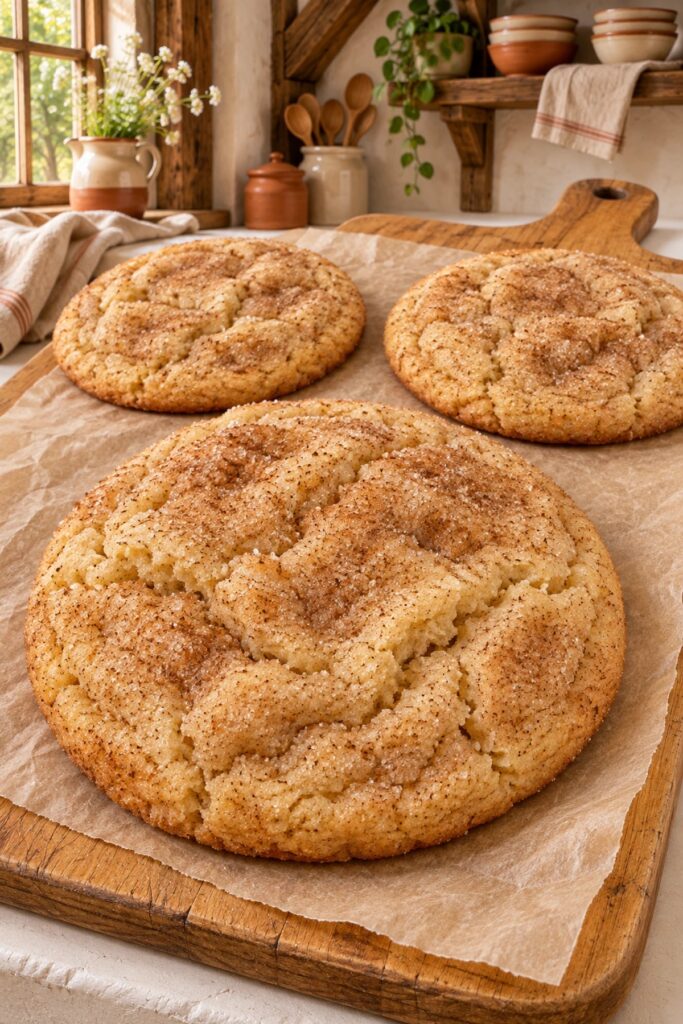
In the oven, the dough puffs up quickly while the cinnamon-sugar coating sets into a thin crust. As the cookies leave the heat, the air inside contracts and the centers sink slightly. The set crust can’t shrink as fast, so it folds into soft wrinkles and fine cracks across the top.
How They Differ from Sugar Cookies
Snickerdoodles and classic sugar cookies start from a very similar butter-and-sugar dough. The difference is in the leavening and the finish: sugar cookies usually rise with baking powder and are rolled and cut or simply baked plain, while snickerdoodles rely on cream of tartar and baking soda and are rolled in cinnamon sugar.
That combination gives them a softer, puffier middle, a subtle tang and their crackled, cinnamon-speckled tops. If you love cookies rolled in a coating before baking, my chocolate crinkle cookies use the same idea with a thick coat of powdered sugar.
Ingredient Notes and Substitutions
There are only nine ingredients here, so each one counts. Here’s what to choose and which swaps work.
Butter. Use unsalted butter at room temperature. If you only have salted butter, it works too; reduce the added salt to a pinch.
Sugar. Plain granulated sugar gives snickerdoodles their crisp edges and crackled tops. You can swap ½ cup (100 g) of it for ½ cup (110 g) of packed light brown sugar for a chewier cookie with a hint of caramel, though the tops will look a little darker.
Eggs and vanilla. Two large eggs, about 50 g each without the shell, bind the dough and keep it moist. Pure vanilla extract rounds out the butter and cinnamon.
Flour. All-purpose flour gives the right balance of structure and tenderness. Bread flour makes a chewier, slightly tougher cookie, and cake flour makes them too soft to hold their shape.
Cream of tartar. This is what makes snickerdoodles taste like snickerdoodles. Cream of tartar adds a tangy flavor that’s hard to copy, and it helps keep the cookies chewy by preventing the sugar from crystallizing. You’ll find it in small jars in the spice aisle, and it keeps for a long time in a dry, closed container.
Baking soda and salt. Baking soda reacts with the cream of tartar for lift. Fine sea salt or table salt both work; if you use coarse kosher salt, add a little extra.
Cinnamon. Ground cinnamon goes only into the coating, so snickerdoodles have a bright, spiced crust around a buttery center. Use a fresh jar, since old cinnamon loses its aroma.
No cream of tartar for your snickerdoodles? Replace both the 2 teaspoons of cream of tartar and the 1 teaspoon of baking soda with 2 teaspoons (8 g) of baking powder. The cookies will still be soft and good, but they won’t have the classic tang, and they tend to bake up a little more cake-like.
Ingredients for Snickerdoodles
These amounts make 24 snickerdoodles, each rolled from about 41 g of dough, a ball about 1½ inches (4 cm) wide.
For the Cookies
- 1 cup (226 g) unsalted butter, at room temperature
- 1½ cups (300 g) granulated sugar
- 2 large eggs (100 g without shells), at room temperature
- 2 teaspoons (10 ml) pure vanilla extract
- 2¾ cups (345 g) all-purpose flour
- 2 teaspoons (6 g) cream of tartar
- 1 teaspoon (5 g) baking soda
- ½ teaspoon (3 g) fine sea salt
For the Cinnamon Sugar
- ⅓ cup (67 g) granulated sugar
- 1 tablespoon (8 g) ground cinnamon

Kitchen Equipment Needed
• Stand mixer with a paddle, or a hand mixer – creams the butter and sugar
• Large and medium mixing bowls – hold the dough and the dry ingredients
• Whisk – combines the flour, cream of tartar, baking soda and salt
• Rubber spatula – scrapes the bowl so everything mixes evenly
• Kitchen scale – weighs the flour and the dough balls
• Plastic wrap or a lidded container – covers the dough while it chills
• Medium cookie scoop (about 2½ tablespoons) – portions the dough evenly
• Small shallow bowl – holds the cinnamon sugar for rolling
• Two baking sheets lined with parchment paper – bake the cookies
• Wire cooling rack and a thin spatula – cool the cookies evenly
How to Make Snickerdoodles
Here’s the whole method for snickerdoodles, from creaming the butter to the cooling rack. Each step ends with what you should see, so you can check your progress along the way.
Step 1: Whisk the Dry Ingredients
In a medium bowl, whisk the flour, cream of tartar, baking soda and salt for about 30 seconds, so the leavening is spread evenly through the flour.
What you should see: A uniform, powdery white mixture with no small clumps of baking soda or cream of tartar.
Step 2: Cream the Butter and Sugar
In a large bowl, beat the softened butter and granulated sugar on medium speed for about 3 minutes, stopping once to scrape down the bowl and the paddle.
What you should see: A light, fluffy, pale yellow mixture that has grown slightly in volume and feels only a little gritty between your fingers.

Step 3: Beat in the Eggs and Vanilla
Add the eggs one at a time, beating on medium-low until each one is fully blended. Beat in the vanilla, then scrape the bowl once more.
What you should see: A smooth, creamy, glossy mixture with no streaks of egg and no curdled-looking patches.
Step 4: Mix in the Dry Ingredients
Add the flour mixture and mix on low speed just until no dry flour remains, about 30 seconds. Finish by folding a few times with the spatula, reaching to the bottom of the bowl.
What you should see: A thick, soft, slightly sticky dough that pulls away from the side of the bowl in one mass, with no pockets of flour.
Step 5: Chill the Dough and Heat the Oven
Cover the bowl and refrigerate the dough for 30 minutes. Meanwhile, heat the oven to 375°F (190°C) with a rack in the center, line two baking sheets with parchment paper, and stir the ⅓ cup (67 g) of sugar and 1 tablespoon (8 g) of cinnamon together in a small shallow bowl.
What you should see: A firmer dough that holds a clean edge when you dig in a scoop and barely sticks to your fingers, and an evenly tan bowl of cinnamon sugar.
Step 6: Scoop, Roll and Coat
Scoop the dough into balls of about 41 g, roughly 2½ tablespoons, and roll each one between your palms until smooth. Drop it into the cinnamon sugar and roll it around until it’s completely coated. Place 12 balls on each sheet, about 2½ inches (6 cm) apart, in staggered rows.
What you should see: Twelve round balls, 1½ inches (4 cm) wide, evenly covered in a speckled cinnamon-sugar coat, none of them touching.

Step 7: Bake
Bake one sheet at a time on the center rack for 10 to 11 minutes, starting to check at 9 minutes. Snickerdoodles are ready when they have puffed and spread, the edges are set and the tops have started to crack, but the centers still look soft and slightly underbaked. Keep the second batch in the refrigerator until its turn.
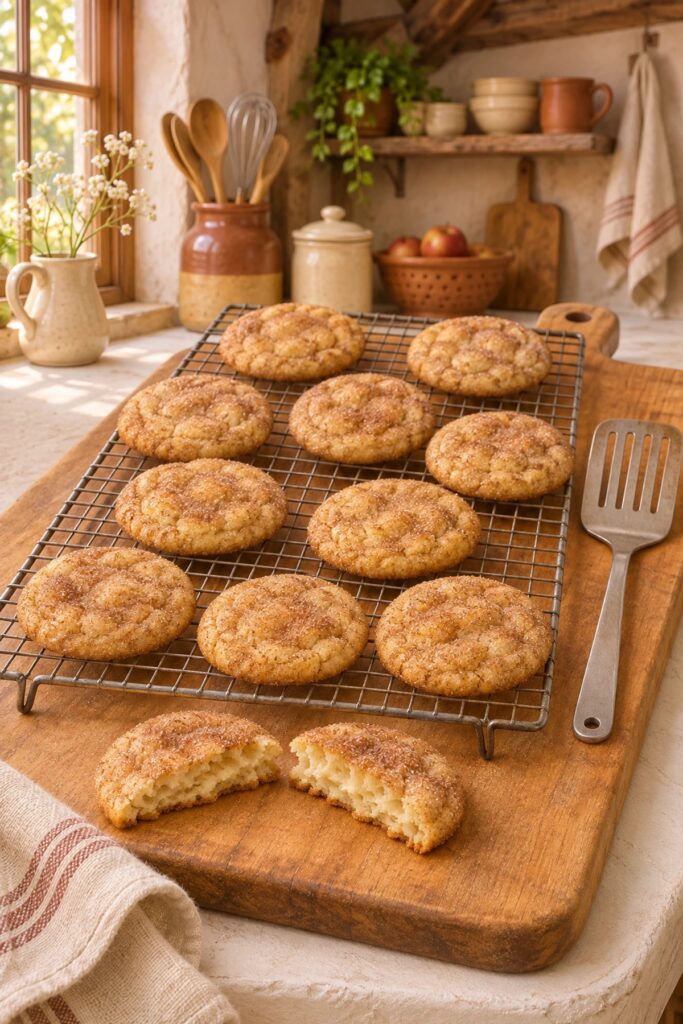
What you should see: Puffed, round cookies about 3 inches (7.5 cm) wide with set, pale golden edges, crackled cinnamon-sugar tops and soft, slightly shiny centers.

Step 8: Cool
Let the snickerdoodles rest on the baking sheet for 5 minutes, since they’re too soft to move at first. Then slide them onto a wire rack to cool completely, about 20 minutes. They sink slightly as they cool, and the tops settle into soft wrinkles.
What you should see: Slightly flattened cookies with crinkled, sparkly tops, lightly crisp edges and a soft, chewy center when you break one open.
How to Know They’re Done
Use these checkpoints from the mixing bowl to the cooling rack, so your snickerdoodles come out soft in the middle and crisp at the edges.
| What to Check | Ready When |
|---|---|
| Creamed butter and sugar | Pale, fluffy and slightly increased in volume |
| Finished dough | Thick, soft, no dry flour |
| Chilled dough | Firm enough to roll without sticking |
| Coated balls | Fully covered in cinnamon sugar |
| Edges in the oven | Set and pale golden |
| Tops | Puffed with the first cracks |
| Centers | Soft, slightly shiny, a little underbaked |
| After cooling | Settled, wrinkled and chewy inside |
If the centers still look wet and raw at 11 minutes, give them 1 more minute. If the edges have turned deep brown and the tops look dry and matte, they’ve gone a little too long; the cookies will still taste good but turn crisp all the way through as they cool, so take the next sheet out a minute or two earlier.
Tips for the Best Snickerdoodles
Don’t rush the butter. Soft but cool butter is the foundation of thick, chewy snickerdoodles. Warm, greasy butter is the most common reason the dough spreads into thin, flat rounds.
Use a scoop and a scale. Balls of the same weight bake in the same time, so every cookie on the sheet is ready at once.
Coat them generously. Roll each ball until no plain dough shows. The cinnamon sugar forms the crackly crust, so a thin coat means a paler, smoother top.
Pull them early. The centers should look a little underdone when they come out. They keep cooking on the hot sheet for a few minutes and set as they cool.
Bake on a cool sheet. Let the baking sheet cool for a few minutes between batches, or use a second sheet. Dough placed on a hot pan starts to melt before it reaches the oven.
Common Mistakes and How to Fix Them
These are the problems that most often get in the way of good snickerdoodles, each with a simple fix.
| Mistake | How to Fix It |
|---|---|
| Butter that is too warm The dough is greasy and the cookies spread thin and flat. | Use butter that feels like clay, and chill the dough for the full 30 minutes, longer in a warm kitchen. |
| Packing the flour The cookies stay tall, dry and smooth instead of crackling. | Weigh 345 g, or spoon the flour into the cup and level it without pressing. |
| Skipping the cream of tartar The snickerdoodles taste like plain sugar cookies. | Use 2 teaspoons of cream of tartar with the baking soda for the classic tang. |
| Crowding the sheet The cookies run into each other and bake unevenly. | Bake 12 per sheet, about 2½ inches apart, one sheet at a time. |
| Overbaking The cookies turn hard and crunchy once cool. | Take them out while the centers still look soft and slightly shiny. |
Variations
Classic snickerdoodles are hard to improve, but the dough is easy to adapt. Keep the cream of tartar and the coating, and try one of these.
Brown Sugar Snickerdoodles
Replace ½ cup (100 g) of the granulated sugar in the dough with ½ cup (110 g) of packed light brown sugar. The cookies turn a little darker, chewier and more caramel-like.
Chai-Spiced Coating
Stir ½ teaspoon (1 g) of ground ginger, ¼ teaspoon (0.5 g) of ground cardamom and a pinch of ground cloves into the cinnamon sugar. The extra spices make the cookies taste warmer, and they pair well with a cup of tea.
Chocolate Chip Snickerdoodles
Fold ¾ cup (130 g) of mini semi-sweet chocolate chips into the dough after the flour. Mini chips keep the balls round and the coating even. You’ll get about 28 cookies. If chocolate is what you’re after, my chocolate chip cookies are the classic choice.
Mini Snickerdoodles
Roll the dough into 1-tablespoon balls, about 20 g each, and bake for 8 to 9 minutes. You’ll get about 48 bite-size cookies, perfect for a party platter.
Serving Suggestions
A glass of cold milk is the classic partner, but snickerdoodles are just as good with coffee or tea. On a chilly afternoon, serve them with a mug of warm spiced apple cider or a homemade pumpkin spice latte.
For a mixed cookie tray, set them next to buttery shortbread cookies, spiced gingerbread cookies, jam-filled thumbprint cookies and peanut butter blossoms. The golden, cinnamon-speckled tops of snickerdoodles look lovely beside the darker cookies. For more ideas, see my list of the best Christmas cookies.
For dessert, sandwich a scoop of vanilla ice cream between two cooled cookies, or crumble one over a bowl of ice cream. And if you can’t get enough cinnamon, a pan of soft homemade cinnamon rolls makes a cozy weekend project.
Storage
Store cooled snickerdoodles in an airtight container at room temperature for up to 4 days. They stay softest when the container is full and tightly closed, so move them to a smaller one as the batch shrinks.
The unbaked dough keeps, tightly covered, in the refrigerator for up to 2 days. Let very cold dough sit on the counter for 10 to 15 minutes, until it’s soft enough to scoop, then roll, coat and bake as usual.
Freezing
Dough balls: Scoop and roll the dough into balls and coat them in cinnamon sugar. Freeze them on a lined baking sheet for about 1 hour until firm, then move them to a labeled freezer bag or container for up to 3 months. Bake straight from the freezer at 375°F (190°C), adding 1 to 2 minutes to the bake time.
Baked cookies: Cool the snickerdoodles completely, then freeze them in a single layer in a freezer container, with a sheet of parchment between the layers, for up to 3 months. Thaw them in the closed container at room temperature, so any moisture stays on the outside of the container rather than on the cookies.
Frequently Asked Questions
What does cream of tartar do in snickerdoodles?
It does two jobs. As an acid, it reacts with the baking soda to give the dough a quick lift in the oven, which helps create the puffy, crinkled tops. It also adds the soft tang that makes snickerdoodles taste different from other butter cookies, and it helps keep them chewy.
Can I make snickerdoodles without cream of tartar?
Yes, with a trade-off. Replace both the cream of tartar and the baking soda with 2 teaspoons (8 g) of baking powder. The cookies will be soft and tasty, but they’ll lose the classic tang and turn out a little more cake-like.
Why did my cookies come out flat?
Butter that was too warm, a dough that wasn’t chilled or a hot baking sheet are the usual causes. Make sure the butter feels like clay rather than grease, chill the dough for 30 minutes and always start each batch on a cool sheet.
Why are my cookies puffy and smooth instead of crinkled?
Too much flour is the most common reason. Weigh the flour, or spoon and level it, and roll each ball fully in cinnamon sugar. Old baking soda can also keep the cookies from rising and settling the way they should.
Do I have to chill the dough?
For thick snickerdoodles, yes. The 30-minute chill firms the butter so the balls hold their shape and spread slowly. If your kitchen is warm, give the dough an extra 15 to 30 minutes, and return it to the fridge between batches.
Can I put cinnamon in the dough too?
You can. Add ½ to 1 teaspoon (1 to 3 g) of ground cinnamon to the flour mixture in Step 1. The cookies will be tan inside, with a warmer spice flavor all the way through.
Can I double the recipe?
Yes. Double every ingredient and use a large stand mixer bowl, so the butter and sugar have room to cream properly. Chill the dough in two containers and bake one sheet at a time, keeping the rest of the dough cold.
Final Thoughts
Soft butter, a little patience and a jar of cream of tartar are all you need for cookies with a chewy middle, crisp edges and a crackled cinnamon crust. Once you’ve rolled one batch, the whole method feels second nature.
Keep a bag of coated dough balls in the freezer and you can bake a few whenever the cookie jar looks empty. Leave them classic, add a chai-spiced coat or fold in mini chocolate chips, depending on the day.
Did your batch come out pillowy and thick or a little flatter with crisp edges, and did anyone at your table notice the little tang? Tell me in the comments how your snickerdoodles turned out and which variation you’re saving for the next batch.
If you try this recipe, please leave a star rating along with your comment below. It takes a few seconds and helps other readers find the recipe.
Snickerdoodles
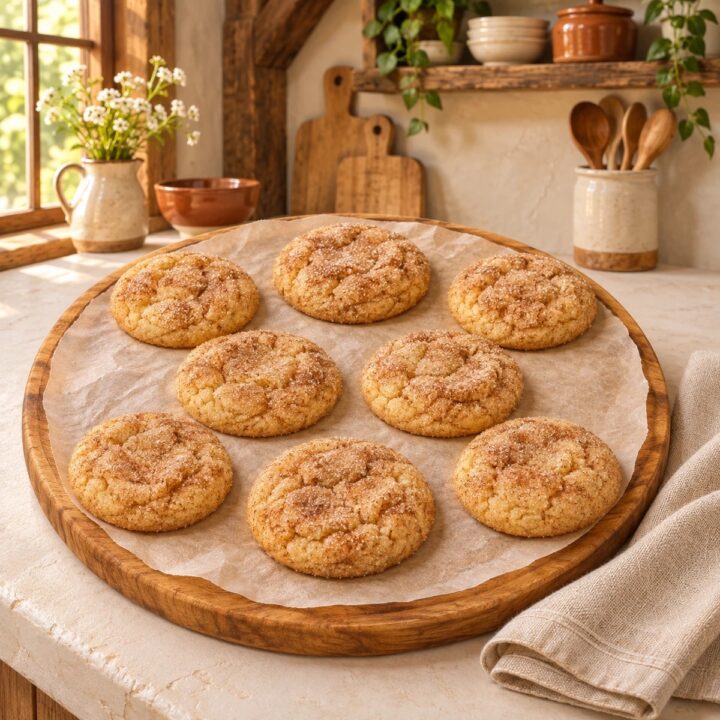
These snickerdoodles are soft, chewy butter cookies with lightly crisp edges, crackled tops and a sparkling coat of cinnamon sugar. Cream of tartar gives them their gentle tang and pillowy middle, and a short 30-minute chill keeps them thick instead of flat. Made with nine pantry ingredients, these snickerdoodles bake in about 11 minutes per sheet and are ready for a cookie jar, a lunchbox or a holiday tray.
Ingredients
For the Cookies
- 1 cup (226 g) unsalted butter, at room temperature
- 1½ cups (300 g) granulated sugar
- 2 large eggs (100 g without shells), at room temperature
- 2 teaspoons (10 ml) pure vanilla extract
- 2¾ cups (345 g) all-purpose flour
- 2 teaspoons (6 g) cream of tartar
- 1 teaspoon (5 g) baking soda
- ½ teaspoon (3 g) fine sea salt
For the Cinnamon Sugar
- ⅓ cup (67 g) granulated sugar
- 1 tablespoon (8 g) ground cinnamon
Instructions
- Whisk 2¾ cups (345 g) flour, 2 teaspoons (6 g) cream of tartar, 1 teaspoon (5 g) baking soda and ½ teaspoon (3 g) salt in a medium bowl.
- In a large bowl, beat 1 cup (226 g) softened butter and 1½ cups (300 g) sugar on medium speed for about 3 minutes, until light and fluffy.
- Beat in the 2 eggs one at a time, then the 2 teaspoons (10 ml) vanilla, scraping the bowl.
- Mix in the flour mixture on low speed just until no dry flour remains.
- Cover and refrigerate the dough for 30 minutes. Meanwhile, heat the oven to 375°F (190°C), line two baking sheets with parchment and mix ⅓ cup (67 g) sugar with 1 tablespoon (8 g) cinnamon.
- Scoop the dough into 24 balls of about 41 g (2½ tablespoons), roll smooth and coat completely in cinnamon sugar. Place 12 on each sheet, about 2½ inches (6 cm) apart.
- Bake one sheet at a time for 10 to 11 minutes, until the edges are set, the tops are cracked and the centers still look soft.
- Cool on the sheet for 5 minutes, then move the cookies to a wire rack to cool completely.
Notes
- Butter: Use butter that feels like clay: soft enough to press a dent into, but still cool and not greasy. Warm butter makes flat cookies.
- Cream of tartar: It gives snickerdoodles their tang and chewy texture. Without it, replace both the cream of tartar and the baking soda with 2 teaspoons (8 g) of baking powder; the cookies will taste less tangy and be slightly more cake-like.
- Flour: Weigh the flour, or spoon it into the cup and level it. Too much flour keeps the cookies puffy and smooth.
- Chilling: Chill the dough for 30 minutes, or longer in a warm kitchen, and keep the second batch cold until it goes in the oven.
- Doneness: Take the cookies out while the centers still look soft and slightly shiny; they set as they cool.
- Make ahead: Refrigerate the covered dough for up to 2 days. Freeze coated dough balls for up to 3 months and bake from frozen, adding 1 to 2 minutes.
- Storage: Store baked cookies airtight at room temperature for up to 4 days, or freeze them for up to 3 months.
- Nutrition: Values are per cookie (1 of 24) and include an estimated 35 g of sugar and 4 g of cinnamon from the coating that clings to the cookies.
Nutrition Information:
Yield: 24 Serving Size: 1 cookieAmount Per Serving: Calories: 182Total Fat: 8gSaturated Fat: 5gCholesterol: 36mgSodium: 113mgCarbohydrates: 25gFiber: 0gSugar: 14gProtein: 2g