Madeleines
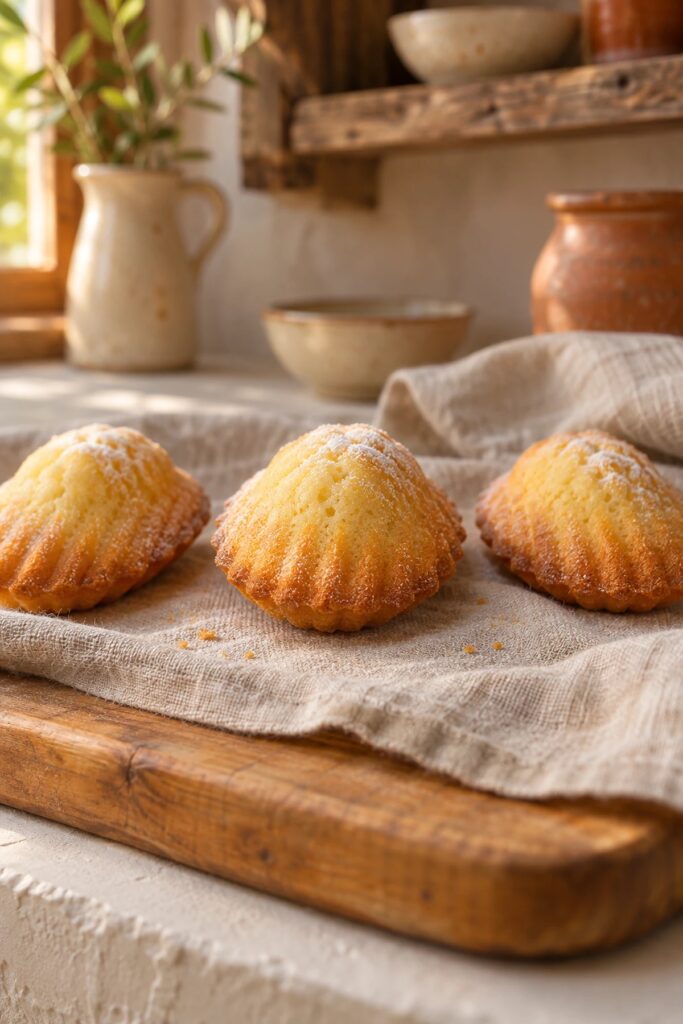
Madeleines are small, shell-shaped French sponge cakes with golden, lightly crisp edges and a soft, buttery center scented with honey and lemon, and they taste best warm from the pan.
The best part is the hump. Each madeleine bakes with a rounded bump on its back, and that little dome is the sign that everything went right: a rested batter, a hot oven and a well-prepared pan. Once you know why it forms, the hump stops being luck and becomes something you can plan for.
This madeleines recipe uses 9 everyday ingredients and one special pan. The batter is whisked in one bowl, rests in the refrigerator for 1 hour and bakes in about 10 minutes per batch, so you can mix it in the morning and have warm madeleines with afternoon tea.
The recipe makes 24 madeleines, which is two rounds in a standard 12-cavity pan. That is enough for a tea table, a brunch spread or a cookie tray, and the cakes are at their best the day they are baked.

Why You’ll Love These Madeleines
Soft inside, crisp at the edges. A thick foam of whisked eggs and sugar gives the crumb a light, springy texture, while the thin edges of the shell bake into a delicate golden frame.
The signature hump, explained. Cold batter meets a hot oven, the edges set first and the center pushes upward. This recipe walks you through every detail that helps the hump form, from the pan to the oven temperature.
Simple, familiar ingredients. Eggs, sugar, flour, butter, honey, lemon and vanilla are all you need, and most of them are already in your kitchen.
Make-ahead friendly. The batter keeps in the refrigerator for up to 24 hours, so you can bake a fresh batch when guests arrive and serve the madeleines warm.

Perfect For
Madeleines fit the moments when you want something small and pretty without a long recipe: an afternoon tea, a weekend brunch, a baby or bridal shower, a hostess gift or a plate next to a cup of coffee.
They also earn a place on a holiday cookie tray, where their pale golden shells look lovely beside darker, spiced cookies. Because the batter rests in the refrigerator, madeleines are a good choice when you like to prepare ahead, since you can mix the batter the night before and bake in the morning while the kitchen smells like butter and lemon.

What Are Madeleines?
Madeleines are classic French petits gâteaux, small cakes baked in a pan with shell-shaped cavities. The batter is closer to a sponge cake than to a cookie dough: eggs and sugar are whisked until thick, flour is folded in, and melted butter goes in at the end.
In the United States they are often sold next to cookies, which is why many home bakers call them madeleine cookies. The texture tells the real story. A madeleine is tender and springy like a small cake, with edges that turn lightly crisp where the batter touches the hot pan.
Madeleines at a Glance
| Flavor | Buttery, with honey and fresh lemon |
| Texture | Soft, springy center with lightly crisp edges |
| Difficulty | Easy |
| Prep Time | 25 minutes |
| Chill Time | 1 hour (up to 24 hours) |
| Bake Time | 20 minutes (2 batches of 9 to 11 minutes) |
| Cooling Time | 10 minutes |
| Total Time | 1 hour 55 minutes |
| Servings | 24 madeleines |
| Method | Baking |
| Cuisine | French |
| Best For | Afternoon tea, brunch and cookie trays |
Before You Start
Plan for the rest. The batter needs at least 1 hour in the refrigerator, and it can rest for up to 24 hours. Start early in the day, or make it the night before.
Bring the eggs to room temperature. Room-temperature eggs whisk into a taller, steadier foam. Set the eggs on the counter for 20 to 30 minutes, or place them in a bowl of warm tap water for 5 minutes. The USDA Food Safety and Inspection Service explains that refrigerated eggs should not be left out for more than 2 hours, so take them out shortly before you start.
Prepare the pan first. Buttering and flouring the pan takes only a few minutes, and the pan should chill in the freezer while you make the batter.
Melt the butter early. Hot butter would cook the eggs and deflate the foam, so melt it at the start and give it time to cool until lukewarm.
Choose a light-colored metal pan if you can. Dark pans brown the shells quickly, and the bottoms can turn too dark before the center is done.
What Makes These Madeleines Work
Whisked Eggs and Sugar
Whisking the eggs with the sugar for 4 to 5 minutes traps air in a thick, pale foam. That foam is the main source of lift and gives madeleines their springy, sponge-like crumb. A small amount of baking powder adds a safety net so the cakes rise evenly.
Melted Butter Folded in Last
Melted butter coats the flour and keeps the crumb tender and rich. It goes in at the very end, in three additions, so the foam stays airy. Folding gently with a spatula matters more than any special trick.
A Rested, Cold Batter
Resting lets the flour absorb the liquid and the butter firm up. Cold batter that meets a hot oven sets quickly at the edges while the middle is still loose, and the expanding center pushes upward into the hump. This is the single most important step in the recipe.
Honey and Lemon Zest
A spoonful of honey keeps the crumb moist and adds a gentle floral sweetness, while fresh lemon zest brings bright aroma without making the cakes sour. Together they give madeleines that familiar teatime flavor.
Ingredient Notes and Substitutions
Eggs: Use large eggs, about 50 g each without the shell. If yours are a different size, whisk one extra egg lightly and add just enough to reach 150 g in total.
Butter: Choose unsalted butter so that you control the salt. A European-style butter with more butterfat tastes richer, and you can also use homemade butter if you have some on hand. If you only have salted butter, use it and leave out the salt.
Sugar: Granulated sugar works well as long as you whisk for the full time. Superfine sugar dissolves a little faster and gives an even smoother batter.
Honey: One tablespoon (20 g) of a mild honey, such as clover or orange blossom, is enough. University of Missouri Extension notes that honey makes baked goods burn faster than sugar does, which is why this recipe watches the oven time closely. If you have no honey, use maple syrup or light corn syrup in the same amount.
Flour: All-purpose flour gives a tender cake with a little structure. For an even more delicate crumb, replace 2 tablespoons (16 g) of the flour with cornstarch.
Lemon zest: Zest the lemon before you juice it, and avoid the white pith, which tastes bitter. If you love lemon, you can also enjoy the same bright flavor in my lemon cupcakes.
Baking powder: Check the date on the can, because old baking powder loses its power and the hump will be smaller.
Ingredients for Madeleines
These amounts make 24 madeleines.
For the Batter
- 3 large eggs (150 g), at room temperature
- ⅔ cup (130 g) granulated sugar
- 1 tablespoon (20 g) honey
- 1 teaspoon (4 g) pure vanilla extract
- 1 tablespoon (6 g) finely grated lemon zest, from 1 large lemon
- ¼ teaspoon (1.5 g) fine sea salt
- 1 cup (125 g) all-purpose flour
- 1¼ teaspoons (5 g) baking powder
- ½ cup (113 g) unsalted butter, melted and cooled until lukewarm
For the Pan and Finishing
- 1 tablespoon (14 g) unsalted butter, softened, for the pan
- 1 tablespoon (8 g) all-purpose flour, for the pan
- 2 tablespoons (15 g) powdered sugar, for dusting

Kitchen Equipment Needed
• 12-cavity madeleine pan – shapes the shells and the hump
• Large mixing bowl – for whisking the eggs and sugar
• Electric hand mixer or stand mixer – builds the thick egg foam
• Medium bowl and whisk – combines the flour and baking powder
• Fine-mesh sieve – sifts the flour and dusts the powdered sugar
• Silicone spatula – folds in the flour and butter
• Small saucepan or microwave-safe bowl – melts the butter
• Pastry brush – coats the pan with butter
• Cookie scoop or tablespoon – portions the batter
• Wire cooling rack – cools the madeleines without steaming them
• Kitchen scale – weighs the eggs and flour
• Plastic wrap – covers the batter while it rests
How to Make Madeleines
Here is how to make madeleines from the prepared pan to the golden, domed cakes that come out of the oven.
Step 1: Prepare the Pan
Brush the cavities with the softened butter, getting into every ridge of the shell. Dust with the flour, tilt the pan so it coats evenly, and tap out the extra. Place the pan in the freezer while you make the batter. A cold, well-coated pan helps the cakes release cleanly and bake into a crisp shell pattern. What you should see: a thin, even, matte white coating in every ridge, with no puddles of butter and no clumps of flour.
Step 2: Melt and Cool the Butter
Melt the butter in a small saucepan over low heat, or in a microwave-safe bowl in 20-second bursts. Set it aside for about 10 minutes, until it is lukewarm, around 95 to 105°F (35 to 40°C). What you should see: a golden, liquid butter that feels warm but not hot on your finger, with a few pale milk solids at the bottom.
Step 3: Whisk the Eggs, Sugar and Honey
In a large bowl, combine the eggs, sugar, honey, vanilla, lemon zest and salt. Beat with an electric mixer on medium-high speed for 4 to 5 minutes. This long whisking builds the foam that lifts the madeleines. What you should see: a pale yellow, thick mixture that has at least doubled in volume. When you lift the beaters, the batter falls in a ribbon that stays visible on the surface for about 3 seconds.

Step 4: Fold in the Dry Ingredients
In a medium bowl, whisk the flour and baking powder. Sift half of it over the egg mixture and fold with a spatula, cutting down through the middle and turning the batter over. Sift in the rest and fold again, just until no dry flour remains. What you should see: a thick, smooth, airy batter with no streaks of flour.
Step 5: Fold in the Melted Butter
Pour the lukewarm butter into the batter in three additions, folding gently after each one. Scrape the bottom of the bowl so no butter stays behind. What you should see: a glossy, smooth batter that drips slowly from the spatula, with no pools of butter on the surface.
Step 6: Chill the Batter
Press plastic wrap directly onto the surface of the batter and refrigerate for at least 1 hour, or up to 24 hours. The cold batter is what creates the hump later. What you should see: a firmer, thicker batter that holds a soft mound on a spoon instead of running off.
Step 7: Heat the Oven and Fill the Pan
Place a rack in the center of the oven and heat it to 400°F (205°C) for at least 20 minutes. Take the pan from the freezer. Spoon a heaping tablespoon (about 22 g) of cold batter into the center of each cavity, filling it about three-quarters full, and do not spread it. The batter will flow to the edges in the oven. Keep the leftover batter in the refrigerator for the second batch. What you should see: a round mound of batter in the middle of each shell, with the ridged edges of the cavity still visible.

Step 8: Bake the Madeleines
Bake for 5 minutes at 400°F (205°C), then reduce the temperature to 375°F (190°C) and bake for 4 to 6 more minutes. The first blast of heat sets the edges quickly, and the lower heat finishes the center without burning the thin edges. What you should see: puffed cakes with golden edges, a pale, firm top that springs back when you press it lightly, and a rounded hump rising in the middle.

Step 9: Unmold and Cool
Rap the pan against the counter, then lift each madeleine out with the tip of a butter knife or tip them onto a wire rack. Let them cool, shell side up, for about 10 minutes. For the second batch, let the pan cool, wipe it, brush and flour it again, and fill it with the cold batter from the refrigerator. Dust the cooled madeleines with powdered sugar just before serving. What you should see: cakes that slip out cleanly, with a sharp shell pattern on one side and a pale, domed hump on the other.
How to Know They’re Done
Use these checkpoints at each stage. They tell you when the batter or the cakes are ready for the next step.
| What to Check | Ready When |
|---|---|
| Whisked eggs | Pale, thick and at least doubled, falling from the beaters in a ribbon |
| Batter after folding | Glossy and smooth, with no streaks of flour or pools of butter |
| Chilled batter | Thick enough to hold a soft mound on a spoon |
| Filled pan | Each cavity about three-quarters full, with the batter mounded in the center |
| Baked madeleines | Golden edges, a pale firm hump and a top that springs back when pressed lightly |
| Cooled madeleines | Crisp edges, a soft center and a clean shell pattern |
If the edges look dark after 9 minutes, take the next batch out a minute earlier. If a madeleine has no hump, the batter was probably not cold enough or the oven was not fully hot, and the table of common mistakes below shows how to fix it.
Tips for the Best Madeleines
Keep the batter cold. Only take it out of the refrigerator when you are ready to fill the pan. Warm batter spreads and loses its hump.
Do not skip the pan preparation. Even a nonstick pan needs a coat of butter and flour, because the thin shell pattern is where madeleines like to stick.
Preheat fully. A hot oven is what makes the hump, so give it a full 20 minutes and, if you have one, check the temperature with an oven thermometer.
Fill, do not spread. A heaping tablespoon in the center of each cavity is enough. Overfilled cavities spill over and hide the shell pattern.
Cool the pan between batches. Cold batter spooned into a hot pan melts the butter early and flattens the cakes, so let the pan cool before you reload it.
Serve them soon. Madeleines are at their very best within a few hours of baking, while the edges are still lightly crisp.
Common Mistakes and How to Fix Them
These are the mistakes that most often hurt madeleines, and each one has a simple fix.
| Skipping the chill The madeleines spread flat and have no hump. | Rest the batter for at least 1 hour, so cold batter meets the hot oven. |
| Underwhisking the eggs The cakes turn dense and rubbery instead of light. | Whisk 4 to 5 minutes, until the mixture is pale and at least doubled. |
| Adding hot butter The eggs start to cook, the foam deflates and the batter turns greasy. | Let the butter cool until lukewarm and fold it in three additions. |
| Overbaking The edges turn dry and the bottoms get too dark. | Pull the pan at 9 to 11 minutes, when the edges are golden and the hump is still pale. |
| Skipping the pan preparation The madeleines stick and the shell pattern tears. | Brush every ridge with butter, dust with flour and chill the pan. |
Variations
Brown Butter Madeleines
Brown the butter in a small saucepan over medium heat until it smells nutty and the milk solids turn golden brown. Cool it until lukewarm, scrape in every brown bit and use it as written. The cakes taste toastier and richer.
Orange and Almond Madeleines
Swap the lemon zest for 1 tablespoon (6 g) of orange zest and add ¼ teaspoon of almond extract along with the vanilla. The orange keeps the cakes bright, and the almond adds a soft bakery aroma.
Chocolate-Dipped Madeleines
Melt 4 ounces (115 g) of semisweet chocolate. Dip the pointed end of each cooled madeleine, or the whole shell side, and set them on parchment paper in the refrigerator for 15 minutes, until the chocolate is firm.
Earl Grey Madeleines
Grind the leaves from 2 Earl Grey tea bags (about 4 g) into a fine powder and whisk them into the flour and baking powder. Keep the lemon zest for a classic tea-and-citrus pairing.
Serving Suggestions
Serve madeleines within an hour or two of baking, dusted with powdered sugar, while the edges are still lightly crisp. They go well with hot tea or coffee, and for something cold you can pair them with an iced matcha latte or a glass of honey lemon soda, which echoes the honey and lemon in the cakes.
On a cookie tray, madeleines look pretty beside spritz cookies and thumbprint cookies. If you are planning a full box, my roundup of the best Christmas cookies has more recipes that bake and travel well.
For a brunch table, set out a bowl of fresh berries and a small dish of lemon curd or whipped cream, and let everyone dip their own.
Storage
Store cooled madeleines in an airtight container at room temperature for up to 2 days. They are best on the day they are baked, because the crisp edges soften as they sit. Refrigeration tends to dry the crumb, so it is better to keep them on the counter.
If you have leftover batter, keep it covered in the refrigerator for up to 24 hours and bake it fresh. To refresh day-old madeleines, warm them in a 300°F (150°C) oven for about 5 minutes.
Freezing
Cool the madeleines completely, freeze them in a single layer on a tray until firm, then move them to a freezer bag for up to 2 months. Thaw them at room temperature for about 30 minutes, then warm them in a 300°F (150°C) oven for 5 minutes to bring back the soft center and crisp edges. Dust with powdered sugar after thawing.
Frequently Asked Questions
Why didn’t my madeleines get a hump?
The most common reason is a batter that was not cold enough or an oven that was not fully hot. The hump forms when cold batter hits strong heat, so chill the batter for at least 1 hour and preheat the oven for 20 minutes. Old baking powder and overmixing can also keep the hump small.
Do I have to chill the batter for madeleines?
Yes. Chilling is what gives madeleines their hump, and it also lets the flour hydrate for a more tender crumb. Rest the batter for at least 1 hour and up to 24 hours.
Can I make madeleines without a madeleine pan?
You can use a mini muffin pan, although you will not get the shell pattern or the same hump. Grease and flour the cups, fill them about three-quarters full and start checking at 9 minutes.
Are madeleines cookies or cakes?
They are small cakes. The batter is a whisked sponge with melted butter, not a creamed cookie dough, and the texture is soft and springy. Many people still call them cookies because of their size and shape.
Why did my madeleines stick to the pan?
The pan was probably not coated well enough. Brush softened butter into every ridge, dust with flour, tap out the extra and chill the pan before filling it. Unmold the cakes within a minute of taking them out of the oven, since the sugar sets as they cool.
Why are my madeleines dry?
Overbaking and too much flour are the usual causes. Weigh the flour to 125 g, and take the pan out at 9 to 11 minutes, when the edges are golden and the humps are still pale.
Can I use salted butter in madeleines?
Yes. Use the same amount of salted butter and leave out the ¼ teaspoon of fine sea salt from the recipe.
Final Thoughts
Madeleines are a small recipe with a generous reward: buttery, honey-and-lemon cakes with a crisp shell on one side and a soft, rounded hump on the other. The batter is simple, and the only real secret is patience, because the rest in the refrigerator does most of the work.
Once you have watched the first batch puff up in the oven, you will know exactly how the hump should look, and these madeleines will become the recipe you reach for whenever you want something pretty to serve with tea. Keep a lemon and a few eggs on hand, and you are always one short rest away from a warm plate of them.
Did you bake yours plain, or dip the shells in chocolate and dust them with powdered sugar? I would love to hear how they turned out in the comments.
If you try this recipe, please leave a star rating along with your comment below. It takes a few seconds and helps other readers find the recipe.

Madeleines
These madeleines are soft, buttery French shell cakes with golden edges and a tall, rounded hump in every bite. With a spoonful of honey and fresh lemon zest, they’re the perfect balance of tender sponge and lightly crisp edges. Made with 9 simple ingredients and a batter that rests for just 1 hour, these madeleines are a must-have for afternoon tea, brunch and cookie trays, or anytime you crave a warm little cake.
Ingredients
For the Batter
- 3 large eggs (150 g), at room temperature
- ⅔ cup (130 g) granulated sugar
- 1 tablespoon (20 g) honey
- 1 teaspoon (4 g) pure vanilla extract
- 1 tablespoon (6 g) finely grated lemon zest, from 1 large lemon
- ¼ teaspoon (1.5 g) fine sea salt
- 1 cup (125 g) all-purpose flour
- 1¼ teaspoons (5 g) baking powder
- ½ cup (113 g) unsalted butter, melted and cooled until lukewarm
For the Pan and Finishing
- 1 tablespoon (14 g) unsalted butter, softened, for the pan
- 1 tablespoon (8 g) all-purpose flour, for the pan
- 2 tablespoons (15 g) powdered sugar, for dusting
Instructions
- Brush the madeleine pan with the softened butter, dust with the flour, tap out the extra and freeze the pan while you make the batter.
- Melt the butter and let it cool for about 10 minutes, until lukewarm.
- Beat the eggs, sugar, honey, vanilla, lemon zest and salt for 4 to 5 minutes, until pale, thick and at least doubled.
- Whisk the flour and baking powder, then sift it over the eggs in two additions and fold until no dry flour remains.
- Fold in the lukewarm butter in three additions until the batter is glossy and smooth.
- Cover the surface with plastic wrap and refrigerate for at least 1 hour, or up to 24 hours.
- Heat the oven to 400°F (205°C). Spoon a heaping tablespoon (about 22 g) of cold batter into the center of each cavity, filling it about three-quarters full.
- Bake for 5 minutes at 400°F (205°C), then reduce the heat to 375°F (190°C) and bake for 4 to 6 minutes more, until the edges are golden and the humps are pale and firm.
- Rap the pan on the counter, lift out the madeleines and cool them shell side up for 10 minutes. Cool, wipe and re-prepare the pan for the second batch, then dust with powdered sugar before serving.
Notes
- Chill the batter: Rest it for at least 1 hour, or up to 24 hours. Cold batter in a hot oven is what makes the hump.
- Weigh the flour: Use 125 g. Too much flour makes the madeleines dry.
- Prepare the pan: Brush every ridge with butter, dust with flour and chill the pan so the cakes release cleanly.
- Two batches: Keep the remaining batter in the refrigerator and let the pan cool, wipe it and re-prepare it before the second batch.
- Storage: Keep the cooled madeleines in an airtight container at room temperature for up to 2 days.
- Freeze for longer: Freeze them in a single layer, then bag them for up to 2 months, and warm them at 300°F (150°C) for 5 minutes.
- Nutrition: Values are for 1 madeleine, from a batch of 24, and do not include the pan butter and flour or the powdered sugar for dusting.
Nutrition Information:
Yield: 24 Serving Size: 1 madeleineAmount Per Serving: Calories: 86Total Fat: 4gSaturated Fat: 3gCholesterol: 33mgSodium: 55mgCarbohydrates: 10gFiber: 0gSugar: 6gProtein: 1g