Ginger Molasses Cookies
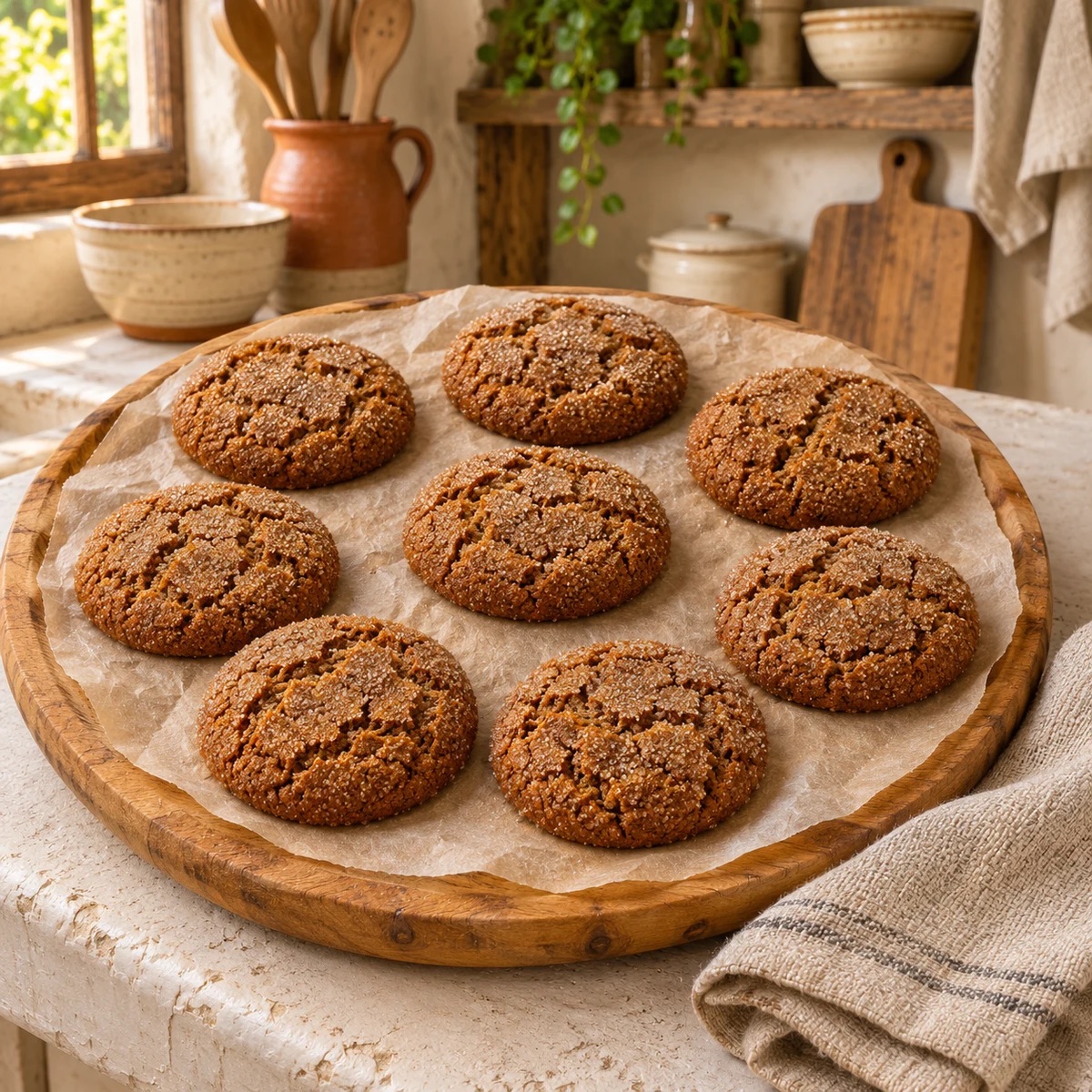
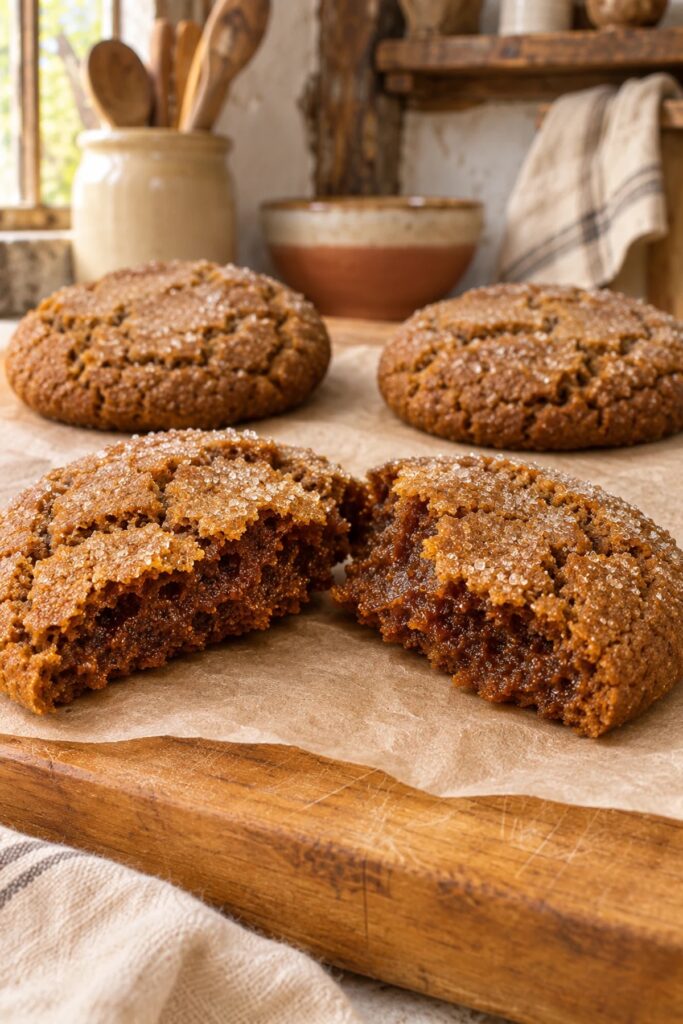
A coat of sugar cracks open across the tops of ginger molasses cookies as they bake, leaving a web of sparkling lines over dark, soft, chewy centers warm with ginger, cinnamon and cloves.
The dough for ginger molasses cookies is a creamed butter and brown sugar mix with a generous pour of unsulphured molasses and a full 2 teaspoons of baking soda. Molasses gives the deep color and that slightly smoky sweetness, and the soda reacts with it so the cookies puff, spread and split.
Ginger molasses cookies start soft and sticky, so the dough rests in the refrigerator for an hour before you scoop it. Then each ball gets rolled in sugar and baked only until the edges set, while the middle still looks a little underdone.
The recipe makes 24 cookies about 2¾ inches (7 cm) wide. They hold their chew for days, which makes them a good choice for cookie tins, trays and anything you need to bake ahead.
Why You’ll Love These Ginger Molasses Cookies
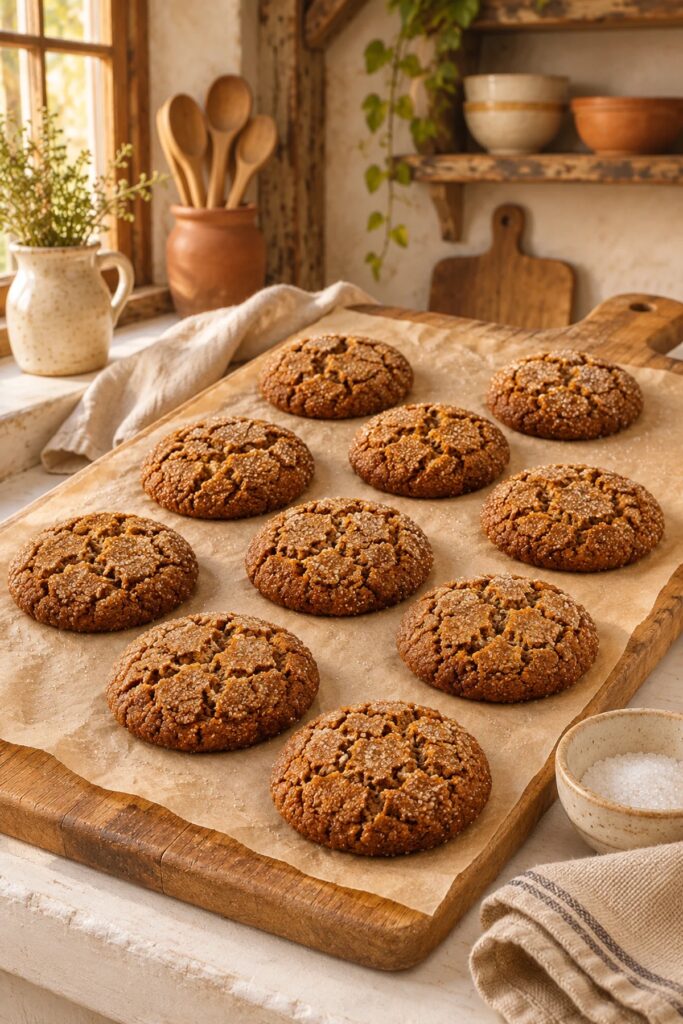
Chewy all the way through. Brown sugar, molasses and a short bake keep the centers soft and bendy, with edges that are only just set. If you like chewy ginger cookies more than crisp gingersnaps, this is the texture you’re after.
Crackled, sparkling tops. The sugar coat and the baking soda work together, so every cookie comes out with a crinkled top that glitters on the tray.
Warm, balanced spice. Ginger leads, cinnamon rounds it out, and a small pinch of cloves adds depth without tasting medicinal.
Easy to plan around. The dough keeps in the refrigerator for a few days and freezes well, so you can bake a fresh sheet of ginger molasses cookies whenever you need one.
Perfect For
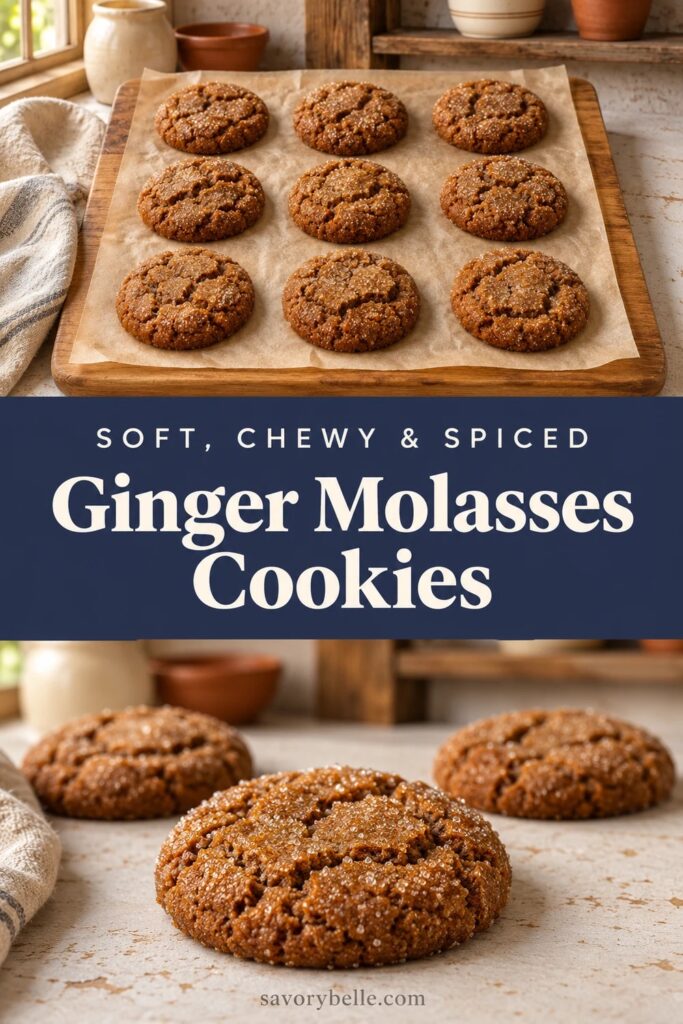
Ginger molasses cookies are a natural fit for cookie trays, gift tins and cookie exchanges, since they travel well and stay soft for days. They’re just as welcome in a lunchbox or on a small plate next to a cup of coffee or a glass of cold milk.
In December, they sit happily beside other spiced and sugar-rolled favorites. For more ideas for the season, browse my holiday recipes or the list of best Christmas cookies for the rest of the tray.
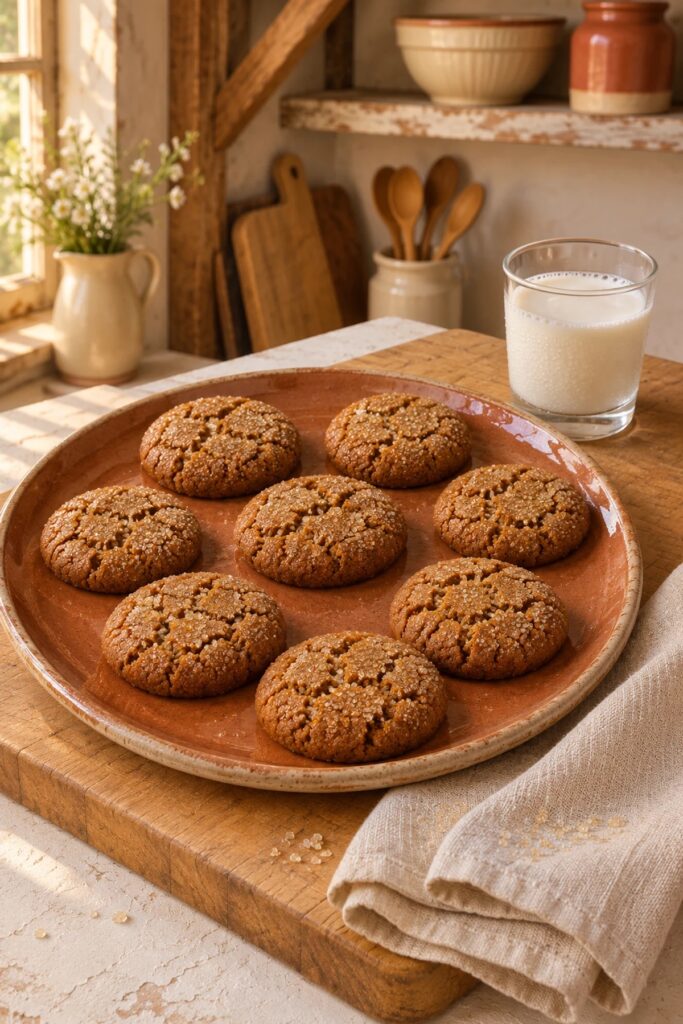
Ginger Molasses Cookies at a Glance
| Flavor | Deep molasses and brown sugar with ginger, cinnamon and a hint of cloves |
| Texture | Soft and chewy in the center, lightly set at the edges, with a crunchy, crackled sugar crust |
| Difficulty | Easy |
| Prep Time | 25 minutes |
| Chill Time | 1 hour (or up to 3 days) |
| Bake Time | 24 minutes (two sheets, 10 to 12 minutes each) |
| Total Time | 1 hour 49 minutes, plus cooling |
| Servings | 24 cookies, about 2¾ inches (7 cm) wide |
| Oven | 350°F (175°C) |
| Cuisine | American |
| Best For | Cookie trays, gift tins, cookie exchanges and lunchboxes |
Before You Start
Ginger molasses cookies come from a simple dough, but a few details decide whether they turn out thick and crackled or thin and flat.
Plan for the chill. Right after mixing, the dough is soft and sticky, almost like thick frosting. An hour in the refrigerator firms the butter so you can roll neat balls and the cookies don’t spread too far.
Measure the flour carefully. Weigh 281 g if you can. If you use cups, spoon the flour into the cup and level it without packing, since extra flour makes these cookies dry and keeps the tops from cracking.
Buy the right molasses. Look for unsulphured molasses labeled “original,” “mild” or “full flavor.” Blackstrap molasses is a different product, and it makes the cookies bitter.
Bake one sheet at a time. A single sheet on the center rack gets even heat, so the whole batch browns and cracks the same way. The second sheet waits in the refrigerator.
Pull them early. Take the cookies out when the edges look set but the centers still look soft and slightly underbaked. They firm up on the hot sheet over the next 5 minutes.
Skip tasting the raw dough. It’s tempting with a dough this dark and spicy, but raw dough contains raw eggs and flour, two ingredients that can cause food poisoning if eaten unbaked. Keep it in the refrigerator until it goes into the oven.
What Makes These Ginger Molasses Cookies Work
Molasses and Baking Soda
Molasses and brown sugar are slightly acidic, and baking soda reacts with that acid to release gas as the cookies heat. The dough puffs, then settles and spreads, which is what splits the sugar coat into cracks and gives the cookies their deep brown color.
Brown Sugar and Creamed Butter
Brown sugar and molasses both hold on to moisture, so ginger molasses cookies stay soft and chewy in the center for days. Butter creamed for just 2 minutes adds flavor and a little lift without making the cookies cakey.
A One-Hour Chill
Cold butter melts more slowly in the oven, so chilled dough spreads less and bakes into thicker cookies with chewy middles. The rest also gives the flour time to absorb moisture, which makes the dough far easier to roll.
The Sugar Coat
Rolling each ball in sugar gives the outside a thin, sweet crust. As the cookie puffs and spreads, that crust breaks into the crackled pattern ginger molasses cookies are known for.
How They Differ from Gingerbread Cookies
The spices overlap, but these are a different cookie from rolled gingerbread cookies. Gingerbread dough is stiff enough to roll out and cut into people and stars, and it bakes into firm, flat shapes that hold icing.
Ginger molasses cookies are scooped, not rolled. The dough is softer, with more butter and sugar for its flour, so the cookies spread into chewy rounds with crackled tops. If you like the sugar-rolled style of snickerdoodles, these are their darker, spicier cousin.
Ingredient Notes and Substitutions
Everything for ginger molasses cookies comes from the baking aisle of a regular grocery store. Here’s what each ingredient does and which swaps work.
Butter. Unsalted butter gives the best flavor and lets you control the salt; a stick of homemade butter works too. If you only have salted butter, cut the added salt to a pinch.
Soften the butter until it dents easily but still feels cool. Melted butter makes a thinner, greasier dough that spreads into flat cookies, even after chilling.
Brown and white sugar. Brown sugar keeps the cookies soft and adds a caramel note, while granulated sugar helps the edges set and the tops crack. Light or dark brown sugar both work; dark gives a slightly deeper color and flavor.
Molasses. Use unsulphured molasses, the kind sold as “original,” “mild” or “full flavor.” Mild molasses tastes sweeter and lighter, and full-flavor or “robust” molasses makes darker, bolder molasses cookies.
Don’t use blackstrap molasses: most of its sugar has been boiled out, so it tastes strong and bitter. Pancake syrup and honey aren’t substitutes either, since they lack the deep, slightly bitter flavor of molasses, and the cookies come out paler, sweeter and plainer.
Spices. Ground ginger leads the flavor, and cinnamon softens it. Measure the cloves carefully, because a little goes a long way and too much makes the cookies taste bitter.
Flour. All-purpose flour gives the right balance of chew and tenderness. Bread flour makes the cookies tougher, and cake flour makes them too soft to hold their shape.
Baking soda. Two teaspoons sounds like a lot, but the acidic molasses needs it for spread and cracks. Use fresh soda, since an old box gives you puffy, pale cookies with smooth tops.
Egg. One large egg binds the dough and adds richness. An extra yolk isn’t needed here, since the molasses and brown sugar already keep the centers chewy.
Sugar for rolling. Granulated sugar gives a fine, even, sparkly coat. Turbinado sugar has bigger, golden crystals that add more crunch and a rustic look.
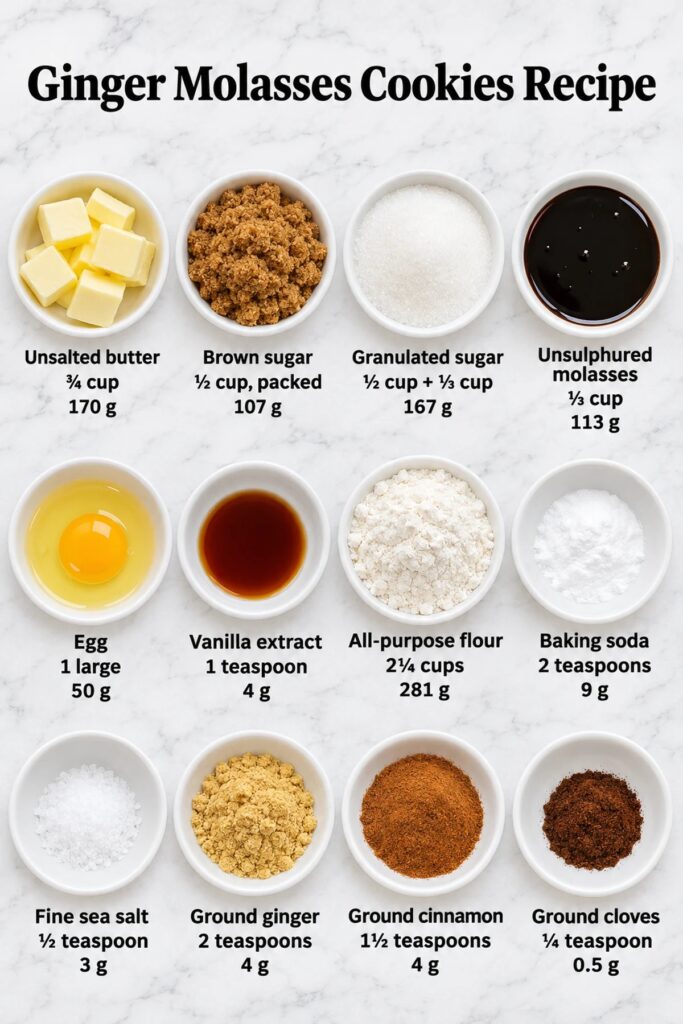
Ingredients for Ginger Molasses Cookies
These amounts make 24 ginger molasses cookies, each from about 35 g of dough, a ball about 1½ inches (4 cm) wide.
For the Cookies
- ¾ cup (170 g) unsalted butter, softened
- ½ cup (107 g) packed brown sugar, light or dark
- ½ cup (100 g) granulated sugar
- ⅓ cup (113 g) unsulphured molasses (not blackstrap)
- 1 large egg (50 g), at room temperature
- 1 teaspoon (4 g) pure vanilla extract
- 2¼ cups (281 g) all-purpose flour
- 2 teaspoons (9 g) baking soda
- ½ teaspoon (3 g) fine sea salt
- 2 teaspoons (4 g) ground ginger
- 1½ teaspoons (4 g) ground cinnamon
- ¼ teaspoon (0.5 g) ground cloves
For Rolling
- ⅓ cup (67 g) granulated sugar or turbinado sugar
Kitchen Equipment Needed
• Stand mixer with a paddle, or a hand mixer – creams the butter and sugars
• Large and medium mixing bowls – hold the dough and the dry ingredients
• Whisk – combines the flour, baking soda, salt and spices
• Rubber spatula – scrapes the sticky dough from the bowl
• Kitchen scale – weighs the flour, molasses and dough balls
• Liquid measuring cup, lightly greased – measures the molasses so it slides right out
• Medium cookie scoop (about 2 tablespoons) – portions the dough evenly
• Small shallow bowl – holds the sugar for rolling
• Two rimmed baking sheets lined with parchment paper – bake the cookies one sheet at a time
• Thin metal spatula and wire cooling rack – move and cool the cookies
How to Make Ginger Molasses Cookies
Here’s the full method for ginger molasses cookies, from the mixing bowl to the cooling rack. Each step ends with what you should see, so you can check you’re on track before moving on.
Step 1: Whisk the Dry Ingredients
In a medium bowl, whisk the flour, baking soda, salt, ginger, cinnamon and cloves for about 30 seconds, so the soda and spices are spread evenly.
What you should see: An even, pale tan powder with no white lumps of baking soda and no dark streaks of spice.
Step 2: Cream the Butter and Sugars
In a large bowl, beat the softened butter, brown sugar and granulated sugar on medium speed for about 2 minutes, stopping once to scrape down the bowl.
What you should see: A smooth, creamy, light caramel-colored mixture with no streaks of plain butter.
Step 3: Beat in the Molasses, Egg and Vanilla
Add the molasses and beat until it disappears into the butter. Beat in the egg and vanilla for about 30 seconds, then scrape the bowl well, since molasses likes to sit at the bottom.
What you should see: A glossy, smooth, deep brown mixture with no dark streaks of molasses left at the bottom of the bowl.
Step 4: Mix in the Dry Ingredients
Add the flour mixture in two parts and mix on low speed just until no dry flour remains. Stop as soon as the last streak disappears.
What you should see: A thick, soft, glossy dark brown dough that sticks to the spatula and holds soft folds, a bit like thick frosting.
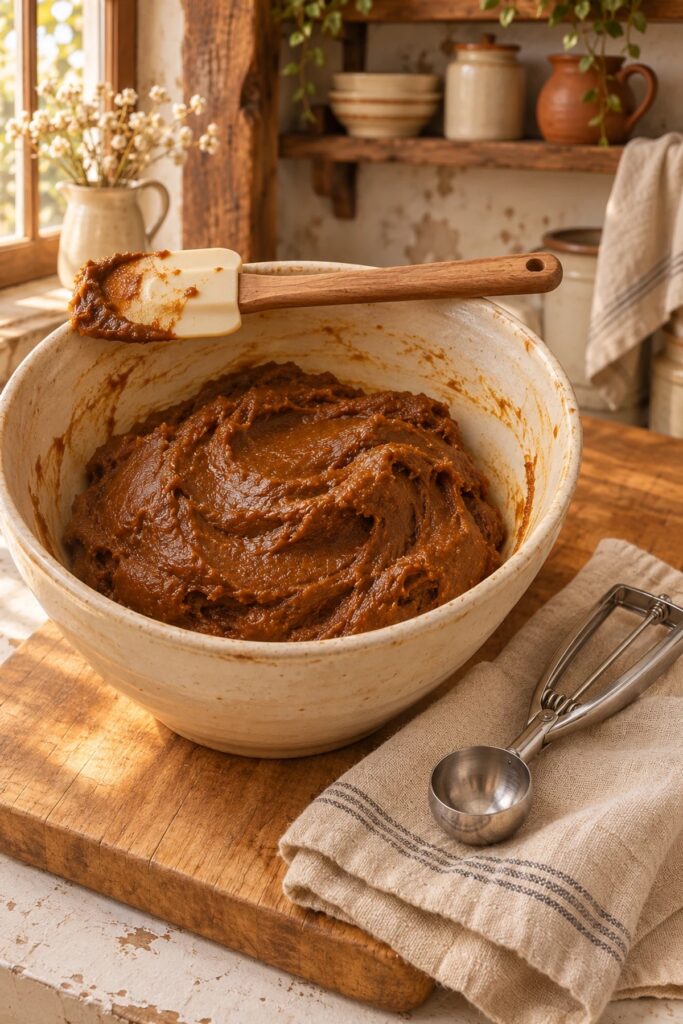
Step 5: Chill the Dough
Cover the bowl and refrigerate the dough for 1 hour. If it chills longer than 2 hours, let it sit on the counter for 15 to 20 minutes so it’s soft enough to scoop.
What you should see: A firm, cool dough that holds a scoop mark and only feels slightly tacky when you touch it.
Step 6: Heat the Oven and Set Up
About 20 minutes before the chill is up, heat the oven to 350°F (175°C) with a rack in the center. Line two rimmed baking sheets with parchment and pour the sugar for rolling into a small, shallow bowl.
What you should see: A fully heated oven, two lined sheets and an even layer of sugar in the bowl, ready next to the dough.
Step 7: Scoop and Roll in Sugar
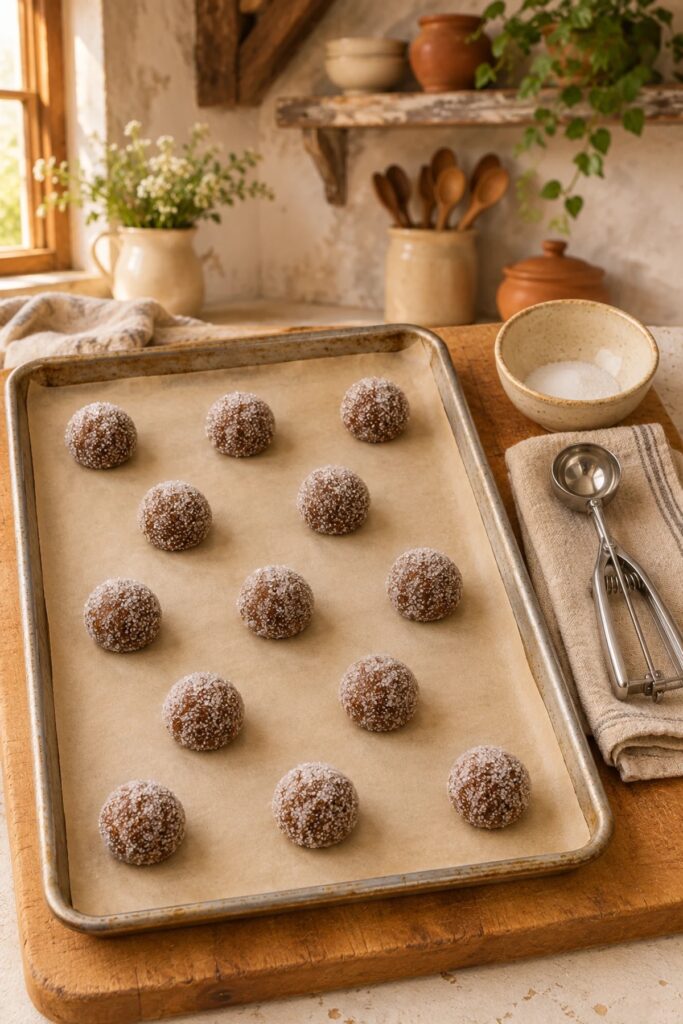
Scoop the dough into 24 balls of about 35 g each, a level 2-tablespoon scoop, and roll each one between your palms until smooth. Roll them in the sugar until fully coated and place 12 on each sheet in staggered rows, about 2½ inches (6 cm) apart. Slide the second sheet into the refrigerator.
What you should see: Twelve round, dark brown balls about 1½ inches (4 cm) wide on each sheet, completely covered in sparkling sugar, with none touching.
Step 8: Bake One Sheet at a Time
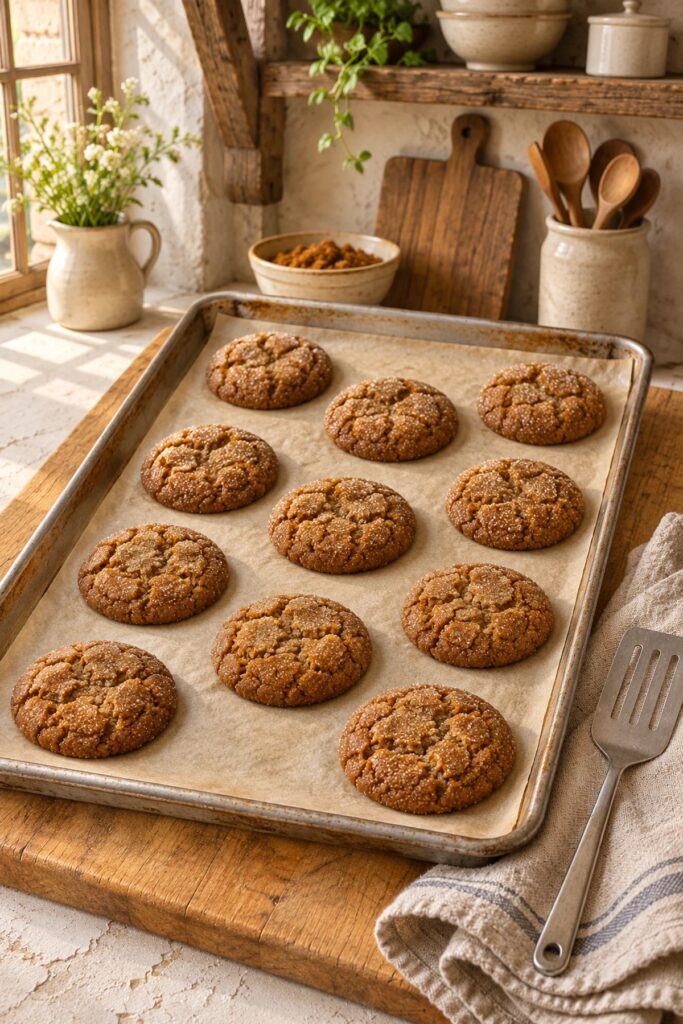
Bake the first sheet for 10 to 12 minutes, starting to check at 10 minutes. Ginger molasses cookies are ready when they have puffed and settled, the edges look set and the centers still look soft. Bake the second sheet the same way, straight from the refrigerator.
What you should see: Round, deep amber-brown cookies about 2¾ inches (7 cm) wide with crackled tops, pale cracks showing through the sugar and centers that look slightly underbaked.
Step 9: Cool on the Sheet, Then on a Rack
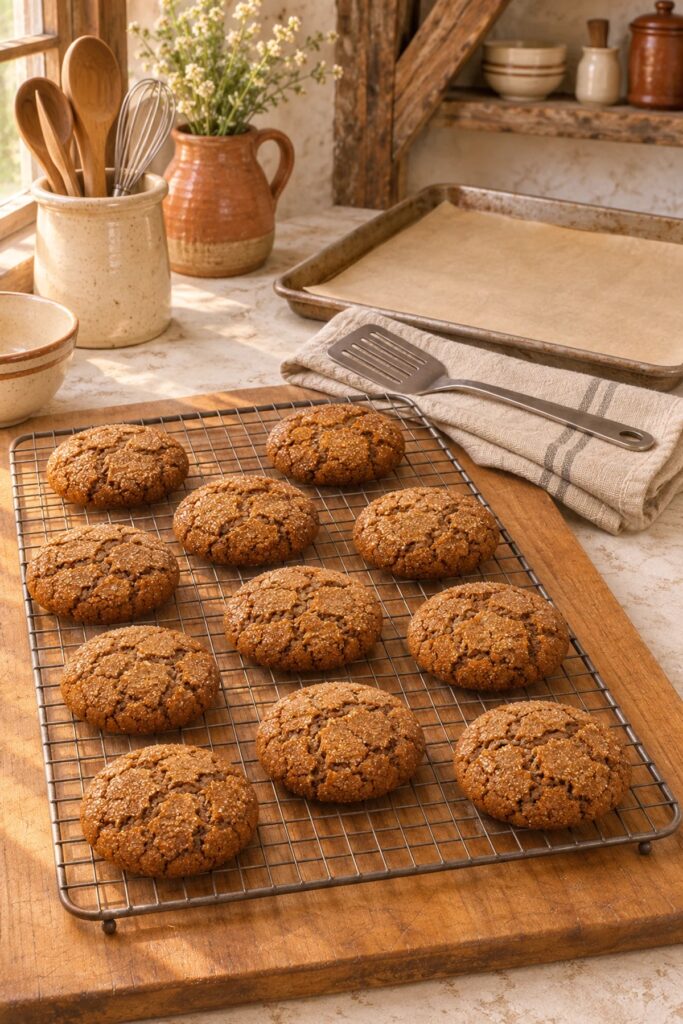
Let the cookies rest on the hot baking sheet for 5 minutes, so the centers finish setting. Then lift them onto a wire rack with a thin spatula and let them cool completely.
What you should see: Cookies that have settled slightly and look evenly crackled, with soft centers that hold together when you lift them.
How to Know They’re Done
Dark molasses dough hides browning, so check ginger molasses cookies by their shape and surface instead of color alone.
| What to Check | Ready When |
|---|---|
| Creamed butter and sugars | Smooth, creamy and light caramel in color |
| Finished dough | Soft, glossy, dark brown and slightly sticky |
| Chilled dough | Firm and cool, holds a scoop mark |
| Edges at 10 minutes | Set and no longer shiny |
| Tops | Puffed and settled, with cracks across the sugar |
| Centers | Still soft and slightly underbaked-looking |
| After 5 minutes on the sheet | Firm enough to lift with a spatula |
If the centers still look wet and glossy at 12 minutes, give them 1 more minute. If the edges turn dark brown before the centers set, your oven may run hot, so check the next sheet at 9 minutes.
Tips for the Best Ginger Molasses Cookies
Grease the measuring cup. A thin film of butter or a quick spray of oil inside the cup lets the molasses slide out, so you get all 113 g into the bowl.
Use a scoop and a scale. Balls of the same weight bake in the same time, so all your ginger molasses cookies come out equally chewy.
Roll twice for a thick crust. For an extra-sparkly top, roll each ball in sugar, let it sit a minute, then roll it once more.
Keep the second sheet cold. Dough that warms up on the counter spreads more, so leave it in the refrigerator until its turn.
Baking two sheets at once. If you’re short on time, bake both sheets on racks in the upper and lower thirds, swap and turn them halfway through, and add a minute if needed.
Common Mistakes and How to Fix Them
These are the problems that come up most often with ginger molasses cookies, each with a simple fix.
| Mistake | How to Fix It |
|---|---|
| Flat, greasy cookies They spread thin and look oily at the edges. | Use butter that dents easily but still feels cool, chill the dough for the full hour and bake on a cool, lined sheet. |
| Hard or dry cookies The centers are firm and crumbly instead of chewy. | Weigh the flour or spoon and level it, and take the cookies out while the centers still look soft. |
| No crackle on top The tops stay smooth and puffy. | Check that your baking soda is fresh and the sugar coat is complete; if the tops are still smooth at 10 minutes but the centers look soft, give the sheet 1 more minute. |
| Bitter or too-strong flavor A harsh, medicinal or burnt edge. | Use unsulphured molasses, not blackstrap, and measure the cloves as a level ¼ teaspoon. |
| Dough too sticky to roll It clings to your hands and the scoop. | Chill it longer, until it holds a scoop mark, and dip the scoop in the rolling sugar between portions. |
Variations
The dough for ginger molasses cookies is easy to adapt. Keep the chill and the sugar coat, and try one of these.
Candied Ginger
Fold ½ cup (85 g) of finely chopped crystallized ginger into the dough after the flour. The chewy bits add bright pops of heat, perfect if you like your ginger cookies with more bite.
Orange Zest
Beat 1 tablespoon (6 g) of finely grated orange zest into the butter and sugars. The citrus lifts the molasses and makes the spice taste fresher.
Vanilla Glaze
Whisk 1 cup (120 g) of powdered sugar with 5 to 6 teaspoons (25 to 30 ml) of milk and ½ teaspoon (2 g) of vanilla until thick but pourable. Drizzle it over the cooled cookies with a spoon and let it set for about 30 minutes before stacking or packing.
Ice Cream Sandwiches
Sandwich about ⅓ cup (about 45 g) of slightly softened vanilla ice cream between two cooled cookies, flat sides in, and press gently. One quart (about 520 g) of ice cream fills 12 sandwiches; freeze them on a lined tray for at least 1 hour, until firm.
Bakery-Style Big Cookies
Scoop the dough into 12 balls of about 70 g each, roll them in sugar and bake 6 per sheet for 14 to 16 minutes. They spread to about 4 inches (10 cm), so give them plenty of room.
Serving Suggestions
A glass of cold milk is the simplest partner. On a cold afternoon, ginger molasses cookies are just as good with a mug of warm apple cider or a homemade pumpkin spice latte.
On a holiday tray, set them beside pale, buttery shortbread cookies, glazed eggnog cookies and snow-dusted chocolate crinkle cookies. The dark, crackled rounds look striking next to lighter cookies.
For a red and ivory accent, add a few white chocolate cranberry cookies. Pack cookie tins in a single layer, or in layers with parchment between them, so the sugar crust doesn’t scuff.
Storage
Store cooled ginger molasses cookies in an airtight container at room temperature for up to 5 days. A tight lid is what keeps them chewy, since cookies left uncovered dry out quickly.
Baked cookies don’t need the refrigerator, and the cold can dry them out. If you glazed them, let the glaze set completely and keep parchment between the layers.
The mixed dough keeps, tightly covered, in the refrigerator for 2 to 3 days. Let it sit at room temperature for 15 to 20 minutes before scooping, then roll and bake as usual.
Freezing
Dough balls: Scoop the dough into balls without the sugar coat, freeze them on a lined sheet until firm, then move them to a labeled freezer bag. Unbaked cookie dough keeps in the freezer for up to three months, and baked cookies for up to two.
Thaw the balls in the refrigerator, not on the counter, then roll them in sugar and bake. You can also bake them straight from the freezer after rolling them in sugar, adding 1 to 2 minutes.
Baked cookies: Let ginger molasses cookies cool completely, then freeze them in an airtight container with parchment between the layers for up to 2 months. Thaw them in the closed container at room temperature; freeze glazed cookies plain and glaze after thawing.
Frequently Asked Questions
Can I use blackstrap molasses in ginger molasses cookies?
No. Blackstrap is the last, darkest boil of the cane, with much of its sugar removed, so it tastes strong and bitter and turns the cookies harsh. Use unsulphured molasses labeled original, mild or full flavor; full flavor gives a darker, bolder cookie.
Why are my ginger molasses cookies flat?
The usual causes are butter that was too soft or melted, dough that wasn’t chilled long enough or flour that was measured too lightly. A warm baking sheet also makes the dough spread before it sets, so always start with a cool, lined sheet.
Why don’t my cookies have crinkly tops?
Old baking soda, too much flour and a thin sugar coat are the usual reasons. Use fresh soda, measure the flour carefully and coat each ball completely; if the tops are still smooth at 10 minutes but the centers look soft, give the sheet 1 more minute.
Can I skip chilling the dough?
It’s worth waiting at least 30 minutes, though the full hour is better. Without a chill, the dough is too sticky to roll neatly and ginger molasses cookies spread thinner, with crisper edges and less chew.
Can I use shortening or vegan butter?
Yes, with honest trade-offs. Vegetable shortening, used 1 for 1, makes thicker, puffier cookies with less buttery flavor, while vegan butter sticks work the same way as butter but can spread a little more, so chill the dough well.
How do I keep them soft?
Bake ginger molasses cookies only until the edges are set and the centers still look underdone, then store them in a tightly closed container as soon as they’re cool. Brown sugar and molasses keep the centers moist for days.
Can I freeze the dough?
Yes. Freeze the scooped balls without the sugar for up to 3 months, then thaw them in the refrigerator, roll them in sugar and bake. You can also bake them from frozen, adding 1 to 2 minutes.
Final Thoughts
Unsulphured molasses with plenty of baking soda, a short chill and a full coat of sugar are what give these cookies their crackled tops and chewy middles. Pulling them while the centers still look soft keeps them that way for days.
Keep a bag of frozen dough balls ready and you can have a warm sheet of ginger molasses cookies out of the oven in well under an hour. Leave them plain, or try them with candied ginger, orange zest or a drizzle of glaze.
When your first sheet came out, did the tops split into wide cracks or a fine web, and did you roll yours in fine sugar or turbinado? Share in the comments how many minutes your oven needed and which spice you’d turn up in the next batch.
If you try this recipe, please leave a star rating along with your comment below. It takes a few seconds and helps other readers find the recipe.
Ginger Molasses Cookies
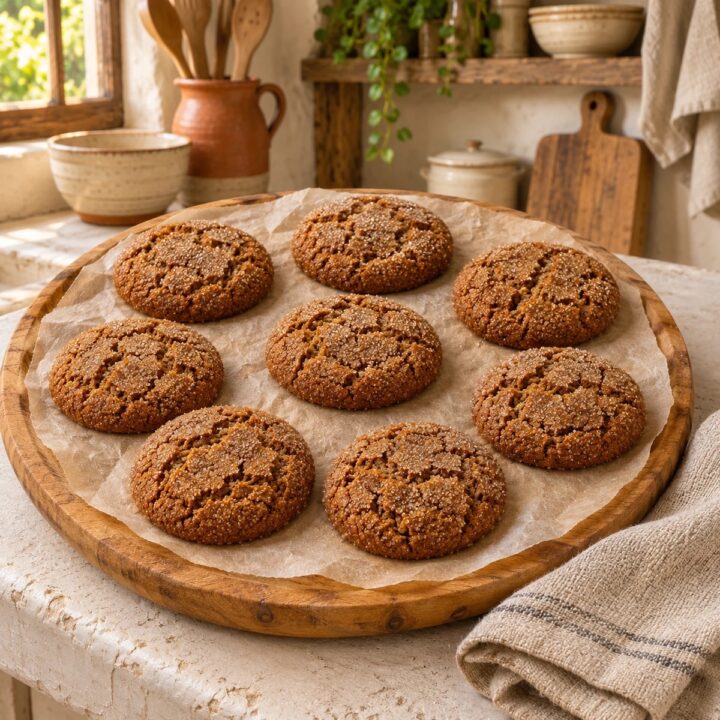
These ginger molasses cookies are soft and chewy, with crackled sugar tops and a deep molasses flavor warmed by ginger, cinnamon and cloves. Butter, brown sugar, unsulphured molasses and one egg make a soft dough that chills for an hour before it is scooped and rolled in sugar. Baked at 350°F for 10 to 12 minutes per sheet, this batch makes 24 ginger molasses cookies for cookie trays, gift tins and cookie exchanges.
Ingredients
For the Cookies
- ¾ cup (170 g) unsalted butter, softened
- ½ cup (107 g) packed brown sugar, light or dark
- ½ cup (100 g) granulated sugar
- ⅓ cup (113 g) unsulphured molasses (not blackstrap)
- 1 large egg (50 g), at room temperature
- 1 teaspoon (4 g) pure vanilla extract
- 2¼ cups (281 g) all-purpose flour
- 2 teaspoons (9 g) baking soda
- ½ teaspoon (3 g) fine sea salt
- 2 teaspoons (4 g) ground ginger
- 1½ teaspoons (4 g) ground cinnamon
- ¼ teaspoon (0.5 g) ground cloves
For Rolling
- ⅓ cup (67 g) granulated sugar or turbinado sugar
Instructions
- Whisk 2¼ cups (281 g) all-purpose flour, 2 teaspoons (9 g) baking soda, ½ teaspoon (3 g) fine sea salt, 2 teaspoons (4 g) ground ginger, 1½ teaspoons (4 g) ground cinnamon and ¼ teaspoon (0.5 g) ground cloves in a medium bowl.
- In a large bowl, beat ¾ cup (170 g) softened butter, ½ cup (107 g) packed brown sugar and ½ cup (100 g) granulated sugar on medium speed for about 2 minutes, until creamy.
- Beat in ⅓ cup (113 g) unsulphured molasses, then 1 egg and 1 teaspoon (4 g) vanilla. Scrape the bowl well.
- Add the flour mixture in two parts and mix on low just until no dry flour remains. The dough will be soft and sticky.
- Cover and refrigerate the dough for 1 hour (if chilled longer than 2 hours, let it stand 15 to 20 minutes before scooping).
- About 20 minutes before the end, heat the oven to 350°F (175°C). Line two rimmed baking sheets with parchment and put ⅓ cup (67 g) sugar in a shallow bowl.
- Scoop 24 balls of about 35 g (a level 2-tablespoon scoop), roll smooth, coat in sugar and place 12 on each sheet in staggered rows, 2½ inches apart. Refrigerate the second sheet.
- Bake one sheet at a time for 10 to 12 minutes, until the edges are set and the tops crackled but the centers still look soft.
- Cool on the sheet for 5 minutes, then move to a wire rack to cool completely.
Notes
- Molasses: Use unsulphured molasses (original, mild or full flavor). Do not use blackstrap, which makes the cookies bitter.
- Flour: Weigh 281 g, or spoon the flour into the cup and level it. Too much flour makes dry cookies without cracks.
- Chill: Chill the dough for 1 hour (at least 30 minutes); it keeps the cookies thick and chewy and makes rolling easy.
- No crackle: Use fresh baking soda and coat the balls completely; if the tops are still smooth at 10 minutes but the centers look soft, bake 1 minute more.
- Doneness: Take the cookies out while the centers still look soft; they finish setting on the hot sheet.
- Make ahead: Refrigerate the dough for 2 to 3 days, or freeze uncoated dough balls for up to 3 months; thaw in the refrigerator, roll in sugar and bake (or bake from frozen, adding 1 to 2 minutes).
- Storage: Store airtight at room temperature for up to 5 days, or freeze baked cookies for up to 2 months.
- Nutrition: Values are per cookie (1 of 24), including the full dough and about 65% of the rolling sugar (about 44 g of the 67 g, the part that sticks to the cookies), computed with light brown sugar and unsulphured molasses; optional variations are not included.
Nutrition Information:
Yield: 24 Serving Size: 1 cookieAmount Per Serving: Calories: 151Total Fat: 6gSaturated Fat: 4gCholesterol: 23mgSodium: 158mgCarbohydrates: 23gFiber: 0gSugar: 14gProtein: 2g