
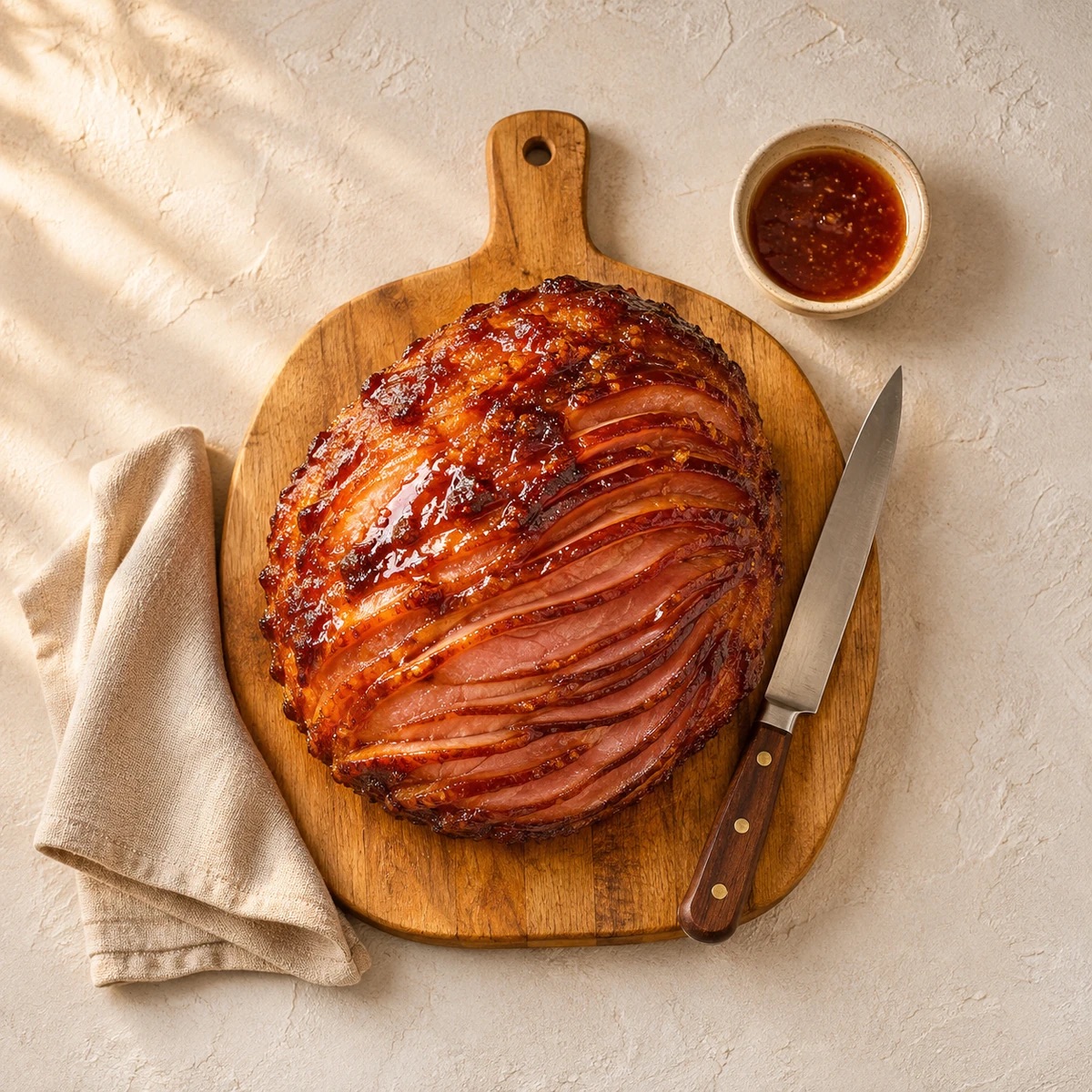
Glazed Ham
Few dishes make a holiday table look as finished as a glazed ham, with its dark, glossy crust and neat, juicy slices.
This version starts with a fully cooked, bone-in ham, so you are only warming it through and building the glaze. Brown sugar and honey bring the sweetness, Dijon mustard adds a savory bite, and a little pineapple juice and apple cider vinegar keep the glaze tangy instead of cloying.
The oven does most of the work. The ham heats slowly under foil so it stays moist, then a short, hot bake caramelizes the glaze into a sticky, shiny crust. The glaze itself is whisked in one saucepan in about 5 minutes while the ham heats.
It serves 16 with leftovers, so it fits Christmas dinner, Thanksgiving and Easter, and the extra slices make some of the best sandwiches of the season.

Why You’ll Love This Glazed Ham
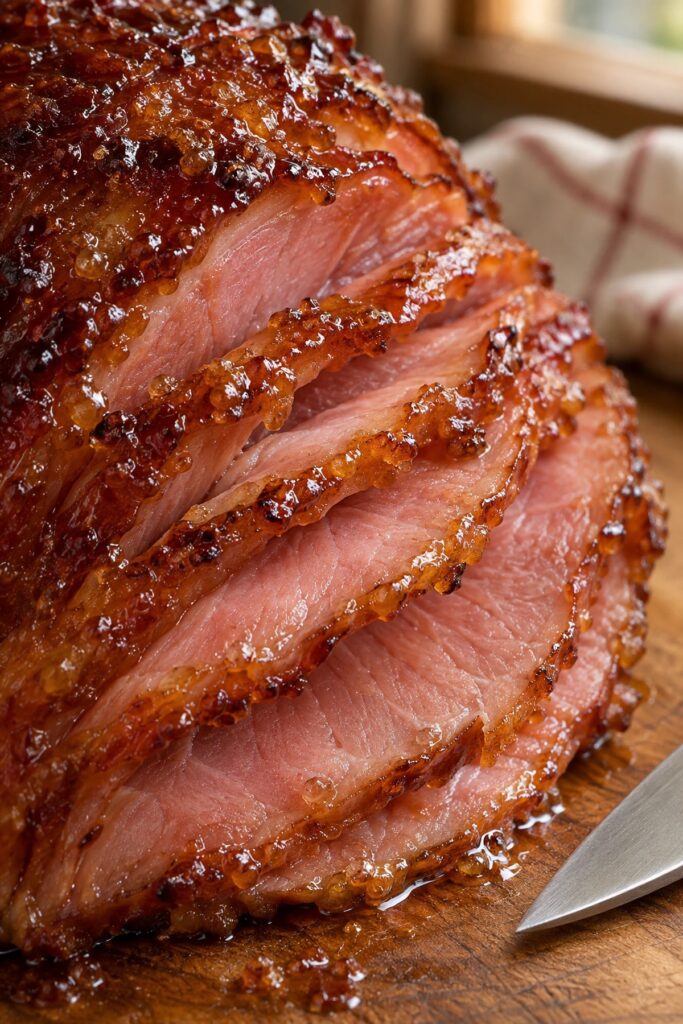
A sticky, caramelized crust. The brown sugar and honey glaze bakes into a dark, glossy coating that clings to every slice.
Juicy, tender meat. Heating the ham under foil with water in the pan keeps the slices moist instead of dry.
Simple ingredients. The glaze uses five pantry staples, and the rest is a ham and a cup of water.
Plenty for a crowd. One 9-pound ham feeds 16 people and still leaves enough for leftovers.

Perfect For
This glazed ham is made for the big meals of the year. It anchors a Christmas dinner, sits beside the turkey at Thanksgiving and makes an easy Easter centerpiece, and it carves quickly when the table is waiting.
It is also a smart choice for a busy host. The ham needs no seasoning or searing, the glaze comes together on the stovetop, and the oven works while you finish the sides, like a pan of sweet potato casserole.

Glazed Ham at a Glance
| Flavor | Sweet, savory and tangy, with a salty ham flavor |
| Texture | Juicy, tender slices with a sticky, caramelized crust |
| Difficulty | Easy |
| Prep Time | 15 minutes |
| Cook Time | About 2 hours (heating and glazing) |
| Resting Time | 15 minutes |
| Total Time | About 2 hours 30 minutes |
| Servings | 16 |
| Method | Baking |
| Cuisine | American |
| Best For | Christmas dinner, Thanksgiving, Easter and holiday buffets |
Before You Start
Check the label. Buy a ham that says “fully cooked.” A spiral-cut, bone-in ham is easiest, since the slices are already cut and the glaze runs between them.
Use an instant-read thermometer. Ham sizes and ovens vary, and a thermometer is the surest way to know when the ham is hot and when it is time to glaze.
Set up your pan. Use a roasting pan with a rack, if you have one, and keep heavy-duty foil on hand, since a tight cover traps the moisture the ham needs.
Let the ham sit while the oven heats. Take it out of the refrigerator and unwrap it as the oven comes to temperature, about 30 minutes, so it heats more evenly.
What Makes This Glazed Ham Work
Low, Slow Heat Under Foil
A fully cooked ham only needs to be warmed. Baking it at 325°F (160°C) under tight foil, with water in the pan, heats it gently without drying out the meat.
A Glaze with Sweet, Sharp and Tangy Notes
Brown sugar and honey make the glaze sweet and sticky, Dijon mustard adds a savory edge, and juice and vinegar balance the sugar. Without the tang, the glaze would taste flat and heavy.
Glazing at the End
Sugar burns quickly, so the glaze goes on only after the ham is almost hot. A final bake at 400°F (200°C) for 15 to 20 minutes caramelizes it without scorching.
Resting for Juicy Slices
A 15-minute rest lets the juices settle back into the meat. Slicing right away sends them onto the cutting board instead.
Ingredients for Glazed Ham
For the Ham
- 1 fully cooked, bone-in spiral-cut ham (9 pounds / 4 kg)
- 1 cup (240 ml) water, for the roasting pan
For the Glaze
- 1 cup (213 g) packed brown sugar
- ½ cup (170 g) honey
- ¼ cup (65 g) Dijon mustard
- ¼ cup (60 ml) pineapple juice or orange juice
- 2 tablespoons (30 ml) apple cider vinegar

Ingredient Notes and Substitutions
Ham: Look for a fully cooked, bone-in ham, and plan on a generous half pound of ham per person, which leaves enough for a second meal. A ham of 8 to 10 pounds works with the same amount of glaze, and a smaller or larger one only changes the heating time.
Brown sugar: Light or dark brown sugar both work. Dark brown sugar gives a deeper molasses flavor and a slightly darker crust.
Honey: Any mild honey works. Maple syrup is a good swap, as shown in the variations.
Dijon mustard: Dijon gives the glaze its savory bite. Skip yellow mustard, which is milder and more sour.
Juice: Pineapple juice is the classic pairing with ham. Orange juice works just as well and adds a little citrus.
Apple cider vinegar: The vinegar keeps the glaze from tasting too sweet. White wine vinegar is a fine substitute.
Kitchen Equipment Needed
• Large roasting pan with a rack
• Heavy-duty aluminum foil
• Medium saucepan
• Whisk
• Pastry brush or silicone brush
• Instant-read thermometer
• Carving knife and cutting board
• Measuring cups and spoons
How to Make Glazed Ham
Step 1: Heat the Oven and Prepare the Ham
Heat the oven to 325°F (160°C) and set a rack in the lower third. Unwrap the ham, discard any plastic cap on the bone and set aside any glaze packet, since this recipe does not use it. Place the ham cut-side down in the roasting pan and pour the water into the bottom of the pan.
Step 2: Cover the Ham
If your ham is not spiral-cut, score the surface in a diamond pattern about ¼ inch deep. Cover the pan tightly with foil, pressing the foil down around the edges.

Step 3: Heat the Ham Until Warm
Bake the ham for 10 to 12 minutes per pound, which is about 1 hour 30 minutes to 1 hour 45 minutes for a 9-pound spiral-cut ham. A whole or half ham that is not sliced takes 15 to 18 minutes per pound. The ham is ready for the glaze when the thermometer reads 120°F (49°C) in the thickest part, away from the bone.
Step 4: Make the Glaze
While the ham heats, whisk the brown sugar, honey, Dijon mustard, juice and vinegar in a medium saucepan. Bring it to a gentle simmer over medium heat, stirring until the sugar dissolves, and cook for 3 to 5 minutes, until it looks glossy and coats the back of a spoon. Pour about ¼ cup into a small bowl and set it aside for serving.

Step 5: Glaze the Ham
Take the ham out of the oven and raise the temperature to 400°F (200°C). Remove the foil, then brush half of the glaze over the ham, working it between the slices.

Step 6: Bake Until Caramelized
Return the ham to the oven, uncovered, and bake for 15 to 20 minutes. Brush on the remaining glaze after 8 to 10 minutes. The ham is done when the glaze is bubbly and dark golden brown and the thermometer reads 140°F (60°C).
Step 7: Rest and Carve
Tent the ham loosely with foil and let it rest for 15 minutes. Spoon the reserved glaze over the slices before serving, and carve along the slices or around the bone.
How to Know It’s Done
Use these checkpoints from the first step to the last.
| What to Check | Ready When |
|---|---|
| Ham before baking | Unwrapped and set cut-side down in the pan with 1 cup of water, tightly covered with foil |
| Ham before glazing | Hot under the foil, with 120°F (49°C) in the thickest part, away from the bone |
| Glaze in the saucepan | Glossy and slightly thickened, coating the back of a spoon |
| Ham in the final bake | Glaze bubbly and dark golden brown, with sticky, caramelized edges |
| Internal temperature | 140°F (60°C) in the thickest part for a ham packaged in a USDA-inspected plant |
| After resting | Juices settled, so the slices stay moist when carved |
The USDA says to reheat a fully cooked ham packaged in a USDA-inspected plant to 140°F, and to 165°F if the ham was repackaged elsewhere or if you are reheating leftovers. Check the label on your ham, and take the temperature in the thickest part, away from the bone.
Tips for the Best Glazed Ham
Keep the foil tight. A loose cover lets steam escape, and the ham dries out before it is warm. Press the foil around the rim of the pan.
Do not skip the water. A cup of water in the bottom of the pan creates steam under the foil, which helps the meat stay moist.
Glaze late. The sugar in the glaze burns if it bakes for hours, so brush it on only for the final 15 to 20 minutes.
Set aside glaze before you brush. Once a brush that has touched the ham goes back into the glaze, do not serve that glaze. Pour the serving portion into a clean bowl first.
Watch the last 10 minutes. Ovens vary, and caramelized sugar goes from dark golden to bitter quickly. Check at 10 minutes and tent with foil if the edges look very dark.
Rest before carving. Fifteen minutes under a loose foil tent keeps the slices juicy.
Common Mistakes and How to Fix Them
| Mistake | How to Fix It |
|---|---|
| Baking it uncovered from the start The surface dries out before the center is warm. | Cover the pan tightly with foil and add a cup of water for the first stage. |
| Glazing too early The sugar scorches during a long bake and turns bitter. | Brush on the glaze only for the last 15 to 20 minutes at 400°F. |
| Heating past 140°F Fully cooked ham dries out quickly once it is hotter than it needs to be. | Use an instant-read thermometer and take the ham out at 140°F. |
| Carving right away The juices run out onto the board and the slices turn dry. | Rest the ham for 15 minutes under a loose foil tent. |
| Buying a ham that is not fully cooked A raw or partly cooked ham needs a longer, different method. | Check the label for “fully cooked” and use the temperatures in this recipe. |
Variations
Bourbon Glazed Ham
Stir 2 tablespoons of bourbon into the glaze after it simmers, then cook for 1 more minute. The bourbon adds a warm, oaky note that suits a Christmas table.
Maple Glazed Ham
Replace the honey with ½ cup of pure maple syrup. The glaze turns out a little less sweet, with a deeper, toasty flavor.
Clove-Studded Ham
If your ham is not spiral-cut, press a whole clove into each point where the score lines cross, about 20 to 30 cloves. The cloves look traditional and perfume the meat. Remove them before eating.
Orange Glazed Ham
Use orange juice, and stir 1 tablespoon of fresh orange zest into the glaze at the end. The citrus brightens the sweetness and gives the crust a pretty color.
Serving Suggestions
Serve glazed ham with a holiday spread of sweet potato casserole, a creamy green bean casserole and a pan of cheesy hash brown casserole. For an easy side, a bubbling dish of mac and cheese is always welcome.
A bowl of tart cranberry sauce cuts through the sweetness of the glaze, and warm buttermilk biscuits turn the leftover slices into small ham sandwiches. A mug of spiced apple cider fits the menu too.
The next morning, tuck leftover slices into a breakfast sandwich with a fried egg and cheese.
Storage and Reheating
Refrigerate leftover ham within 2 hours of serving. Wrap it tightly or store it in an airtight container, and plan to eat it within 3 to 5 days.
To reheat slices, warm them in a skillet with a splash of water for a couple of minutes, or cover them with foil and heat them in a 325°F (160°C) oven until hot. Reheat leftovers to 165°F, as the USDA recommends.
Freezing
Wrap leftover ham well, in portions you can use at one time, and freeze it for 1 to 2 months for the best quality. Thaw it overnight in the refrigerator before you reheat it. Keep the bone in the freezer too, since it makes a flavorful base for soup.
Frequently Asked Questions
Do I need to score the ham?
Not if it is spiral-cut, since the slices are already cut. If your ham is not sliced, score the surface in a diamond pattern about ¼ inch deep so the glaze can seep in and the surface caramelizes more evenly.
How long do I bake a glazed ham per pound?
A spiral-cut ham needs about 10 to 12 minutes per pound at 325°F (160°C), covered, before the glaze goes on. A whole or half ham that is not sliced takes 15 to 18 minutes per pound. Use a thermometer rather than the clock, since ovens and hams vary.
Can I use a boneless ham?
Yes. Heat it covered to 120°F (49°C), then glaze it as written. Boneless hams usually heat a little faster, so start checking the temperature about 20 minutes earlier than you would with a bone-in ham.
How much ham do I need per person?
Plan on a generous half pound of bone-in ham per person. A 9-pound ham serves about 16, with leftovers for sandwiches the next day.
Can I make the glaze ahead?
Yes. Make it up to 3 days ahead, cool it and keep it covered in the refrigerator. Warm it gently on the stove until it loosens before you brush it on.
What should I do if the glaze starts to burn?
Tent the ham loosely with foil, and lower the oven to 375°F (190°C) if the edges are very dark. The final bake is meant to caramelize the sugar, not blacken it.
Can I freeze leftover glazed ham?
Yes. Wrap it tightly in portions and freeze it for 1 to 2 months for the best quality. Thaw it in the refrigerator overnight, then reheat it until it reaches 165°F.
Final Thoughts
This glazed ham proves that a holiday centerpiece does not have to be complicated. A fully cooked ham, a five-ingredient glaze and a short hot bake give you a sticky, glossy crust and tender, juicy slices for a whole table.
Heating the ham gently under foil, glazing only at the end and resting it before carving are the habits that make the difference. Once you know the method, you can swap in bourbon, maple or orange without changing a thing.
What did you do with the leftovers: sandwiches, biscuits or a pot of soup made with the bone? Tell me in the comments.
If you try this recipe, please leave a star rating along with your comment below. It takes a few seconds and helps other readers find the recipe.

Glazed Ham
This glazed ham is a juicy, fully cooked bone-in ham brushed with a sticky brown sugar, honey and Dijon glaze until the crust turns glossy and caramelized. You warm the ham gently under foil, whisk the glaze in one saucepan, then finish it in a hot oven for 15 to 20 minutes. Ready in about 2 hours 30 minutes, this glazed ham feeds a crowd and is made for Christmas dinner, Thanksgiving and Easter.
Ingredients
For the Ham
- 1 fully cooked, bone-in spiral-cut ham (9 pounds / 4 kg)
- 1 cup (240 ml) water, for the roasting pan
For the Glaze
- 1 cup (213 g) packed brown sugar
- ½ cup (170 g) honey
- ¼ cup (65 g) Dijon mustard
- ¼ cup (60 ml) pineapple juice or orange juice
- 2 tablespoons (30 ml) apple cider vinegar
Instructions
- Heat the oven to 325°F (160°C) and set a rack in the lower third. Unwrap the ham, discard any plastic cap on the bone and set aside any glaze packet. Place the ham cut-side down in a roasting pan and pour the water into the bottom of the pan.
- If the ham is not spiral-cut, score the surface in a diamond pattern about ¼ inch deep. Cover the pan tightly with foil.
- Bake for 10 to 12 minutes per pound, which is about 1 hour 30 minutes to 1 hour 45 minutes for a 9-pound spiral-cut ham (15 to 18 minutes per pound for an unsliced ham), until a thermometer reads 120°F (49°C) in the thickest part, away from the bone.
- While the ham heats, whisk the brown sugar, honey, Dijon mustard, juice and vinegar in a medium saucepan. Simmer over medium heat for 3 to 5 minutes, stirring, until the sugar dissolves and the glaze looks glossy. Pour about ¼ cup into a clean bowl and set it aside for serving.
- Take the ham out of the oven and raise the temperature to 400°F (200°C). Remove the foil and brush half of the glaze over the ham, working it between the slices.
- Return the ham to the oven, uncovered, and bake for 15 to 20 minutes, brushing with the remaining glaze after 8 to 10 minutes, until the glaze is bubbly and dark golden brown and the thermometer reads 140°F (60°C).
- Tent the ham loosely with foil and let it rest for 15 minutes. Spoon the reserved glaze over the slices and carve.
Notes
- Ham: Use a fully cooked, bone-in ham. A spiral-cut ham is the easiest to glaze and carve. Plan on a generous half pound per person.
- Temperature: Reheat a fully cooked ham packaged in a USDA-inspected plant to 140°F (60°C). If the ham was repackaged elsewhere, or for leftovers, the USDA recommends 165°F (74°C).
- Timing: A thermometer is more reliable than the clock, since hams and ovens vary. Start checking early.
- Glaze: Pour ¼ cup of glaze into a clean bowl before you start brushing, and serve that portion. The glaze can be made up to 3 days ahead and warmed gently before using.
- Burning: If the edges darken too quickly in the final bake, tent the ham loosely with foil and lower the oven to 375°F (190°C).
- Variations: Stir 2 tablespoons of bourbon into the glaze, replace the honey with ½ cup of maple syrup, press whole cloves into an unsliced ham, or use orange juice and 1 tablespoon of orange zest.
- Storage: Refrigerate leftovers within 2 hours and eat them within 3 to 5 days. Freeze wrapped portions for 1 to 2 months for the best quality.
- Nutrition: Values are estimates for 1 serving (1 of 16, about 6 ounces of ham with glaze), made with a ham with natural juices. Sodium varies by brand.
Nutrition Information:
Yield: 16 Serving Size: 1 serving (about 6 ounces of ham with glaze)Amount Per Serving: Calories: 298Total Fat: 9gSaturated Fat: 3gCholesterol: 98mgSodium: 1836mgCarbohydrates: 19gFiber: 0gSugar: 18gProtein: 34g


