
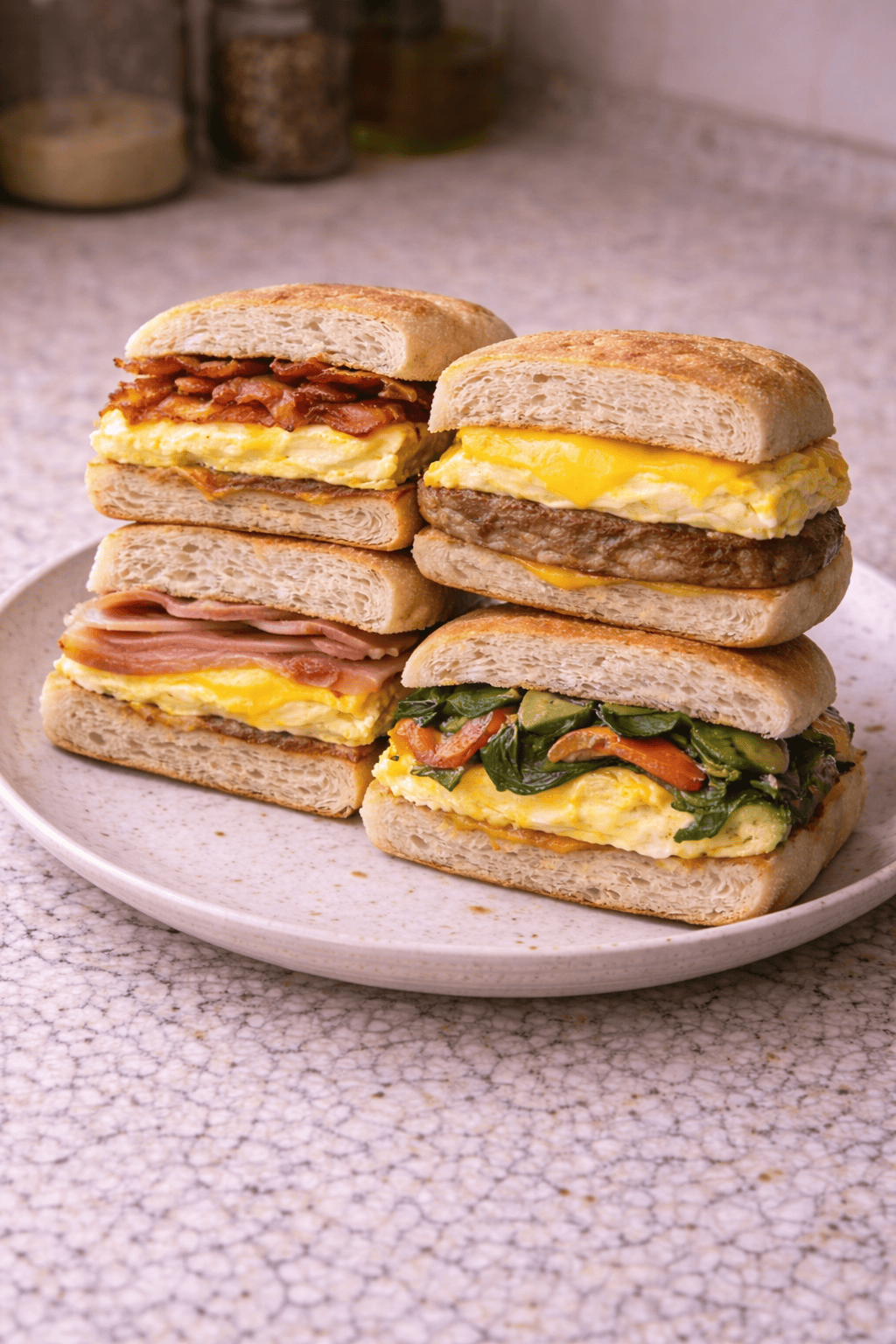
Breakfast Sandwich
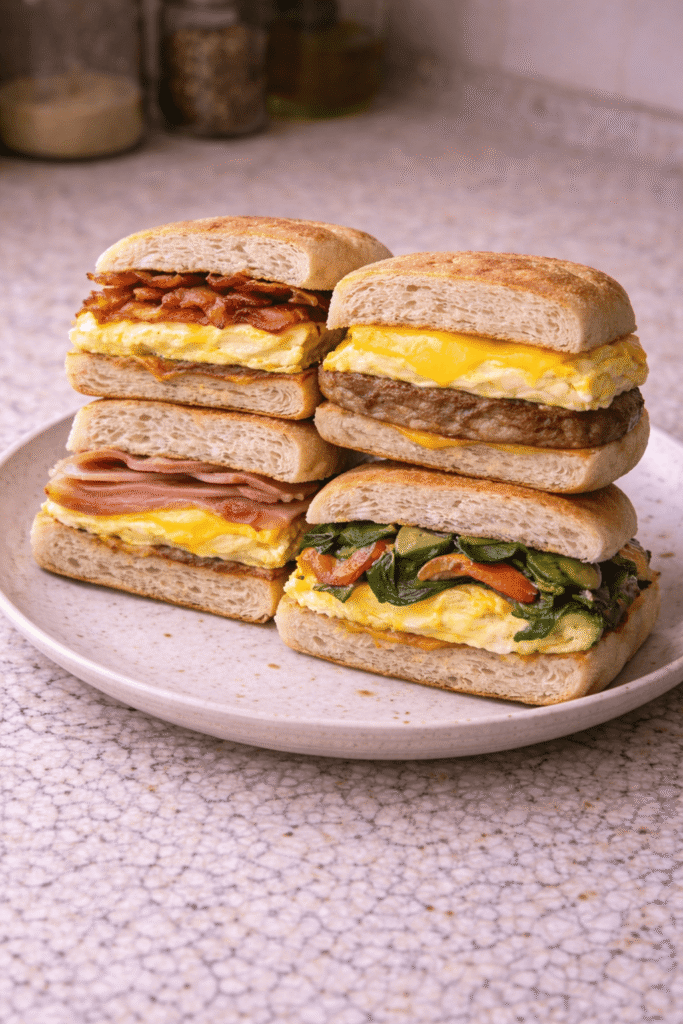
Breakfast sandwiches exist because they solve a very practical problem. They make it possible to eat a warm, filling breakfast without committing to a full sit-down meal. That practicality is why they appear everywhere, from coffee shops and diners to home kitchens.
I started making breakfast sandwiches regularly during a period when my mornings became unpredictable. Some days I had time to cook and eat slowly. Other days I did not. Skipping breakfast entirely usually led to feeling low on energy later, so I needed something reliable that could be made quickly and eaten just as easily.
At first, my breakfast sandwiches were inconsistent. Some were too messy, with eggs sliding out the sides. Others were too dry because the bread was toasted too much.
Over time, I paid attention to small details. Bread thickness. Egg doneness. How much filling actually fits between two slices without turning the sandwich into something awkward to eat.
I have made versions of this breakfast sandwich dozens of times over the years. Eventually, it became something I could make almost automatically. That familiarity is what makes it reliable. This is not a recipe I have to think about every time. It is a structure I understand.
What makes breakfast sandwiches especially useful is their flexibility. Once you understand the base, you can adjust the bread, the egg, and the fillings depending on what you have, how hungry you are, and how much time you have. That adaptability is why this recipe holds up over time.
Perfect For
- Busy mornings when sitting down for breakfast is not realistic
- Anyone who prefers savory breakfasts over sweet ones
- Home cooks who want flexibility instead of strict rules
- Breakfasts that need to be eaten on the go
Why You’ll Love This Recipe
- I make this exact sandwich when I know I will be eating breakfast in the car or at my desk and need something that stays together without dripping or falling apart
- The base works whether I am using sandwich bread, a roll, or whatever bread happens to be left in the kitchen
- Even when the egg cooks a little longer than planned or the bread is toasted unevenly, the sandwich still tastes good and feels satisfying
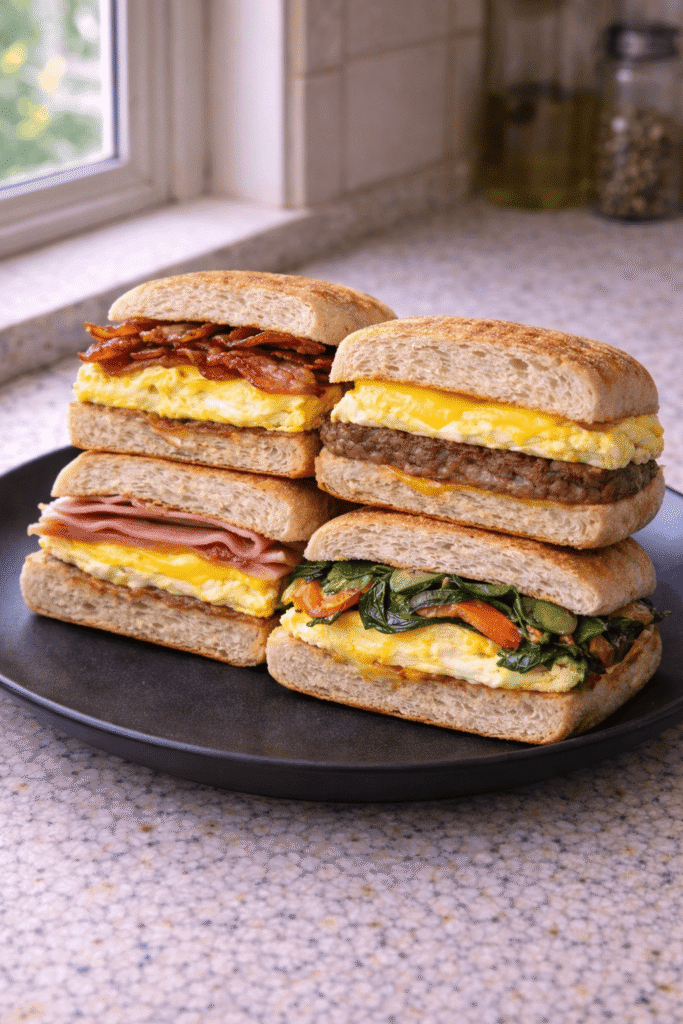
Recipe Overview
Prep Time: 10 minutes
Cook Time: 10 minutes
Total Time: About 20 minutes
Servings: 1 sandwich
Understanding the Breakfast Sandwich Base
Every breakfast sandwich that works well follows the same basic structure. Understanding that structure is what allows you to make good sandwiches consistently, even when you are not following a strict recipe.
The bread is the foundation. It needs to be sturdy enough to support the fillings without becoming soggy, but not so thick that it overwhelms everything else. Light to medium toasting usually provides enough structure without drying the bread out.
The egg is the anchor of the sandwich. It adds protein and helps bind the other ingredients together. Egg style matters more than most people expect.
A fried egg with a runny yolk creates a richer sandwich but can make it messier. A folded egg, cooked gently and layered flat, creates a cleaner sandwich that is easier to eat and easier to stack.
Fillings add flavor and texture, but they should support the egg rather than compete with it. When too many fillings are added, the sandwich becomes difficult to eat and loses its balance.
When these elements are in balance, the sandwich feels effortless.
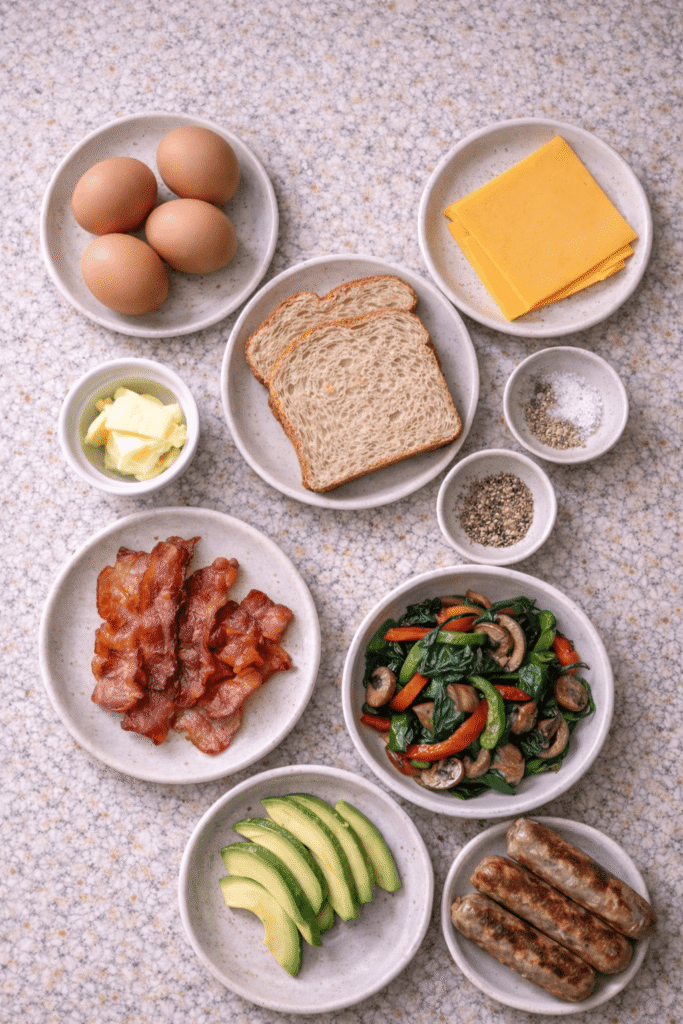
Base Ingredients
This is the starting point for every variation in this article.
- 2 slices bread or 1 roll, split in half
- 1 large egg
- Butter or oil, for cooking
- Salt, to taste
- Black pepper, to taste
Everything beyond this is optional.
Kitchen Equipment Needed
- Small skillet – Large enough to cook one egg evenly without spreading too thin.
- Spatula – Useful for flipping or folding the egg cleanly.
- Knife – For slicing bread or additional fillings.
- Toaster or skillet – To lightly toast the bread for structure.
Step-by-Step Instructions (Base Recipe)
Step 1: Toast the bread
Toast the bread lightly until it is warm and just crisp enough to support the fillings. Avoid heavy browning, which can dry out the sandwich and make it harder to eat.
Step 2: Cook the egg
Heat a small skillet over medium heat with butter or oil. Crack in the egg and cook it either fried or folded. Folded eggs are easier to stack and travel better. Fried eggs work best when you plan to eat immediately.

Step 3: Assemble the sandwich
Place the cooked egg on the bottom half of the bread. Add any additional fillings while the egg is still warm so everything settles together.
Step 4: Finish and serve
Top with the remaining bread, press gently, and serve right away.
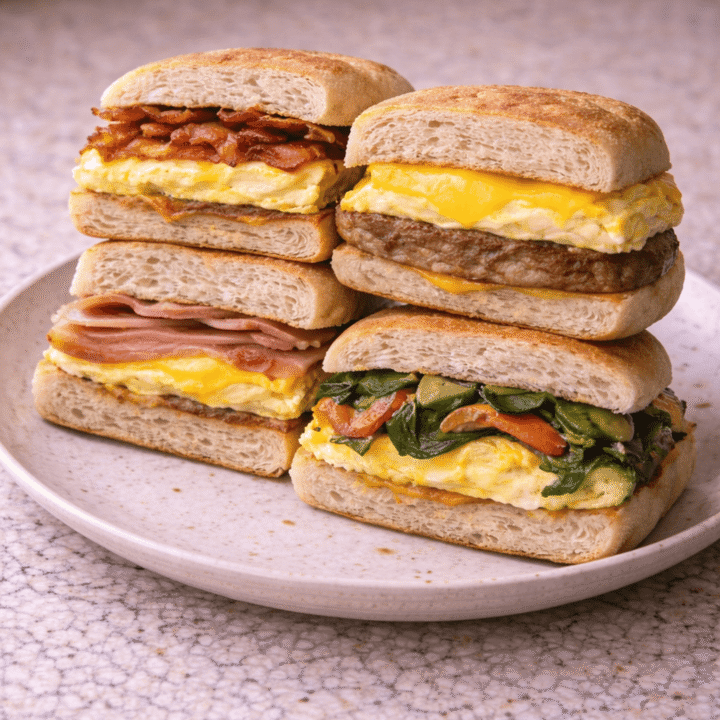
Breakfast Sandwich Variations
Each variation below starts with the same base recipe. The differences come from the fillings and how the sandwich feels once assembled.
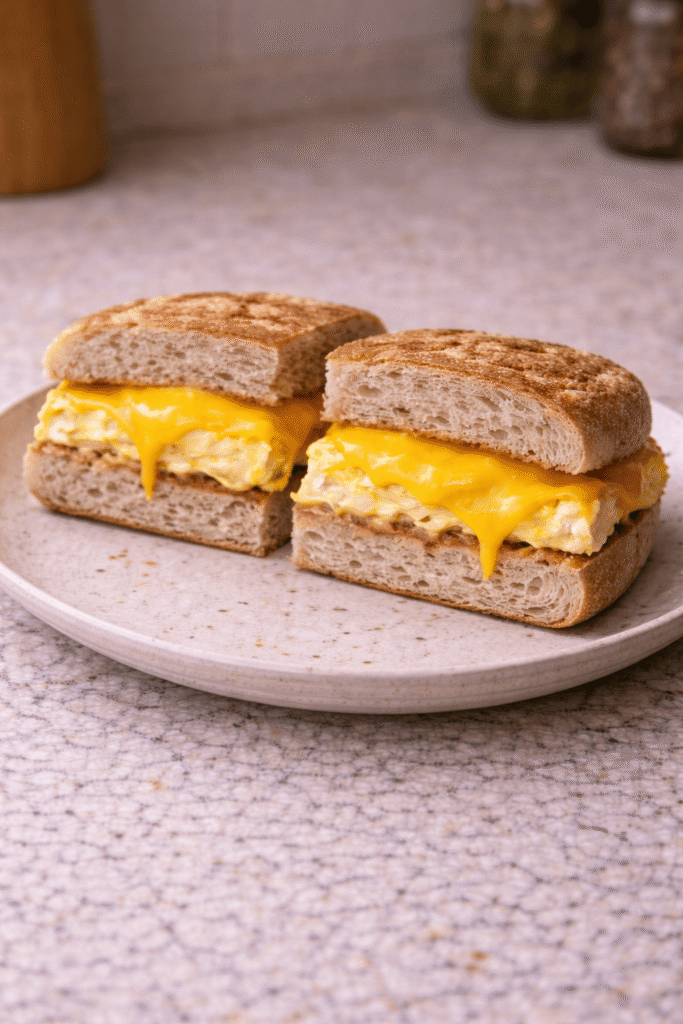
1. Classic Egg and Cheese Sandwich
Ingredients
- Base breakfast sandwich ingredients
- Cheese, sliced or shredded
This is the version I make most often because it is predictable and comforting. The cheese melts into the egg and helps hold everything together. It works with almost any type of bread and does not require extra planning.
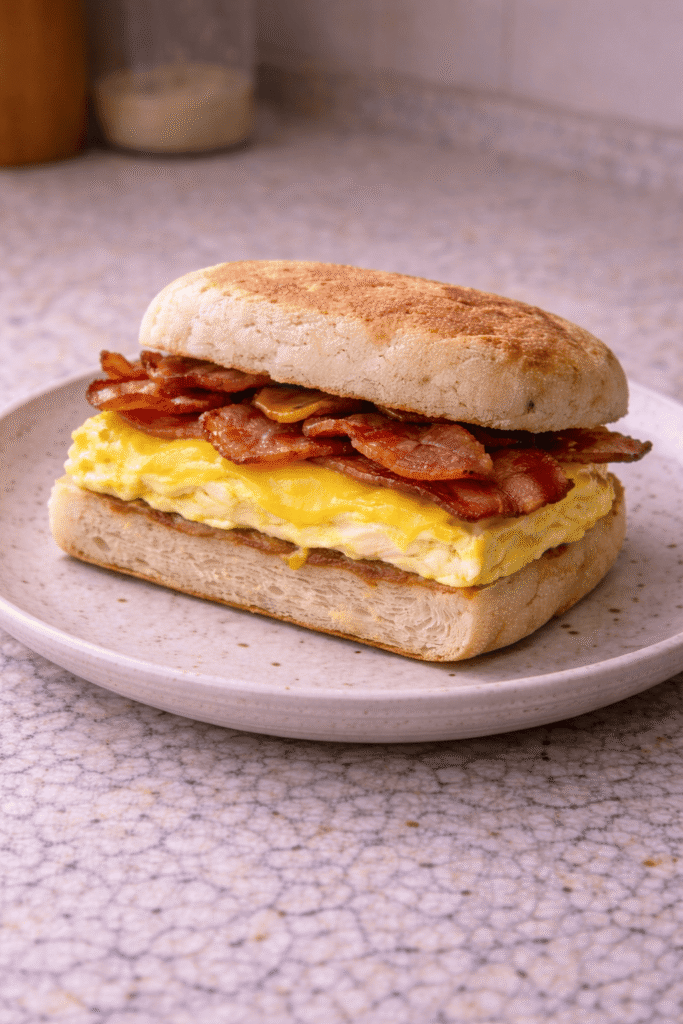
2. Bacon Egg Breakfast Sandwich
Ingredients
- Base breakfast sandwich ingredients
- Cooked bacon
This variation adds crispness and saltiness. I usually make it when I want something a little more filling. Keeping the bacon portion moderate prevents the sandwich from becoming greasy or overwhelming.
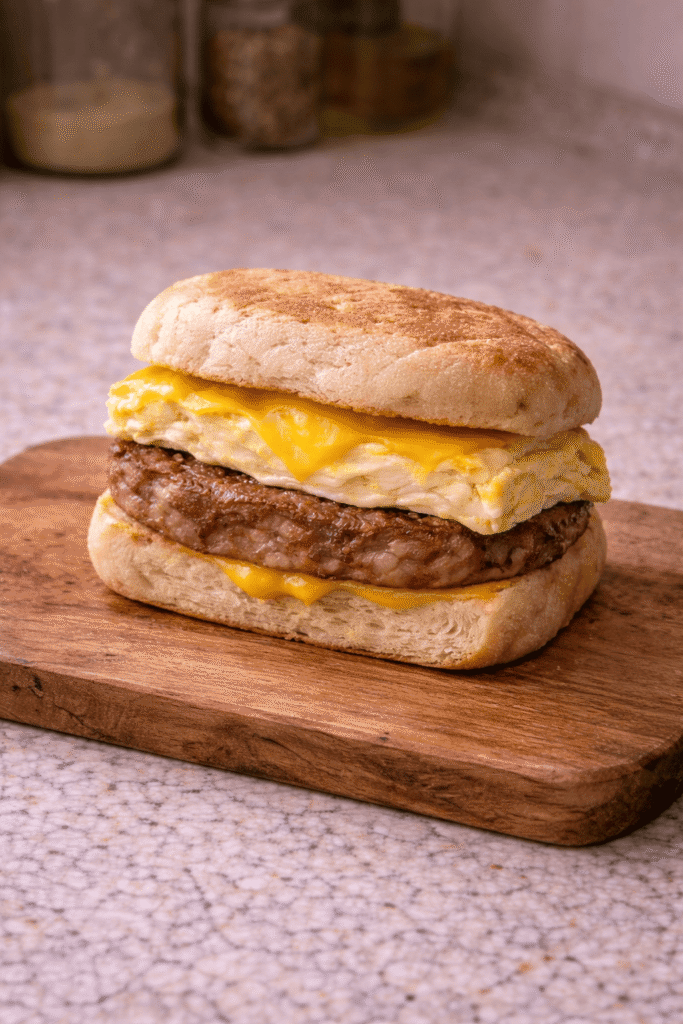
3. Sausage and Egg Breakfast Sandwich
Ingredients
- Base breakfast sandwich ingredients
- Cooked sausage patty
This version feels heartier and works well on colder mornings. The sausage adds richness, so the rest of the sandwich can stay simple.
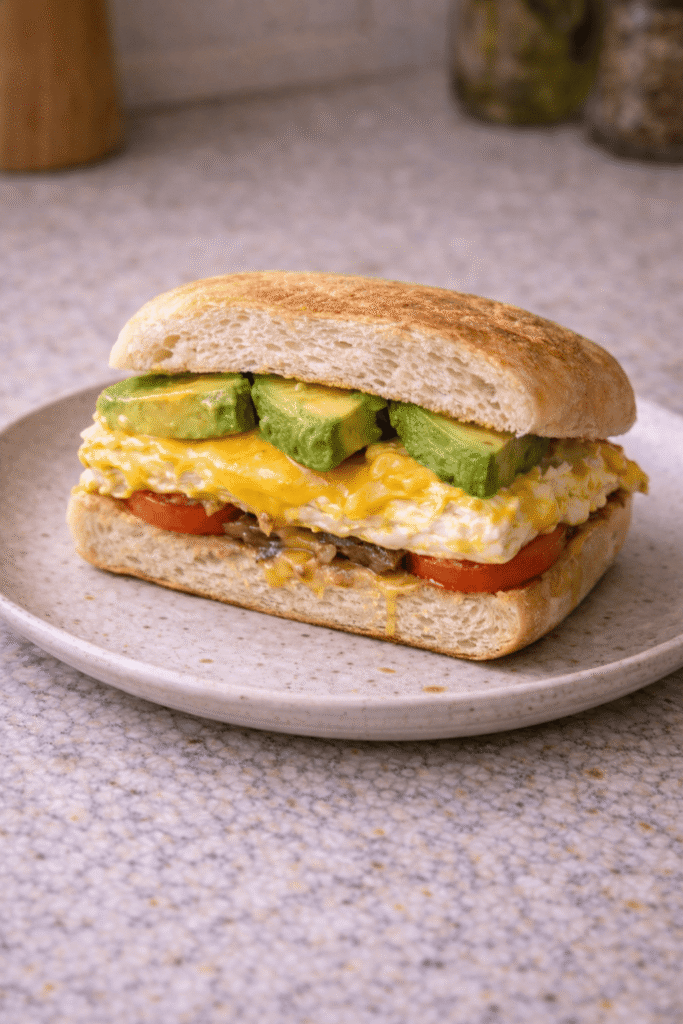
4. Avocado Egg Breakfast Sandwich
Ingredients
- Base breakfast sandwich ingredients
- Sliced avocado
This variation feels lighter and fresher. The avocado adds creaminess and balances the egg without making the sandwich heavy. It is best eaten fresh.
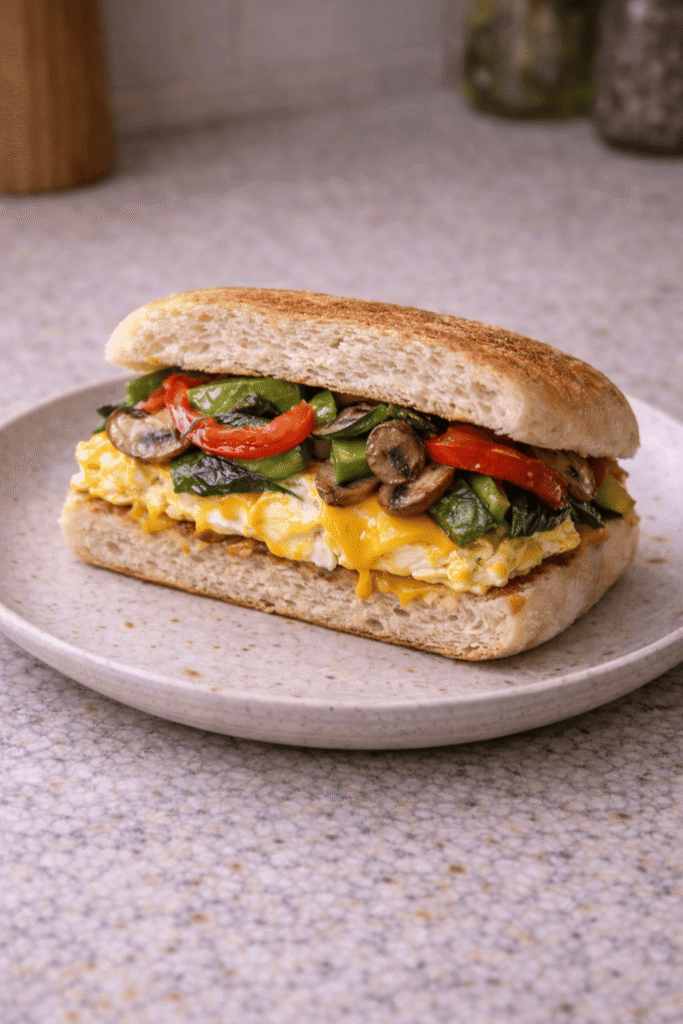
5. Veggie Breakfast Sandwich
Ingredients
- Base breakfast sandwich ingredients
- Sautéed vegetables such as spinach, mushrooms, or peppers
This is my go-to option when I want a savory breakfast without meat. It is flexible and works with whatever vegetables I have available.
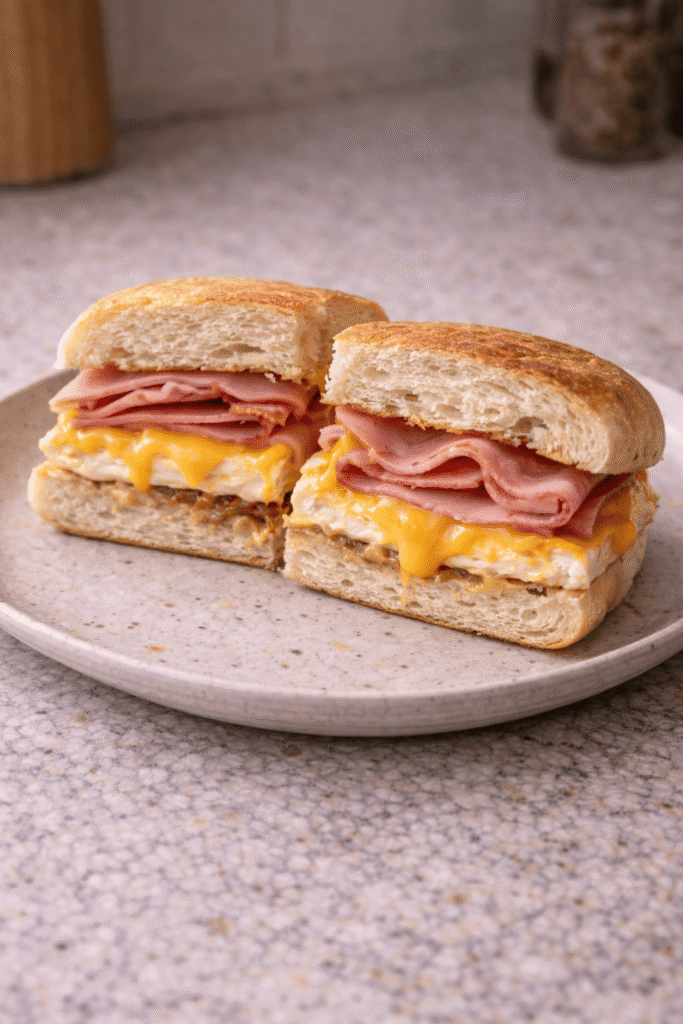
6. Ham and Cheese Breakfast Sandwich
Ingredients
- Base breakfast sandwich ingredients
- Sliced ham
- Cheese
This variation feels familiar and comforting. It works especially well when cooking for more than one person or when you want something simple and filling.
Common Mistakes and How to Avoid Them
One of the most common mistakes is overfilling the sandwich. A sandwich that looks generous on the counter can quickly become messy once you start eating it. Keeping fillings modest improves both texture and ease of eating.
Another common issue is soggy bread. Lightly toasting the bread and avoiding wet ingredients directly against it helps prevent this.
Egg overcooking is also common. Cooking eggs gently keeps them tender and prevents them from overpowering the sandwich.
Nutrition Information (Estimated)
Per sandwich, base only:
- Calories: 280 to 320
- Protein: 14 to 18 grams
- Carbohydrates: 25 to 30 grams
- Fat: 14 to 18 grams
These values are estimates and are meant for general guidance only.
Storage and Make-Ahead
Breakfast sandwiches are best eaten fresh, but some versions work well for freezing. Egg and cheese, sausage, and ham sandwiches freeze reliably.
Sandwiches with avocado or runny fried eggs are better eaten fresh, as their texture changes after freezing.
When freezing, folded eggs reheat more evenly than fried eggs and help the sandwich hold its shape.
Frequently Asked Questions
Can I make breakfast sandwiches ahead of time?
Yes. You can prepare components ahead or freeze certain versions.
Which sandwiches freeze best?
Egg and cheese, sausage, and ham versions freeze most reliably.
Fried egg or folded egg, which is better?
Folded eggs stack and freeze better. Fried eggs are richer but messier.
What bread works best?
Any sturdy bread works, as long as it is lightly toasted.
How do I keep the sandwich from getting soggy?
Toast the bread lightly and avoid adding wet ingredients directly.
Final Thoughts
Breakfast sandwiches work because they adapt to real mornings. They are not about perfection or presentation. They are about something warm, filling, and easy to eat when time is limited.
Once you understand the base, you can adjust the sandwich endlessly without needing a new recipe. That is what makes it useful. Some mornings you keep it simple. Other mornings you build it up. Both versions work.
If you make one of these variations, I would love to know which one becomes your regular choice.
Looking for another easy breakfast idea? These protein pancakes are quick, filling, and meal prep friendly.
Breakfast Sandwich
A flexible breakfast sandwich base with six easy variations. It comes together quickly, stays filling, and adapts easily to whatever ingredients you have on hand on busy mornings.
Ingredients
- 2 slices bread or 1 roll, split in half
- 1 large egg
- Butter or oil, for cooking
- Salt, to taste
- Black pepper, to taste
Instructions
1. Toast the bread
Toast the bread slices or split roll until lightly golden and sturdy enough to hold the fillings. The surface should be crisp while the inside remains soft.
2. Cook the egg
Heat a small skillet over medium heat and add butter or oil. Crack in the egg and cook fried or gently folded, seasoning with salt and black pepper.
3. Add optional fillings
If using cheese, bacon, sausage, or vegetables, warm them briefly in the pan. Place the cheese directly on the hot egg so it melts slightly before assembling.
4. Assemble the sandwich
Place the cooked egg onto the bottom slice of bread. Add any additional fillings, then top with the remaining bread or roll half.
5. Serve warm
Serve immediately while the egg is warm and the bread is still crisp. The contrast in texture is best enjoyed fresh.
Notes
- Folded eggs stack and freeze better than fried eggs.
- Sandwiches with avocado are best eaten fresh.
- Assemble just before serving for best texture.
Nutrition Information:
Yield: 1 sandwichAmount Per Serving: Calories: 280 - 320Total Fat: 14-18gCarbohydrates: 25 - 30gProtein: 14 - 18 g
Nutrition information is an estimate and may vary depending on the exact ingredients, brands, and portion sizes used. This information is provided for general guidance only and should not be considered a substitute for professional nutritional advice.
Related Recipes
Printable Recipe Card
Want just the essential recipe details without scrolling through the article? Get our printable recipe card with just the ingredients and instructions.


