Biscoff Cake
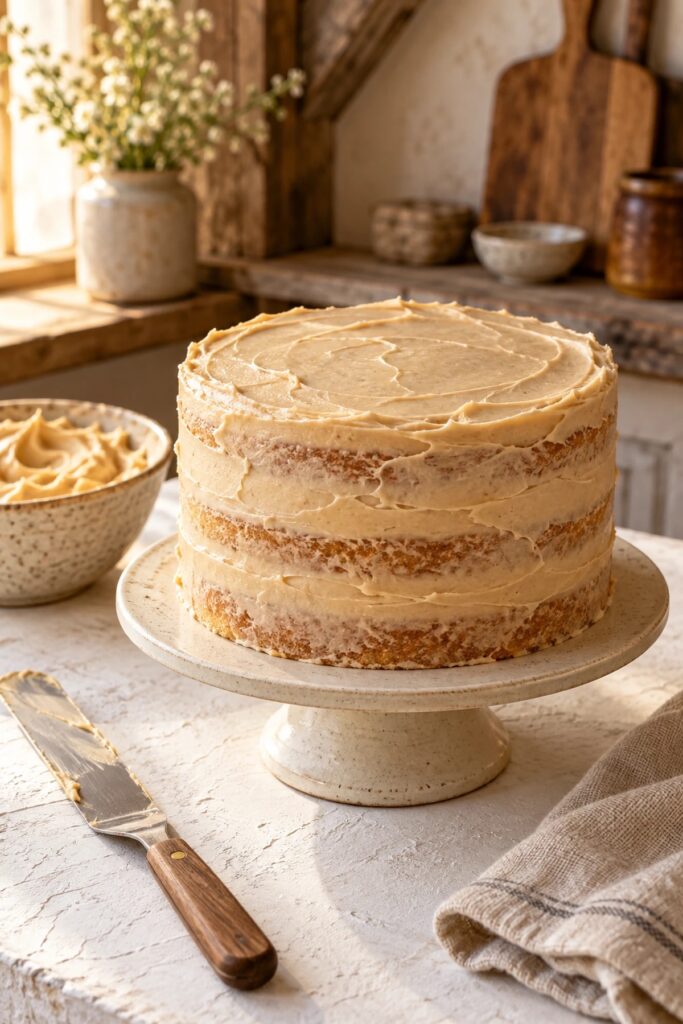
A Biscoff cake turns the spiced, caramelized flavor of the famous cookie into three tall, tender layers, stacked with a fluffy cookie butter frosting and a crunchy cookie-crumb filling.
The layers get their soft, moist crumb from sour cream and their flavor from Biscoff spread and crushed cookies folded into the batter. The mixing is simple: softened butter, eggs and sour cream go straight into the dry ingredients, so there is no creaming step and only one bowl to wash for the batter.
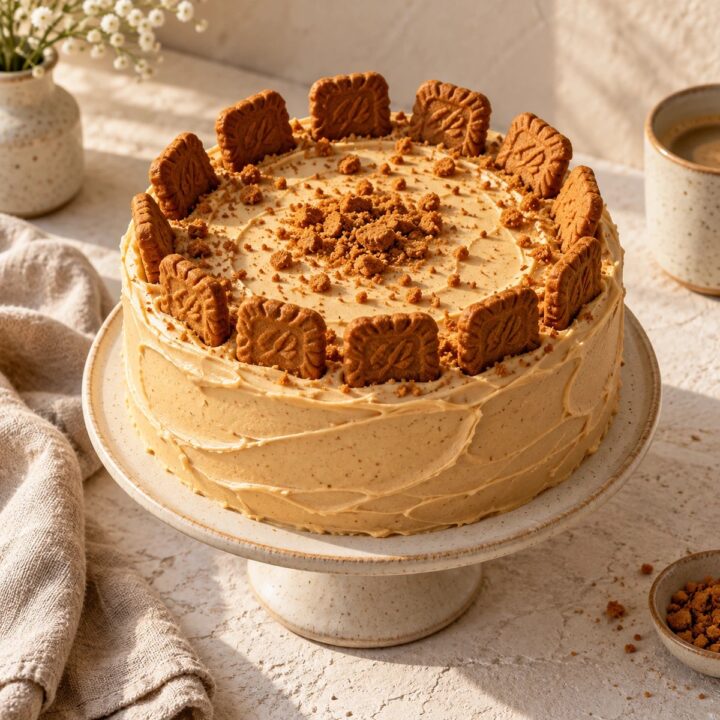
The frosting is a smooth Biscoff buttercream, and a cup of it is stirred with more crushed cookies to make the filling between the layers. A ring of whole cookies on top tells everyone what is inside before the first slice is cut.
This Biscoff cake makes 16 slices from three 8-inch layers. It takes 45 minutes of prep, 30 minutes of baking and about 1 hour 20 minutes of cooling and chilling, so plan on 2 hours 35 minutes from start to finish.

Why You’ll Love This Biscoff Cake
Biscoff three ways. The spread flavors the batter and the frosting, and the crushed cookies add crunch to the batter, the filling and the top.
Moist, tender layers. Full-fat sour cream keeps the crumb soft, and it stays that way for days in the refrigerator.
A simple batter. There is no creaming step and no separate bowls for wet and dry ingredients, so even a beginner can mix it.
A bakery-style finish at home. Three layers, a thin crumb coat and a ring of whole cookies make the cake look impressive with very little decorating skill.

Perfect For
This cake suits birthdays, Christmas and Thanksgiving dessert tables, baby showers, potlucks and any weekend when you want a real layer cake with coffee. It is rich, so a thin slice goes a long way.
If you like layer cakes with a big personality, you may also enjoy my carrot cake and my classic chocolate cake.

Biscoff Cake at a Glance
| Flavor | Warm caramel and spice, buttery and sweet |
| Texture | Moist, tender crumb with crunchy cookie bits |
| Difficulty | Easy to medium |
| Prep Time | 45 minutes |
| Bake Time | 30 minutes |
| Cooling and Chilling | 1 hour 20 minutes |
| Total Time | 2 hours 35 minutes |
| Servings | 16 slices (three 8-inch layers) |
| Method | Baked layer cake |
| Cuisine | American |
| Best For | Birthdays, holiday tables and potlucks |
Before You Start
Soften the butter. Take both amounts of butter out of the refrigerator about 1 hour ahead. It is ready when a finger leaves a dent without sinking in or sliding.
Bring the eggs and sour cream to room temperature. Cold ingredients make a lumpy batter and a curdled-looking frosting, so set them out with the butter.
Stir the Biscoff spread. The oil can separate in the jar, so stir it well before you measure.
Crush the cookies. Put the cookies in a zip-top bag and crush them with a rolling pin into coarse crumbs with a few small pieces. You need about 1 cup of crumbs, plus 8 to 10 whole cookies for the top.
Prepare the pans. Grease and flour three 8-inch round cake pans, and line the bottoms with parchment circles.
What Makes This Biscoff Cake Work
Sour Cream for a Moist Crumb
Sour cream adds fat and a little acidity, which keeps the crumb tender. The acidity also reacts with the baking soda, so the layers rise well and stay soft.
Biscoff Spread and Cookies in the Batter
Half a cup of spread gives the whole cake a caramel-spice flavor, and half a cup of crushed cookies adds small pockets of crunch and extra flavor.
An All-in-One Mixing Method
Adding the soft butter, eggs and sour cream to the dry ingredients all at once means there is less to measure and less to wash. Mixing on low first and then on medium for 2 minutes brings the batter together without overworking it.
A Filling With Crunch
Stirring crushed cookies into a cup of the frosting turns the middle of the cake into a creamy, crunchy layer. The plain frosting on the outside stays smooth and easy to spread.

Ingredients for Biscoff Cake
For the Cake
- 2½ cups (300 g) all-purpose flour
- 2 cups (400 g) granulated sugar
- 1 teaspoon baking powder
- ½ teaspoon baking soda
- 1 teaspoon salt
- 1 cup (227 g) unsalted butter, softened
- 4 large eggs, at room temperature
- 1 cup (230 g) full-fat sour cream
- ½ cup (125 g) smooth Biscoff spread
- ½ cup (about 50 g) crushed Biscoff cookies
For the Biscoff Frosting and Filling
- 1½ cups (340 g) unsalted butter, softened
- 4 cups (480 g) powdered sugar
- 1 cup (250 g) smooth Biscoff spread
- 2 teaspoons vanilla extract
- 2 tablespoons milk
- ½ cup (about 50 g) crushed Biscoff cookies, for the filling
For Decorating
- 8 to 10 whole Biscoff cookies

Ingredient Notes and Substitutions
Biscoff spread: Use the smooth version for the batter, the frosting and the filling. The crunchy version has cookie pieces that can clog a piping tip. Any other brand of smooth speculoos or cookie butter works too, and the flavor is very similar.
Biscoff cookies: The classic caramelized cookies are the best choice, and about 6 or 7 cookies make ½ cup of crumbs. Save the prettiest whole ones for the top.
Sour cream: Full-fat sour cream gives the most tender crumb. Plain full-fat Greek yogurt can replace it in the same amount.
Butter: Unsalted butter lets you control the salt, because the spread and cookies already contain some. If you only have salted butter, use it and reduce the added salt to ½ teaspoon.
Flour: One cup of all-purpose flour weighs about 120 grams, so 2½ cups is 300 grams. Weigh it, or spoon the flour into the cup and level it off, because too much flour makes a dry cake.
Powdered sugar: If it looks lumpy, sift it before you add it, so the frosting turns out silky.
Milk: Any milk works. Add it a little at a time at the end, because the amount you need depends on how soft your butter and spread are.
Kitchen Equipment Needed
• Three 8-inch round cake pans
• Parchment paper
• Large mixing bowl
• Electric hand mixer or stand mixer
• Whisk and rubber spatula
• Zip-top bag and rolling pin
• Wire cooling racks
• Serrated knife
• Offset spatula
• Cake plate or cake stand
How to Make Biscoff Cake
Step 1: Heat the Oven and Prepare the Pans
Heat the oven to 350°F (175°C). Grease and flour three 8-inch round cake pans, tap out the extra flour and line the bottoms with parchment circles.
Step 2: Whisk the Dry Ingredients
In a large bowl, whisk the flour, granulated sugar, baking powder, baking soda and salt until evenly mixed.
Step 3: Add the Butter, Eggs and Sour Cream
Add the softened butter, eggs and sour cream to the dry ingredients. Beat with an electric mixer on low speed until everything is just combined and no dry flour remains. Scrape down the bowl, then increase the speed to medium and beat for 2 minutes.
Step 4: Fold in the Biscoff Spread and Cookies
Add the Biscoff spread and crushed cookies. Fold them in gently with a rubber spatula until the batter is evenly mixed. The batter is thick, so do not worry if a few streaks of spread remain.

Step 5: Fill the Pans
Divide the batter evenly between the three prepared pans. For perfectly matched layers, weigh each pan on a kitchen scale. Smooth the tops with the back of a spoon.
Step 6: Bake
Bake the cakes for 25 to 30 minutes, until a toothpick inserted in the center comes out clean and the tops spring back when lightly pressed.
Step 7: Cool the Layers
Let the cakes cool in the pans for 10 minutes, then run a knife around the edges and turn them out onto a wire rack. Peel off the parchment. Let the layers cool completely, about 1 hour, before you frost them.
Step 8: Make the Biscoff Frosting
Beat the softened butter for 2 minutes, until it is smooth and pale. On low speed, add the powdered sugar a little at a time, then add the Biscoff spread and vanilla. Add the milk and beat on medium speed for 2 to 3 minutes, until the frosting is light and fluffy. If it is too thick, add more milk, 1 teaspoon at a time.
Step 9: Make the Cookie Filling
Scoop 1 cup of the frosting into a small bowl and stir in the ½ cup of crushed cookies. This is your filling. Keep the rest of the frosting plain.
Step 10: Level and Stack the Layers
If the layers have domed tops, trim them flat with a serrated knife. Place the first layer on a serving plate. Spread half of the filling over it, then add the second layer and spread on the rest of the filling. Top with the third layer, placing it cut side down for a flat top.

Step 11: Add the Crumb Coat
A crumb coat is an extremely thin layer of icing that traps loose crumbs. Spread a thin layer of plain frosting over the top and sides of the cake, then refrigerate it for 20 minutes, until the coat feels firm.
Step 12: Frost and Decorate
Cover the cake with the rest of the plain frosting and smooth the top and sides with an offset spatula. Press a few crushed cookies against the bottom edge, and arrange the whole cookies on top.
Step 13: Slice and Serve
Cut the cake with a long, sharp knife, wiping it clean between slices. For the neatest cuts, run the blade under hot water and dry it first.
How to Know It’s Done
Check the layers before you take them out of the oven, and check the cake again before you frost. Use this table as a guide.
| What to Check | Ready When |
|---|---|
| Toothpick | Comes out clean or with a few dry crumbs |
| Tops | Golden brown and springy when lightly pressed |
| Edges | Just starting to pull away from the sides of the pans |
| Cooled layers | Completely cool to the touch, about 1 hour after baking |
| Frosting | Fluffy and smooth, easy to spread with no grittiness |
| Crumb coat | Firm to the touch after 20 minutes in the refrigerator |
If a toothpick comes out with wet batter, give the layers 3 more minutes and test again. If the tops brown before the centers are set, cover the pans loosely with foil for the last few minutes. The layers keep firming up as they cool, so do not wait until they look dry in the oven.
Tips for the Best Biscoff Cake
Weigh the flour. A kitchen scale gives the most accurate measurement and the best crumb.
Use room temperature ingredients. Soft butter, eggs and sour cream blend into a smooth batter, and soft butter whips into a silky frosting.
Level the layers. A serrated knife and a flat top on each layer make a stable stack that does not lean.
Do not skip the crumb coat. The thin coat holds loose crumbs in place, so the final layer of frosting stays clean.
Brush the layers with simple syrup (optional). Simmer equal parts sugar and water until the sugar dissolves, cool it completely and brush a little over each layer for extra moisture.
Keep the frosting workable. If the frosting gets too soft while you decorate, chill it for 10 to 15 minutes, then stir and use it again.
Common Mistakes and How to Fix Them
| Mistake | How to Fix It |
|---|---|
| Using cold ingredients The batter turns lumpy and the frosting looks curdled. | Set the butter, eggs and sour cream out for about 1 hour, and beat the frosting butter until smooth before adding any sugar. |
| Overmixing after the cookies go in The cake turns dense and tough. | Fold in the spread and crushed cookies gently with a spatula, just until the batter is evenly mixed. |
| Uneven layers Thin layers dry out and the stack leans. | Weigh each pan on a kitchen scale and trim domed tops flat with a serrated knife. |
| Frosting a warm cake The frosting melts and slides off, and the layers tear. | Cool the layers completely, about 1 hour, and chill them briefly if the kitchen is warm. |
| Skipping the crumb coat Loose crumbs mix into the final frosting and show on the surface. | Spread a thin coat, refrigerate it for 20 minutes, then add the final layer of frosting. |
Variations
Biscoff Drizzle Cake
Warm 3 tablespoons of Biscoff spread with 1 tablespoon of milk for about 20 seconds, stir until pourable and drizzle it over the top of the frosted cake, letting it run down the sides.
Coffee Biscoff Cake
Replace the 2 tablespoons of milk in the frosting with 2 tablespoons of cooled strong coffee for a frosting that tastes like a cookie and a café latte at once.
Biscoff Sheet Cake
Bake the batter in a greased and floured 9×13-inch pan and frost it right in the pan. The baking time may be a little longer, so start checking with a toothpick at 30 minutes.
Cookie Crumb Sides
After the final coat of frosting, press crushed Biscoff cookies all over the sides of the cake with your palm over a tray, so the crumbs are caught and the cake looks rustic.
Serving Suggestions
Serve a slice with a cold glass of milk or a hot cup of coffee, which cuts through the sweetness. A cozy tiramisu latte or a mug of pumpkin spice latte goes especially well in fall.
For a larger dessert table, add a New York cheesecake, a plate of gingerbread cookies or a yule log cake at Christmas.
Storage
Room temperature: Store the cake in an airtight container or under a cake dome for up to 2 days.
Refrigerator: Keep it in an airtight container for up to 5 days. Let chilled slices sit at room temperature for 20 to 30 minutes before serving, so the frosting softens and the flavor comes back.
Layers ahead of time: Wrap the cooled, unfrosted layers tightly in plastic wrap and keep them in the refrigerator for 1 day before you frost them.
Freezing
Wrap the cooled, unfrosted layers tightly in plastic wrap and then foil, and freeze them for up to 2 months. Thaw them overnight in the refrigerator, then frost the cake as usual. Frosting the cake first and freezing slices also works, but wrap each slice well so it does not pick up other flavors.
Frequently Asked Questions
Can I use crunchy Biscoff spread?
Smooth spread is the better choice for the frosting and the filling, because the cookie pieces in the crunchy version can clog a piping tip and make the frosting less silky. You already get plenty of crunch from the crushed cookies.
Can I bake this in a different pan?
Yes. The batter fits a 9×13-inch pan, and you can frost it right in the pan. The baking time may be a little longer, so check with a toothpick.
What can I use if I cannot find Biscoff spread?
Any smooth speculoos or cookie butter spread works. The flavor is very similar, though brands vary slightly in sweetness and thickness.
My frosting is too thick. How can I fix it?
Add milk, 1 teaspoon at a time, and beat until the frosting reaches the consistency you like. If it is too soft, chill it for 10 to 15 minutes and beat it again.
Can I make this cake ahead of time?
Yes. Bake and wrap the layers a day ahead, or freeze them for up to 2 months, then fill and frost the cake on the day you plan to serve it.
Can I use Greek yogurt instead of sour cream?
Yes. Use the same amount of plain, full-fat Greek yogurt. The crumb will be slightly less rich but still moist.
Why is my cake dry?
Too much flour and too long in the oven are the usual causes. Weigh the flour, check the layers at 25 minutes, and take them out as soon as a toothpick comes out clean.
Final Thoughts
This Biscoff cake rewards a few easy habits: soft ingredients, a gentle hand once the cookies go in, fully cooled layers and a thin crumb coat before the final frosting.
Each layer, the filling and the frosting carries the same warm caramel-spice flavor, so every forkful tastes like the cookie you know in a much bigger, softer form. It is a fine cake for a celebration, and a good excuse to make an ordinary weekend feel special.
Come by the comments and let me know who got the first slice of yours, and whether the cookies on top lasted long enough for a photo.
If you try this recipe, please leave a star rating along with your comment below. It takes a few seconds and helps other readers find the recipe.
Biscoff Cake
This Biscoff cake is a tall, three-layer showstopper with warm caramel-spice flavor in every bite. With moist sour cream layers, a fluffy Biscoff frosting and a crunchy cookie filling, it's the perfect balance of creamy and crisp. Made in three 8-inch pans and cut into 16 slices, this Biscoff cake is a must-have for birthdays, holiday tables, potlucks, or anytime you crave a show-stopping dessert.
Ingredients
Cake
- 2½ cups (300 g) all-purpose flour
- 2 cups (400 g) granulated sugar
- 1 teaspoon baking powder
- ½ teaspoon baking soda
- 1 teaspoon salt
- 1 cup (227 g) unsalted butter, softened
- 4 large eggs, at room temperature
- 1 cup (230 g) full-fat sour cream
- ½ cup (125 g) smooth Biscoff spread
- ½ cup (about 50 g) crushed Biscoff cookies
Biscoff Frosting and Filling
- 1½ cups (340 g) unsalted butter, softened
- 4 cups (480 g) powdered sugar
- 1 cup (250 g) smooth Biscoff spread
- 2 teaspoons vanilla extract
- 2 tablespoons milk
- ½ cup (about 50 g) crushed Biscoff cookies, for the filling
Decorating
- 8 to 10 whole Biscoff cookies
Instructions
- Heat the oven to 350°F (175°C). Grease and flour three 8-inch round cake pans and line the bottoms with parchment circles.
- In a large bowl, whisk the flour, granulated sugar, baking powder, baking soda and salt.
- Add the softened butter, eggs and sour cream. Beat with an electric mixer on low speed until just combined, scrape down the bowl, then beat on medium speed for 2 minutes.
- Fold in the Biscoff spread and crushed cookies with a rubber spatula until evenly mixed.
- Divide the batter evenly between the three pans and smooth the tops.
- Bake for 25 to 30 minutes, until a toothpick inserted in the center comes out clean.
- Cool the cakes in the pans for 10 minutes, then turn them out onto a wire rack, peel off the parchment and cool completely, about 1 hour.
- For the frosting, beat the softened butter for 2 minutes until smooth and pale. On low speed, add the powdered sugar a little at a time, then the Biscoff spread and vanilla. Add the milk and beat on medium speed for 2 to 3 minutes, until light and fluffy.
- Scoop 1 cup of the frosting into a small bowl and stir in ½ cup of crushed cookies to make the filling.
- Trim any domed tops flat. Place one layer on a serving plate, spread on half of the filling, add the second layer and spread on the rest of the filling, then top with the third layer, cut side down.
- Spread a thin crumb coat of plain frosting over the top and sides and refrigerate for 20 minutes, until firm.
- Cover the cake with the remaining frosting, smooth it with an offset spatula, press crushed cookies around the bottom edge and arrange the whole cookies on top.
- Slice with a long, sharp knife, wiping it clean between slices.
Notes
- Room temperature: Use soft butter and room-temperature eggs and sour cream for a smooth batter and a silky frosting.
- Biscoff spread: Use smooth Biscoff spread. The crunchy version can clog a piping tip. Any smooth speculoos or cookie butter spread works.
- Pans: Grease and flour three 8-inch pans and line the bottoms with parchment. For even layers, weigh the pans after filling.
- Crumb coat: A thin layer of frosting chilled for 20 minutes traps loose crumbs and gives a clean final coat.
- Storage: Keep the cake in an airtight container at room temperature for up to 2 days, or refrigerate it for up to 5 days. Let chilled slices sit at room temperature before serving.
- Freezing: Freeze the cooled, unfrosted layers, wrapped tightly, for up to 2 months and thaw them overnight in the refrigerator.
- Nutrition: Values are estimates for 1 slice (1 of 16), made with the cake, frosting and filling and without the whole cookies used for decorating.
Nutrition Information:
Yield: 16 Serving Size: 1 sliceAmount Per Serving: Calories: 745Total Fat: 43gSaturated Fat: 23gCholesterol: 131mgSodium: 324mgCarbohydrates: 88gFiber: 1gSugar: 66gProtein: 5g