
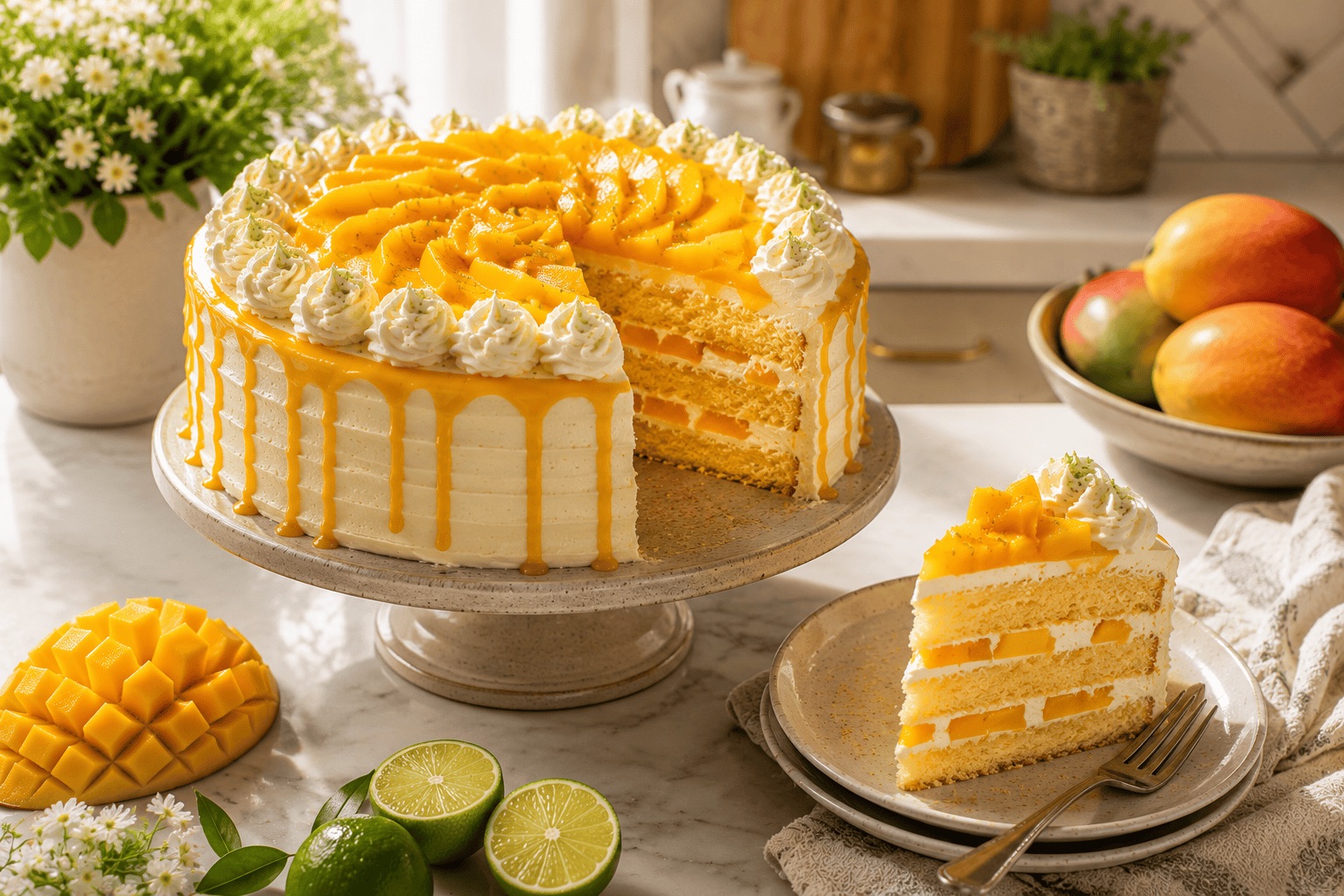
Mango Cake
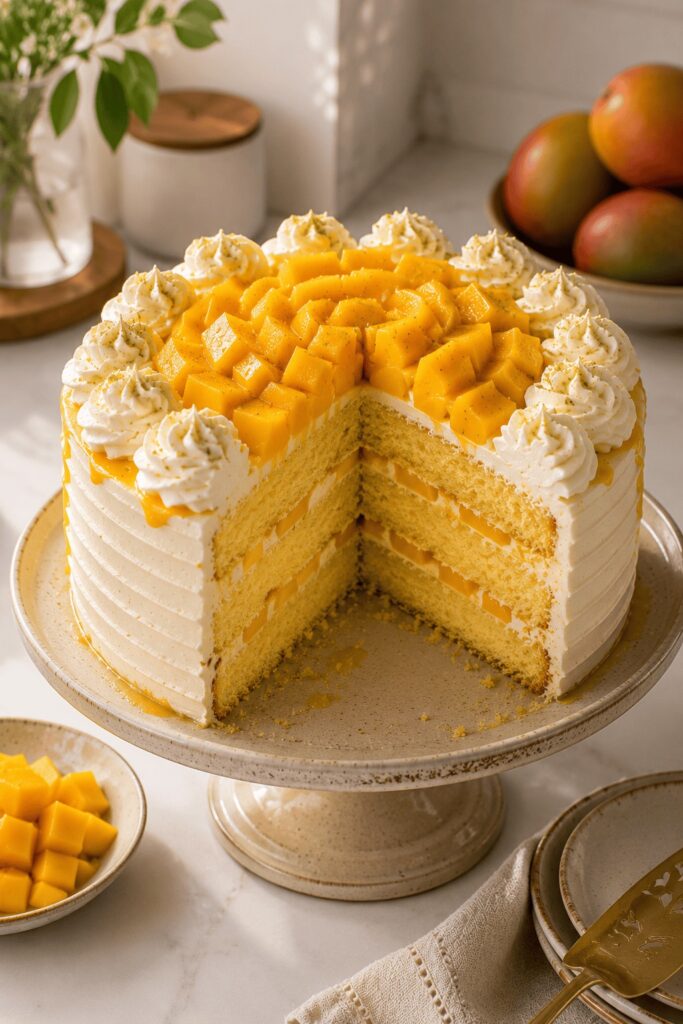
Mango cake tastes like summer in every slice. It’s soft, tender, and full of bright mango flavor without being too sweet. If you love fruit-forward desserts, this one delivers a fresh, tropical twist on classic butter cake.
It’s simple enough for a weekday bake but pretty enough for a celebration. Serve it plain with a dusting of sugar, or go all out with whipped cream and fresh mango slices.
What Makes This Recipe So Good
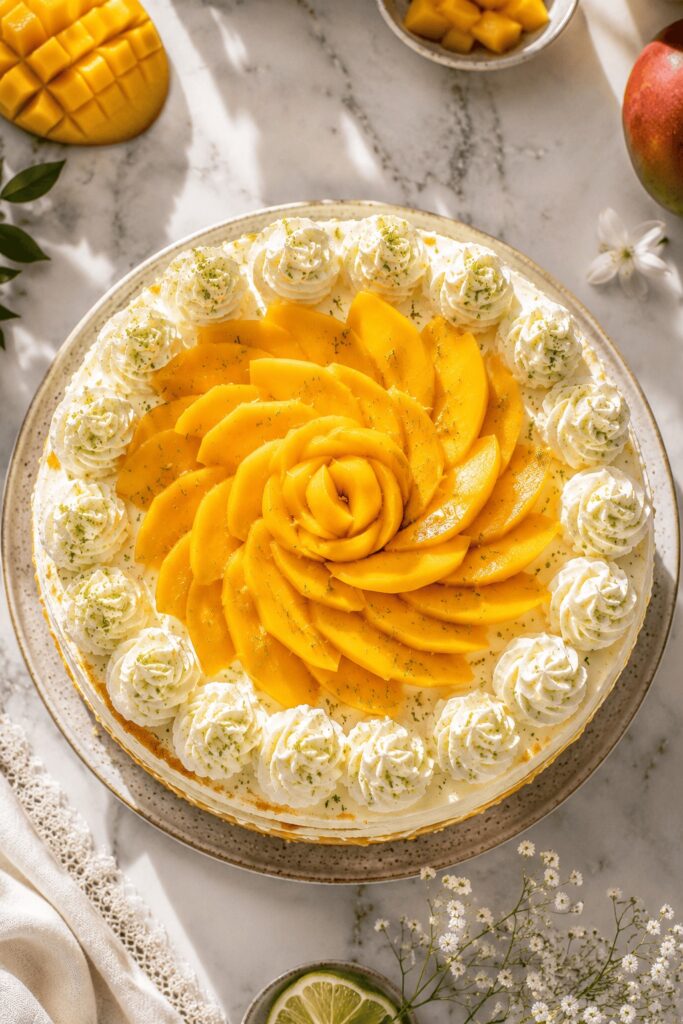
- Big mango flavor: Real mango puree brings natural sweetness and a sunny aroma you can’t fake with extracts.
- Moist and tender crumb: Oil plus yogurt keeps the cake soft for days without drying out.
- Foolproof batter: No special techniques required. If you can whisk and fold, you can make this cake.
- Flexible and forgiving: Works with fresh, frozen, or canned mango.
You can bake it in a loaf pan, round pan, or as cupcakes.
- Not overly sweet: Balanced flavor that pairs well with cream, yogurt, or even a tangy lime glaze.
Ingredients
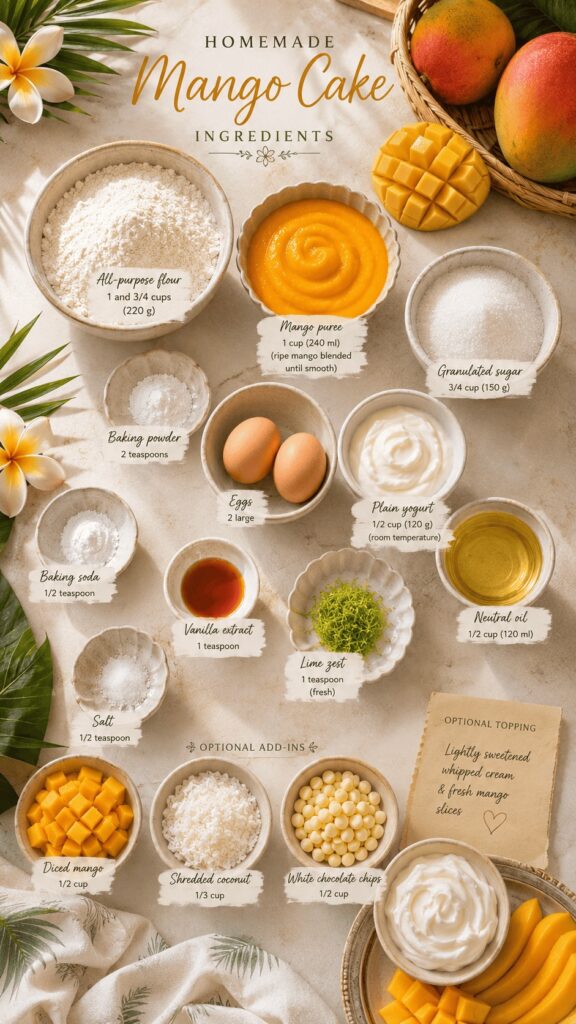
- Mango puree: About 1 cup (240 ml). Blend ripe mango flesh until smooth. Strain if fibrous.
You can also use canned mango pulp.
- All-purpose flour: 1 and 3/4 cups (220 g) for structure and a tender crumb.
- Granulated sugar: 3/4 cup (150 g) for sweetness without heaviness.
- Baking powder: 2 teaspoons to help it rise.
- Baking soda: 1/2 teaspoon for extra lift and softness, especially with yogurt.
- Salt: 1/2 teaspoon to balance the sweetness and boost flavor.
- Neutral oil: 1/2 cup (120 ml), such as canola, sunflower, or light olive oil.
- Plain yogurt: 1/2 cup (120 g), room temperature. Greek yogurt works if thinned slightly.
- Eggs: 2 large, room temperature, for structure and moisture.
- Vanilla extract: 1 teaspoon for warmth and aroma.
- Fresh lime or lemon zest: 1 teaspoon to lift the mango flavor.
- Optional add-ins: 1/2 cup diced mango, 1/3 cup shredded coconut, or 1/2 cup white chocolate chips.
- Optional topping: Lightly sweetened whipped cream and fresh mango slices for serving.
Instructions
- Prep your pan and oven: Grease and line an 8-inch (20 cm) round cake pan or a 9×5-inch loaf pan with parchment. Preheat the oven to 350°F (175°C).
- Make the mango puree: If using fresh mango, peel and cube 2–3 ripe mangoes.
Blend until smooth. Measure out 1 cup. If the puree seems stringy, strain it.
- Combine dry ingredients: In a medium bowl, whisk flour, baking powder, baking soda, and salt.
Set aside.
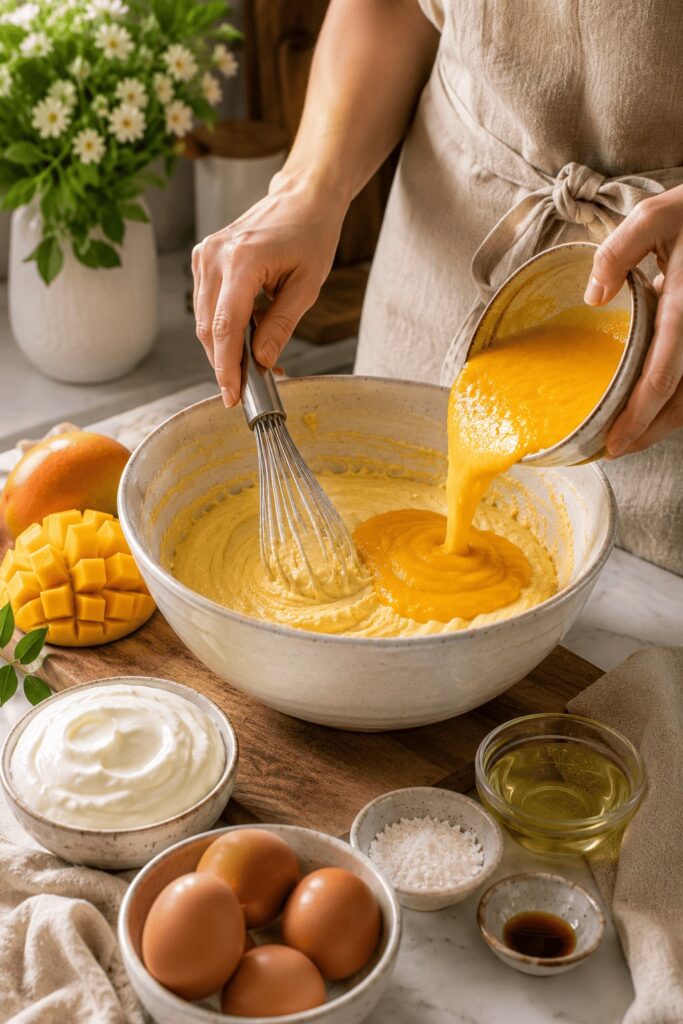
- Whisk the wet ingredients: In a large bowl, whisk sugar, oil, yogurt, eggs, and vanilla until smooth and slightly thick. Stir in the citrus zest.
- Add mango: Whisk the mango puree into the wet mixture until evenly combined and sunny orange.
- Bring it together: Sift or sprinkle the dry ingredients over the wet. Gently fold with a spatula just until no dry streaks remain. Do not overmix.
- Optional mix-ins: Fold in diced mango, coconut, or white chocolate if using.
Spread the batter into your prepared pan and smooth the top.
- Bake: Bake round cake for 30–38 minutes, loaf for 45–55 minutes, or until a toothpick comes out with a few moist crumbs. Don’t wait for a bone-dry tester.
- Cool: Let the cake rest in the pan for 10 minutes, then lift out to a rack. Cool completely before slicing to keep the crumb intact.
- Serve: Dust with powdered sugar, add a dollop of whipped cream, or top with fresh mango slices. A squeeze of lime makes the flavor pop.
How to Store
- Room temperature: Keep covered for up to 2 days.
It stays moist thanks to the oil and yogurt.
- Refrigerator: Store in an airtight container for 4–5 days. Bring to room temperature before serving for the best texture.
- Freezer: Wrap slices individually and freeze for up to 2 months. Thaw at room temperature, then warm slightly if you like.
- With toppings: If using whipped cream or fresh mango on top, refrigerate any leftovers and enjoy within 2 days.
Benefits of This Recipe
- Simple, everyday ingredients: Nothing fancy or hard to find, especially if you use canned mango pulp.
- Beginner-friendly: Easy mixing method with a forgiving batter.
- Moist without butter: Oil keeps it soft and light, even after chilling.
- Versatile: Works as cupcakes, a snack loaf, or a celebration layer with cream.
- Seasonal or year-round: Fresh mangoes in summer, canned pulp in winter.
What Not to Do
- Don’t use underripe mangoes: They’re sour and watery, which dulls the flavor and changes the crumb.
- Don’t skip room temperature ingredients: Cold eggs or yogurt can cause a lumpy batter and uneven bake.
- Don’t overmix: Overworking the batter leads to a tough, dense cake.
Fold gently.
- Don’t overbake: Pull it when the center springs back and the toothpick has moist crumbs. A dry tester means a dry cake.
- Don’t flood with wet fruit: If adding diced mango, pat it dry and use no more than 1/2 cup to avoid sogginess.
Variations You Can Try
- Coconut mango cake: Fold in shredded coconut and finish with a coconut-lime glaze.
- Mango cardamom: Add 1/2 teaspoon ground cardamom to the dry ingredients for a warm, fragrant twist.
- Mango cream cheese frosting: Frost a cooled round cake with whipped cream cheese mixed with a few spoonfuls of mango puree.
- Gluten-free version: Use a 1:1 gluten-free flour blend with xanthan gum. Check doneness a few minutes early.
- Dairy-free: Swap yogurt for coconut yogurt and serve with coconut whipped cream.
- Mango cupcakes: Bake in a lined muffin tin for 18–22 minutes.
Great for parties and easy portioning.
- Mango lime syrup soak: Brush the warm cake with a simple syrup made from lime juice, sugar, and a little mango puree for extra moisture.
FAQ
Can I Use Frozen Mango?
Yes. Thaw, drain, and blend until smooth, then measure the puree. If it seems watery, simmer it for 5–7 minutes to reduce slightly and cool before using.
What If I Only Have Canned Mango Pulp?
That works very well.
Choose a pulp without added sugar if possible. If it’s sweetened, reduce the granulated sugar by 2–3 tablespoons to keep the cake balanced.
How Do I Prevent the Cake From Sinking?
Use fresh leaveners, don’t overmix, and bake immediately after combining the batter. Also, avoid opening the oven in the first 20 minutes.
If adding fruit, keep the pieces small and not too many.
Can I Make This Egg-Free?
Yes. Replace the 2 eggs with 1/2 cup unsweetened applesauce or 2 flax eggs (2 tablespoons ground flax + 6 tablespoons water, rested). The cake will be slightly denser but still moist.
What Frosting Goes Best With Mango Cake?
Light options shine here: whipped cream, whipped cream cheese, or a yogurt-lime frosting.
A simple lime glaze (powdered sugar, lime juice, and zest) also adds a bright finish.
Why Is My Mango Cake Dense?
Common reasons include overmixing, measuring too much flour, or using underripe mango. Spoon and level the flour, fold gently, and use ripe, sweet mango or good-quality pulp.
Can I Double the Recipe?
Yes. Bake in a 9×13-inch pan for 30–38 minutes, checking early.
Make sure your oven is fully preheated and rotate the pan once for even baking.
In Conclusion
Mango cake brings a burst of tropical flavor with an easy, no-fuss method. It’s soft, fragrant, and adaptable, whether you bake it as a simple loaf or dress it up for a party. With a handful of pantry staples and good mango puree, you’ll get a tender crumb and a sunny finish every time.
Keep this recipe in your back pocket for when you want something bright, simple, and crowd-pleasing.

Mango Cake
Ingredients
- Mango puree: About 1 cup (240 ml). Blend ripe mango flesh until smooth. Strain if fibrous. You can also use canned mango pulp.
- All-purpose flour: 1 and 3/4 cups (220 g) for structure and a tender crumb.
- Granulated sugar: 3/4 cup (150 g) for sweetness without heaviness.
- Baking powder: 2 teaspoons to help it rise.
- Baking soda: 1/2 teaspoon for extra lift and softness, especially with yogurt.
- Salt: 1/2 teaspoon to balance the sweetness and boost flavor.
- Neutral oil: 1/2 cup (120 ml), such as canola, sunflower, or light olive oil.
- Plain yogurt: 1/2 cup (120 g), room temperature. Greek yogurt works if thinned slightly.
- Eggs: 2 large, room temperature, for structure and moisture.
- Vanilla extract: 1 teaspoon for warmth and aroma.
- Fresh lime or lemon zest: 1 teaspoon to lift the mango flavor.
- Optional add-ins: 1/2 cup diced mango, 1/3 cup shredded coconut, or 1/2 cup white chocolate chips.
- Optional topping: Lightly sweetened whipped cream and fresh mango slices for serving.
Instructions
- Prep your pan and oven: Grease and line an 8-inch (20 cm) round cake pan or a 9×5-inch loaf pan with parchment. Preheat the oven to 350°F (175°C).
- Make the mango puree: If using fresh mango, peel and cube 2–3 ripe mangoes. Blend until smooth. Measure out 1 cup. If the puree seems stringy, strain it.
- Combine dry ingredients: In a medium bowl, whisk flour, baking powder, baking soda, and salt. Set aside.
- Whisk the wet ingredients: In a large bowl, whisk sugar, oil, yogurt, eggs, and vanilla until smooth and slightly thick. Stir in the citrus zest.
- Add mango: Whisk the mango puree into the wet mixture until evenly combined and sunny orange.
- Bring it together: Sift or sprinkle the dry ingredients over the wet. Gently fold with a spatula just until no dry streaks remain. Do not overmix.
- Optional mix-ins: Fold in diced mango, coconut, or white chocolate if using. Spread the batter into your prepared pan and smooth the top.
- Bake: Bake round cake for 30–38 minutes, loaf for 45–55 minutes, or until a toothpick comes out with a few moist crumbs. Don’t wait for a bone-dry tester.
- Cool: Let the cake rest in the pan for 10 minutes, then lift out to a rack. Cool completely before slicing to keep the crumb intact.
- Serve: Dust with powdered sugar, add a dollop of whipped cream, or top with fresh mango slices. A squeeze of lime makes the flavor pop.
Printable Recipe Card
Want just the essential recipe details without scrolling through the article? Get our printable recipe card with just the ingredients and instructions.


