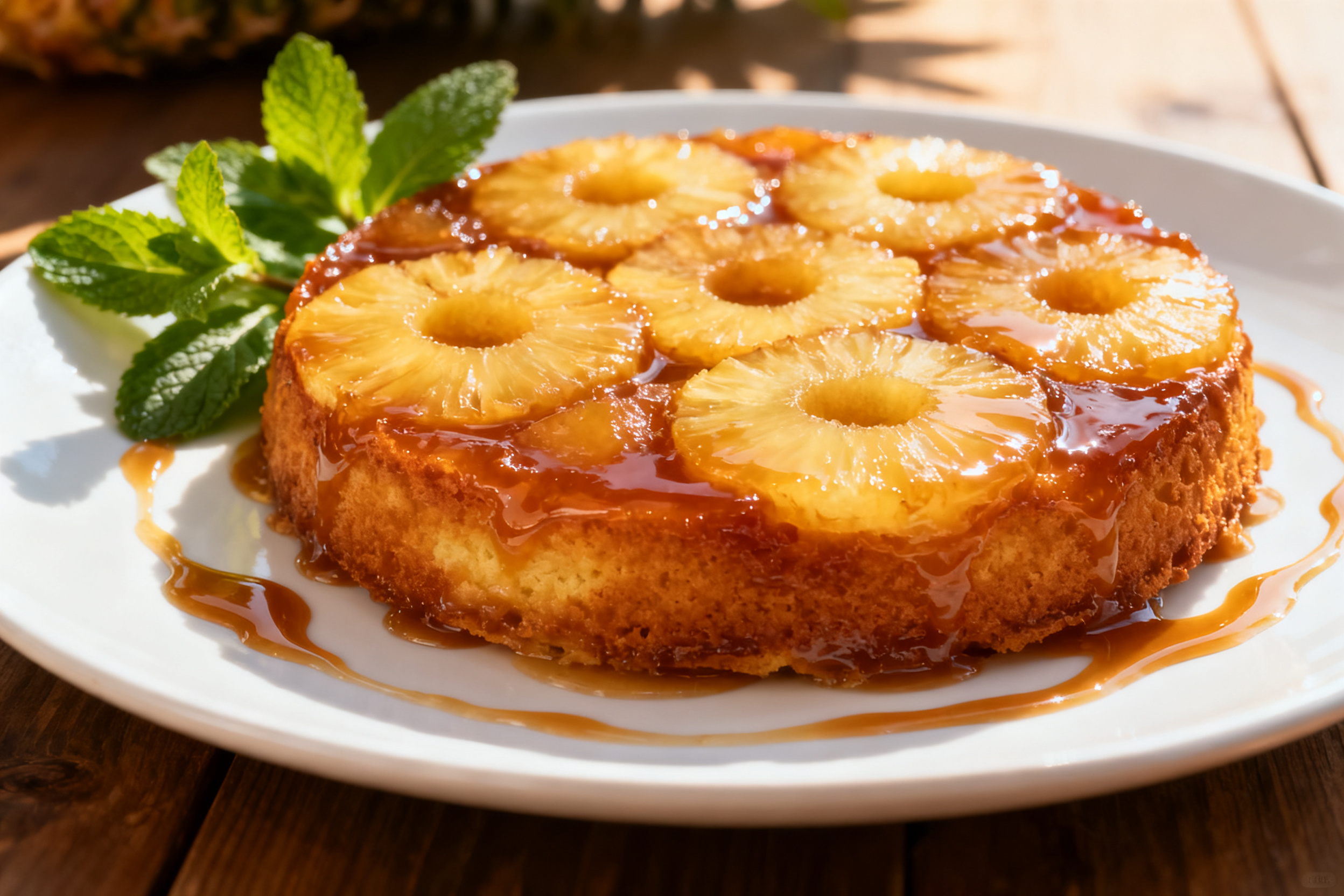
Pineapple Upside Down Cake
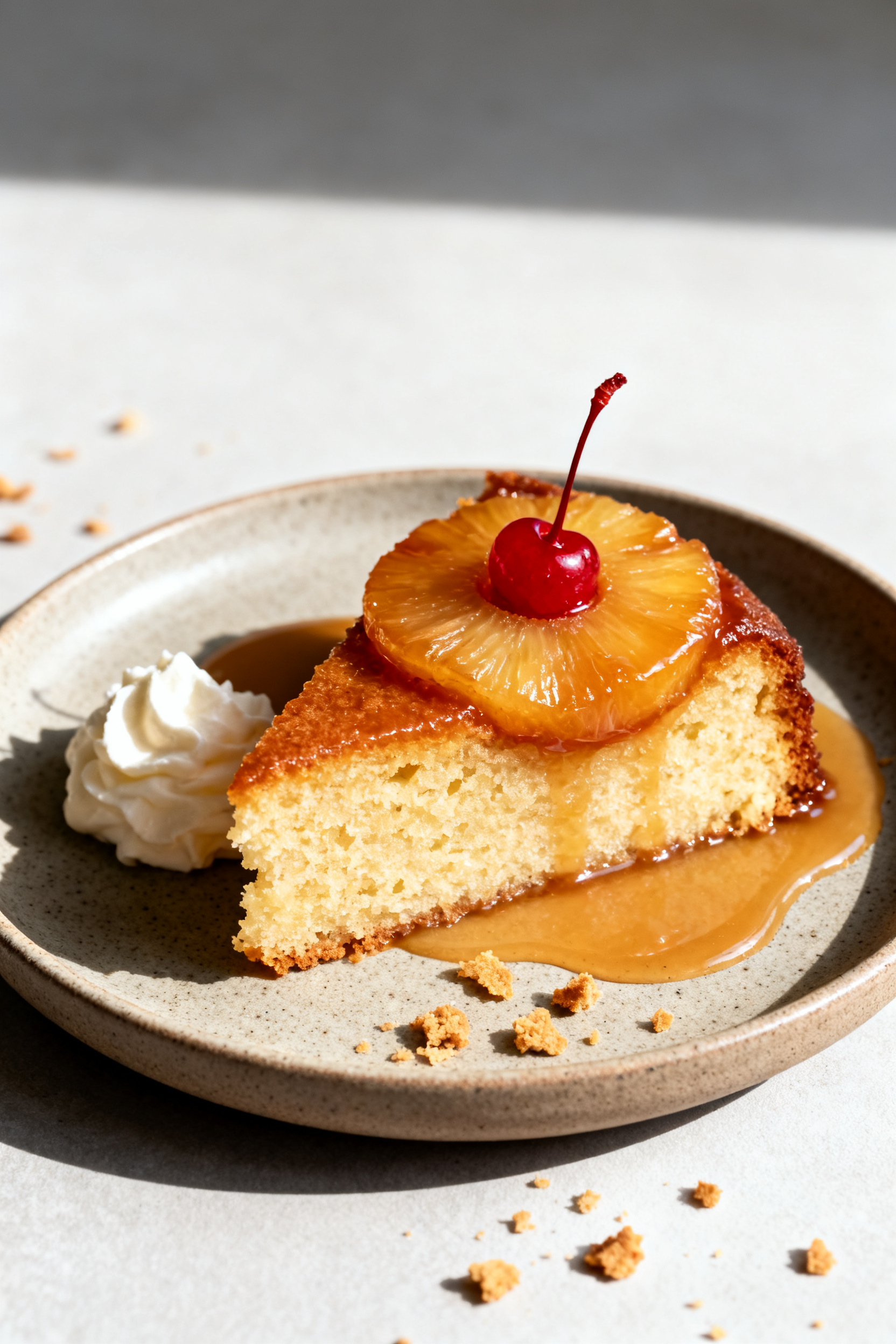
This is the cake people remember from childhood parties and Sunday dinners, the one that turns out of the pan with glossy pineapple rings and ruby cherries on top. It smells like butter and warm sugar, tastes like a tropical hug, and looks impressive without trying too hard. Best of all, it’s simple, forgiving, and uses pantry basics.
Whether you’re baking for a crowd or treating yourself on a weeknight, pineapple upside down cake delivers that perfect balance of sweet, tangy, and tender. Let’s make the version you’ll want to keep on repeat.
What Makes This Special
This recipe leans into buttery caramel at the base, which melts into the cake as it bakes and keeps every bite moist. Canned pineapple keeps things easy and consistent, while a touch of sour cream and brown sugar adds depth you don’t get from boxed mixes.
The crumb is soft but sturdy enough to hold the fruit, so it slices cleanly and stays plush for days. You get a dessert that’s nostalgic, eye-catching, and genuinely simple to pull off.
Ingredients
- For the Topping:
- 1/2 cup (1 stick) unsalted butter
- 3/4 cup packed light brown sugar
- 8–10 pineapple rings (canned, well-drained)
- 10–12 maraschino cherries, drained and patted dry
- For the Cake Batter:
- 1 1/2 cups all-purpose flour
- 1 1/2 teaspoons baking powder
- 1/2 teaspoon fine salt
- 1/2 cup whole milk, at room temperature
- 1/4 cup sour cream, at room temperature
- 1 teaspoon pure vanilla extract
- 1/2 cup (1 stick) unsalted butter, softened
- 3/4 cup granulated sugar
- 1/4 cup packed light brown sugar
- 2 large eggs, at room temperature
- Optional: 1 tablespoon pineapple juice from the can
- Equipment:
- 9-inch round cake pan (2 inches deep) or 10-inch cast-iron skillet
- Mixing bowls, whisk, hand mixer or stand mixer
- Spatula and parchment paper (optional but helpful)
Step-by-Step Instructions
1. Prep the pan and oven. Preheat to 350°F (175°C). Grease a 9-inch round pan and, if you like, line the bottom with a parchment circle for easy release.
2. Make the caramel base. Melt 1/2 cup butter in a small saucepan over medium heat.
Stir in 3/4 cup brown sugar and cook 1–2 minutes until the sugar looks glossy and thick. Immediately pour into the pan and tilt to coat the bottom evenly.
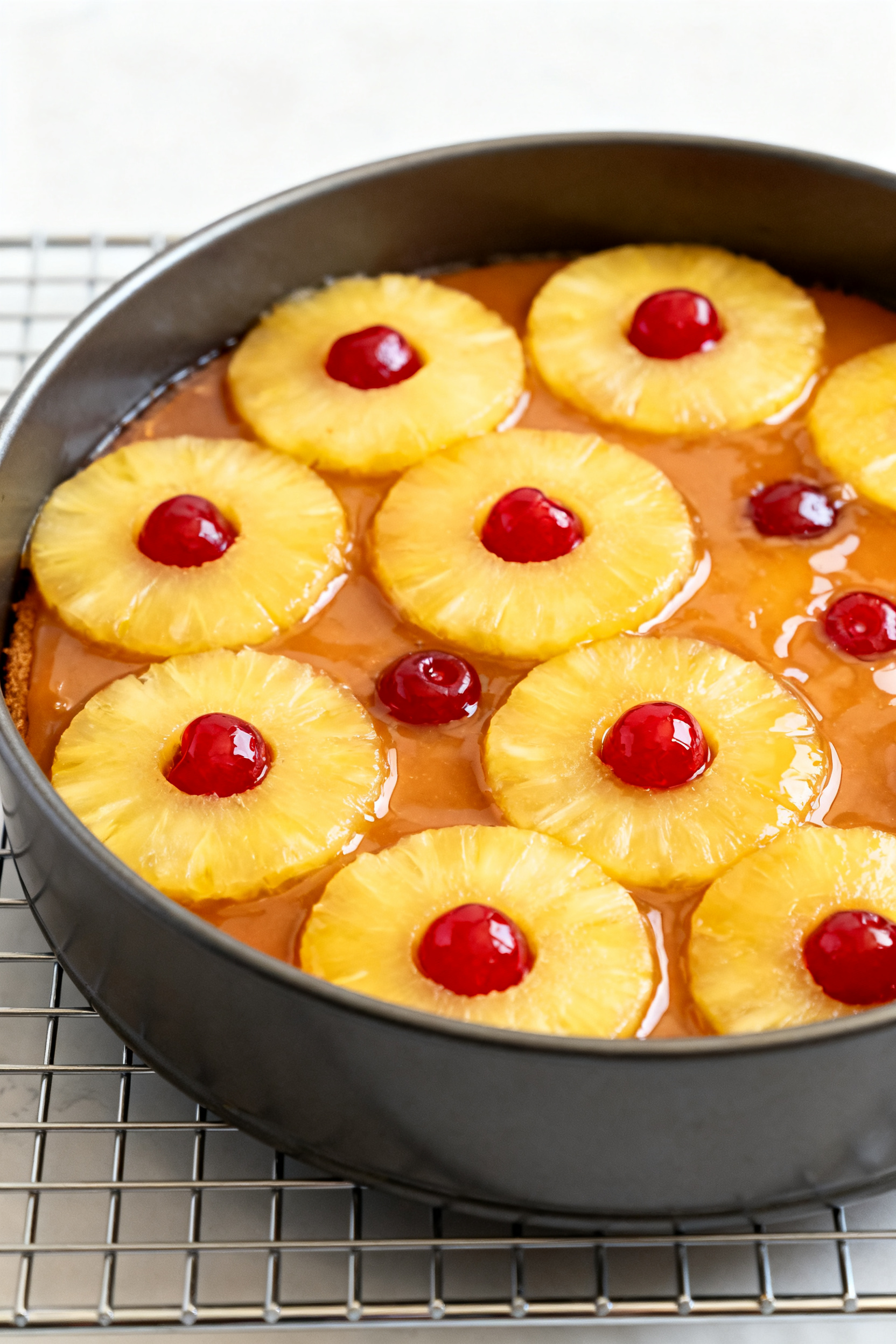
3. Arrange the fruit. Lay pineapple rings over the caramel, snug but not overlapping too much. Tuck a cherry into the center of each ring and any gaps. Pat fruit dry first so the topping isn’t watery.
4. Whisk dry ingredients. In a bowl, whisk flour, baking powder, and salt.
Set aside.
5. Combine wet ingredients. In a measuring cup, whisk milk, sour cream, vanilla, and optional pineapple juice.
6. Cream the butter and sugars. In a large bowl, beat 1/2 cup softened butter with granulated sugar and 1/4 cup brown sugar until light and fluffy, about 2–3 minutes. This step builds structure and tenderness.
7. Add eggs. Beat in eggs one at a time, scraping the bowl. Mix until smooth and slightly thickened.
8. Bring it together. Add the dry ingredients in two additions, alternating with the milk mixture.
Start and end with the dry. Mix on low just until combined. Don’t overmix or the cake will turn dense.
9. Fill the pan. Spoon batter over the fruit and gently spread to the edges. The pan will be fairly full—this is normal.
10. Bake. Bake 40–50 minutes, until the top is golden and a toothpick inserted into the center comes out clean or with a few moist crumbs.
If the top browns too quickly, tent loosely with foil for the last 10 minutes.
11. Cool briefly, then invert. Let the cake rest on a rack for 10 minutes. Run a knife around the edge, place a serving plate over the pan, and invert carefully. Tap the bottom to release.
If any fruit sticks, lift it off and press back into place.
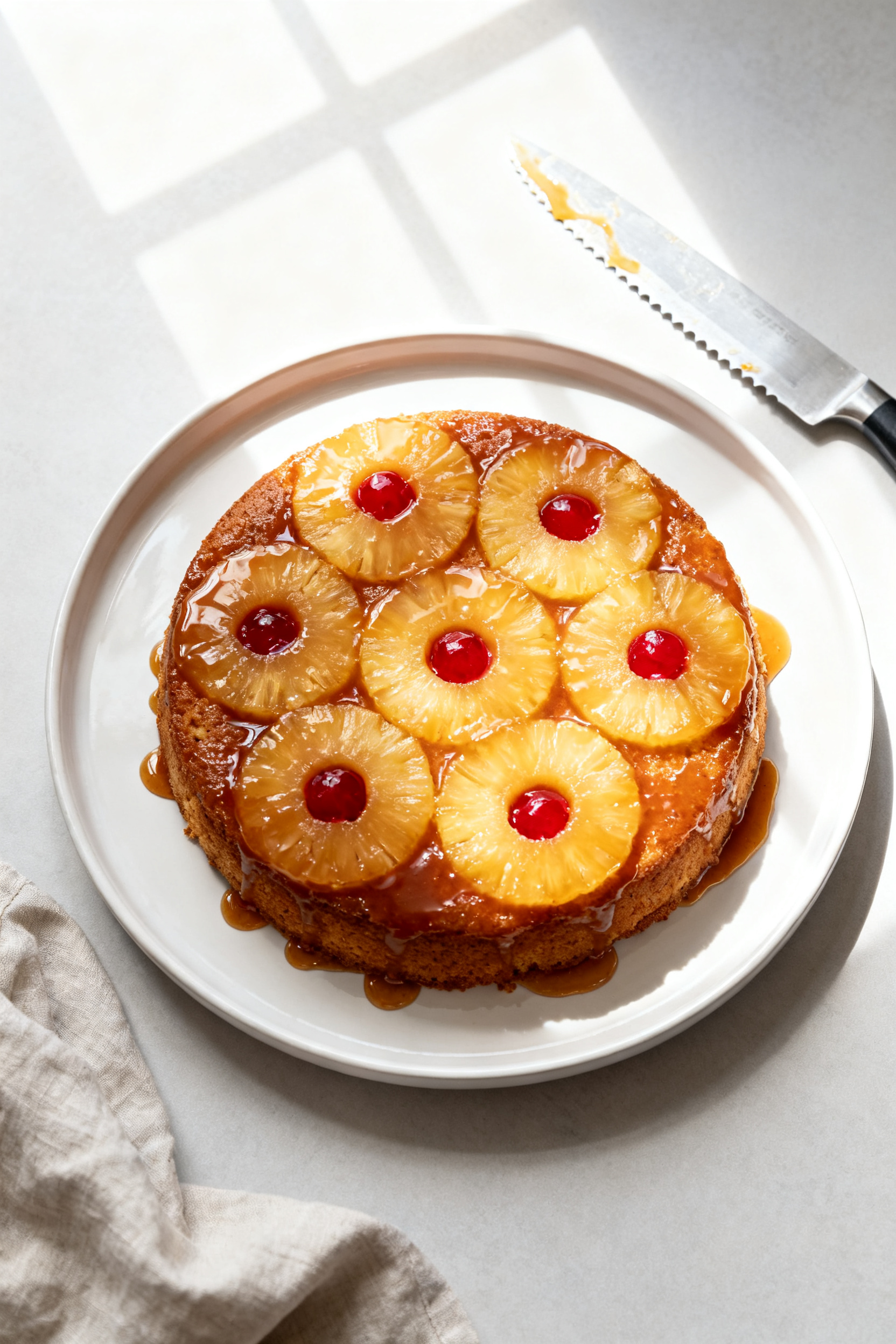
12. Serve warm or at room temperature. The glaze sets as it cools. Slice gently with a serrated knife to protect the fruit.
Keeping It Fresh
Cover leftovers loosely and keep at room temperature for up to 2 days. For longer storage, refrigerate up to 5 days; bring slices to room temp or warm lightly before serving to revive the buttery gloss.
To freeze, wrap slices tightly in plastic and then foil for up to 2 months. Thaw overnight in the fridge and warm briefly in a low oven for best texture.
Why This is Good for You
No, it’s not health food—and that’s okay. Dessert can be about comfort, celebration, and sharing.
Pineapple brings vitamin C and a natural tang that helps you feel satisfied with a smaller slice. The cake’s balanced sweetness and moist crumb also mean you don’t need heavy frosting to enjoy it, keeping the overall sugar load more moderate than many layer cakes.
What Not to Do
- Don’t skip drying the fruit. Wet pineapple and cherries will water down the caramel and make the top soggy.
- Don’t overmix the batter. Once the flour goes in, mix just until you don’t see dry streaks.
- Don’t leave it in the pan too long. If you wait more than 15 minutes to invert, the caramel can set and stick.
- Don’t use a shallow pan. You need at least 2 inches of depth to prevent overflow.
- Don’t crank up the heat. Higher oven temps brown the top fast but underbake the center.
Alternatives
- Flour swaps: Use a 1:1 gluten-free baking blend for a gluten-free version. For a tender crumb, consider swapping 1/4 cup of the flour for fine almond flour.
- Dairy-free: Replace butter with a quality plant-based butter and use almond or oat milk.
Add a teaspoon of lemon juice to the milk to mimic the tang of sour cream.
- Fruit twist: Try sliced peaches, mango, or pear in place of pineapple. Keep the cherry centers for color, or swap in fresh raspberries right before baking.
- Spice it up: Add 1/2 teaspoon ground cinnamon or a pinch of cardamom to the dry mix for warmth.
- Mini versions: Divide topping and batter among a greased muffin tin or mini cake pans. Bake 18–22 minutes and cool 5 minutes before inverting.
- Skillet style: Make the caramel directly in a 10-inch cast-iron skillet, add fruit, then the batter, and bake.
It’s rustic and one-pan easy.
FAQ
Can I use fresh pineapple?
Yes, but choose ripe pineapple that’s sweet and not overly juicy. Slice it into 1/2-inch rings and pat very dry. If it’s extremely juicy, lightly sauté the slices for a minute to reduce moisture before arranging in the pan.
Why did my cake stick to the pan?
Usually it’s because the caramel cooled too long or the pan wasn’t greased well.
Next time, invert after a 10-minute rest and consider lining the bottom with parchment. If it still sticks, warm the bottom of the pan over low heat for 30 seconds and try again.
My cake is dense. What went wrong?
Overmixing is the common culprit.
Also check that your baking powder is fresh and your butter was properly creamed until fluffy. Room-temperature eggs help the batter emulsify and trap air.
Can I make it ahead?
Yes. Bake it the day before, cool completely, cover, and store at room temperature.
Refresh slices in a low oven or microwave for a few seconds to bring back the glossy top and soft crumb.
Do I have to use cherries?
No. They’re classic and add color, but you can skip them or use dried cranberries, candied ginger pieces, or nothing at all. The cake will still be beautiful.
What if I only have a springform pan?
You can use one, but wrap the outside tightly with foil to prevent caramel leaks.
Place it on a rimmed baking sheet to catch any drips.
How do I know it’s done in the center?
Look for a golden top that springs back when gently pressed. A toothpick should come out clean or with a few moist crumbs. If the edges are browning but the center is underdone, tent with foil and continue baking in 5-minute increments.
Can I reduce the sugar?
You can reduce the granulated sugar in the batter by up to 2 tablespoons without hurting texture.
Avoid reducing the brown sugar in the topping, since it forms the caramel glaze and affects moisture.
Final Thoughts
Pineapple upside down cake proves that simple ingredients can create something special. It’s bright, buttery, and just cozy enough to feel like home. With this method, you’ll get a tender crumb, a glossy top, and flavors that hit all the right notes.
Keep a can of pineapple in the pantry and this recipe in your back pocket—you’ll be ready for any celebration, or just a sweet moment on an ordinary day.
Pineapple Upside Down Cake
Ingredients
- For the Topping: 1/2 cup (1 stick) unsalted butter
- 3/4 cup packed light brown sugar
- 8–10 pineapple rings (canned, well-drained)
- 10–12 maraschino cherries, drained and patted dry
- For the Cake Batter: 1 1/2 cups all-purpose flour
- 1 1/2 teaspoons baking powder
- 1/2 teaspoon fine salt
- 1/2 cup whole milk, at room temperature
- 1/4 cup sour cream, at room temperature
- 1 teaspoon pure vanilla extract
- 1/2 cup (1 stick) unsalted butter, softened
- 3/4 cup granulated sugar
- 1/4 cup packed light brown sugar
- 2 large eggs, at room temperature
- Optional: 1 tablespoon pineapple juice from the can
- Equipment: 9-inch round cake pan (2 inches deep) or 10-inch cast-iron skillet
- Mixing bowls, whisk, hand mixer or stand mixer
- Spatula and parchment paper (optional but helpful)
Instructions
- Prep the pan and oven. Preheat to 350°F (175°C). Grease a 9-inch round pan and, if you like, line the bottom with a parchment circle for easy release.
- Make the caramel base. Melt 1/2 cup butter in a small saucepan over medium heat. Stir in 3/4 cup brown sugar and cook 1–2 minutes until the sugar looks glossy and thick. Immediately pour into the pan and tilt to coat the bottom evenly.
- Arrange the fruit. Lay pineapple rings over the caramel, snug but not overlapping too much. Tuck a cherry into the center of each ring and any gaps. Pat fruit dry first so the topping isn’t watery.
- Whisk dry ingredients. In a bowl, whisk flour, baking powder, and salt. Set aside.
- Combine wet ingredients. In a measuring cup, whisk milk, sour cream, vanilla, and optional pineapple juice.
- Cream the butter and sugars. In a large bowl, beat 1/2 cup softened butter with granulated sugar and 1/4 cup brown sugar until light and fluffy, about 2–3 minutes. This step builds structure and tenderness.
- Add eggs. Beat in eggs one at a time, scraping the bowl. Mix until smooth and slightly thickened.
- Bring it together. Add the dry ingredients in two additions, alternating with the milk mixture. Start and end with the dry. Mix on low just until combined. Don’t overmix or the cake will turn dense.
- Fill the pan. Spoon batter over the fruit and gently spread to the edges. The pan will be fairly full—this is normal.
- Bake. Bake 40–50 minutes, until the top is golden and a toothpick inserted into the center comes out clean or with a few moist crumbs. If the top browns too quickly, tent loosely with foil for the last 10 minutes.
- Cool briefly, then invert. Let the cake rest on a rack for 10 minutes. Run a knife around the edge, place a serving plate over the pan, and invert carefully. Tap the bottom to release. If any fruit sticks, lift it off and press back into place.
- Serve warm or at room temperature. The glaze sets as it cools. Slice gently with a serrated knife to protect the fruit.
Printable Recipe Card
Want just the essential recipe details without scrolling through the article? Get our printable recipe card with just the ingredients and instructions.