Giblet Gravy
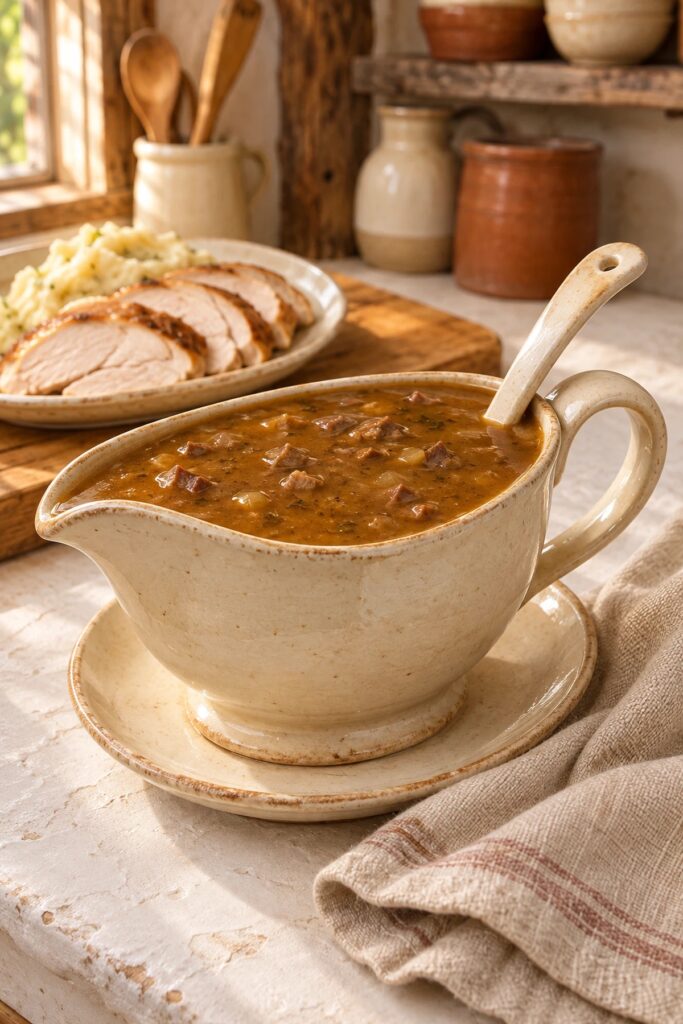
Giblet gravy takes the small bag of parts tucked inside a turkey and simmers it into a deeply savory stock, then whisks that stock with pan drippings and flour into a smooth, glossy brown sauce.
The flavor is what sets it apart. The heart, gizzard and liver add a rich, meaty depth that you cannot get from a jar or a packet, and the onion and celery in the pot keep it balanced. Tender bits of chopped giblet are stirred in at the end, so every spoonful has a little body.
The method has two short stages. First you simmer the giblets and neck into a stock, which can happen while the turkey roasts or even the day before. Then you make a quick roux from the pan drippings and flour, whisk in the stock and cook the gravy for 5 minutes until it coats a spoon.
This recipe makes about 4 cups, enough for 8 servings of ½ cup each. It takes 15 minutes to prep and about 1½ hours to cook, most of it hands-off simmering, and it uses parts of the bird you already have.
Why You’ll Love This Giblet Gravy
Deep, meaty flavor. A stock made from the heart, gizzard, liver and neck tastes far richer than store-bought broth.
Smooth and glossy. A roux made from the drippings and flour gives you a silky texture that never turns gloppy.
Nothing goes to waste. The giblet bag is already in your turkey, and this recipe turns it into the best part of the meal.
Easy to plan. The stock can simmer while the turkey roasts or be made a day ahead, so the gravy takes only 15 minutes at the end.

Perfect For
This giblet gravy is made for Thanksgiving and Christmas dinner, when the turkey comes out of the oven and the roasting pan is full of browned drippings. It is also a good match for a Sunday roast chicken or any other bird you cook with the giblets.
Pour it over sliced turkey and mashed potatoes, spoon it over stuffing, or serve it in a gravy boat so everyone can add as much as they like. It makes next-day turkey sandwiches taste like a fresh dinner, too.
For a classic holiday plate, serve the gravy alongside green bean casserole, a spoonful of cranberry sauce and hash brown casserole.

Giblet Gravy at a Glance
| Flavor | Rich, savory and deeply meaty |
| Texture | Smooth and glossy, with tender bits of chopped giblet |
| Difficulty | Easy |
| Prep Time | 15 minutes |
| Cook Time | 1 hour 30 minutes, mostly simmering |
| Total Time | 1 hour 45 minutes |
| Servings | 8, about ½ cup each (about 4 cups) |
| Method | Stovetop |
| Cuisine | American |
| Best For | Thanksgiving, Christmas dinner and Sunday roasts |
Before You Start
Find the giblets. The bag usually sits in the main cavity or the neck cavity of the turkey. Take it out before roasting, and if the giblets are frozen, thaw them in the refrigerator, in cold water or in the microwave, never on the counter.
Save the drippings. Pour the browned fat and juices from the roasting pan into a heatproof cup or a gravy separator once the turkey comes out. You need ½ cup for the roux.
Plan the timing. The stock needs about 1½ hours on the stove, so start it while the turkey roasts, or make it the day before and refrigerate it.
Measure the stock. After straining, you want about 4 cups. Have a measuring cup ready so you can top it up with water if the stock cooks down.
What Makes This Giblet Gravy Work
A Stock From the Giblets
Simmering the heart, gizzard, neck and liver with onion and celery pulls their flavor into the water, which gives you a gravy with real turkey depth before any drippings are added.
A Roux for Body
Whisking flour into hot drippings and cooking it for 2 minutes removes the raw flour taste and creates a smooth base that thickens evenly instead of forming lumps.
The Liver Goes in Last
The liver cooks quickly and turns dry and crumbly if it simmers too long. Adding it for the final 15 minutes keeps its flavor and its tender texture.
Giblets Chopped Small
Chopping the cooked giblets and stirring them in at the end gives the gravy its classic, hearty texture without making it chewy.

Ingredients for Giblet Gravy
- 1 turkey giblet set (heart, gizzard and liver)
- 1 turkey neck, if it came with the giblets
- 4 cups (950 ml) water
- 1 medium onion, quartered
- 1 celery stalk, chopped
- ½ cup (120 ml) turkey pan drippings, fat and browned juices
- ½ cup (62 g) all-purpose flour
- Salt and black pepper, to taste

Ingredient Notes and Substitutions
Giblets: The set usually includes the heart, gizzard and liver. The neck is not technically a giblet, but it often comes in the same package and adds a lot of flavor to the stock. If your turkey did not come with giblets, you can use a turkey neck and a few wings or drumsticks from the store.
Liver: The liver gives the gravy a deeper, richer flavor, but it is optional. Leave it out if you want a milder gravy.
Pan drippings: Use the fat and browned juices from the roasting pan. If you have less than ½ cup, add melted butter to make up the difference. If you have more, use only ½ cup of fat for the roux and stir the extra juices into the gravy at the end.
Flour: All-purpose flour is the standard thickener. For a gluten-free gravy, use a cornstarch slurry as described in the FAQ below.
Water: Water keeps the stock clean and lets the giblets shine. For a stronger stock, replace half of it with low-sodium chicken broth.
Salt: The stock has no added salt because the drippings can already be salty. Season the finished gravy at the end.
Kitchen Equipment Needed
• Medium saucepan with a lid (for the stock)
• Large saucepan or deep skillet (for the gravy)
• Fine-mesh strainer
• Whisk
• Liquid measuring cup
• Chef’s knife and cutting board
• Gravy separator or heatproof cup (optional)
• Gravy boat (for serving)
How to Make Giblet Gravy
Step 1: Prepare the Giblets
Rinse the heart, gizzard and neck under cold water. Set the liver aside in the refrigerator, since it goes in later. Quarter the onion and chop the celery.
Step 2: Simmer the Stock
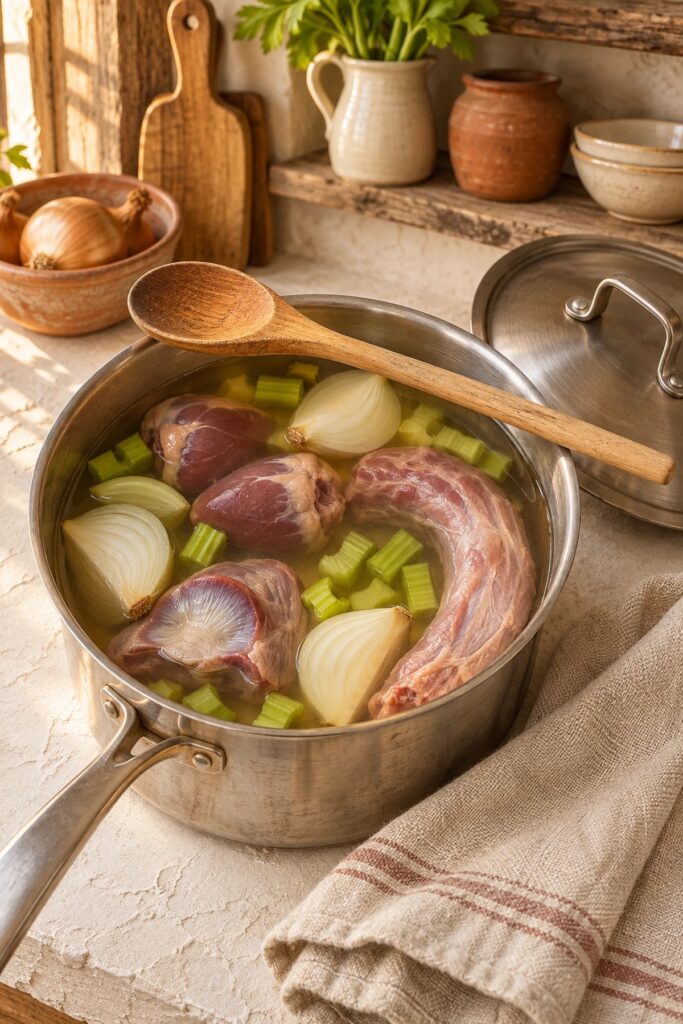
Put the heart, gizzard, neck, onion and celery in a medium saucepan and cover them with the 4 cups of water. Bring it to a simmer over medium heat, then reduce the heat to low, cover and simmer for 1 hour, until the heart and gizzard are tender when pierced with a fork. Skim off any foam that rises to the surface in the first 10 minutes.
Step 3: Add the Liver
Add the liver to the pot and simmer for the final 15 minutes, until it is cooked through and no longer pink in the center.
Step 4: Strain and Chop
Set a fine-mesh strainer over a liquid measuring cup and pour in the stock. Discard the onion and celery. Skim the fat from the top of the stock and add water if needed to make 4 cups. Chop the heart, gizzard and liver into small pieces, pick the meat from the neck and chop it too, and set the giblets aside.
Step 5: Make the Roux
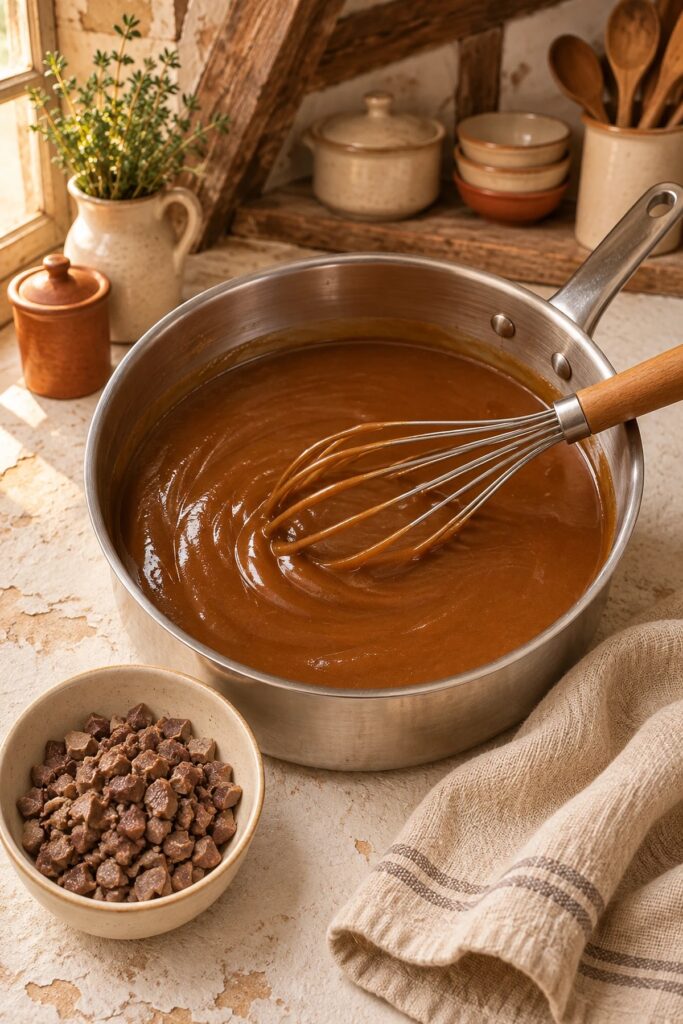
Heat the pan drippings in a large saucepan over medium heat. Whisk in the flour to form a smooth paste and cook for 2 minutes, whisking constantly, until it smells toasty and turns light golden.

Step 6: Whisk in the Stock
Pour in the hot stock a splash at a time, whisking after each addition until the mixture is smooth, then add the rest in a steady stream.
Step 7: Simmer Until Thick
Bring the gravy to a simmer, whisking constantly, and cook for 5 minutes, until it thickens enough to coat the back of a spoon.
Step 8: Add the Giblets and Season
Stir in the chopped giblets and season the gravy with salt and black pepper, tasting as you go. Serve it hot.
How to Know It’s Done
Check the giblets in the stock first, and then the thickness of the gravy at the end.
| What to Check | Ready When |
|---|---|
| Heart and gizzard | Tender when pierced with a fork, and firm in texture |
| Liver | Cooked through, with no pink in the center |
| Stock | Lightly golden and measuring 4 cups after skimming |
| Roux | A smooth paste that smells toasty and looks light golden |
| Gravy thickness | Coats the back of a spoon after 5 minutes of simmering |
| Texture | Smooth, with no lumps and small pieces of chopped giblet |
If the gravy is too thin after 5 minutes, simmer it for another 2 to 3 minutes. If it is too thick, whisk in a splash of hot stock or water until it flows the way you like.
Tips for the Best Giblet Gravy
Start the stock early. It needs about 1½ hours, so begin while the turkey roasts, or make it the day before, and the last stage will take only 15 minutes.
Skim the fat. A layer of fat on the stock makes the finished gravy greasy, and a gravy separator or a spoon removes it in a minute.
Whisk constantly. Constant whisking while the gravy thickens prevents lumps and scorching on the bottom.
Add the stock slowly. A splash at a time lets the roux absorb the liquid evenly, so the gravy stays smooth.
Use hot stock. Keeping the stock hot, not cold, helps it blend into the roux without clumping.
Add a splash of sherry or wine. Two tablespoons of dry sherry or white wine added with the stock bring extra depth.
Puree for a smoother gravy. Blend the cooked giblets with a little stock before stirring them in if you prefer no pieces.
Taste before salting. Pan drippings are often seasoned, so wait until the end to add salt.
Common Mistakes and How to Fix Them
| Mistake | How to Fix It |
|---|---|
| Adding the liver too early It turns dry and crumbly and can make the stock taste harsh. | Add the liver for the final 15 minutes of simmering. |
| Pouring in all the stock at once The roux clumps and the gravy turns lumpy. | Add the hot stock a splash at a time, whisking until smooth after each addition. |
| Skipping the strain and skim Bits of onion and a layer of fat make the gravy cloudy and greasy. | Strain the stock through a fine-mesh strainer and skim off the fat before measuring. |
| Undercooking the roux The gravy tastes of raw flour. | Cook the flour in the drippings for 2 minutes, whisking, until it smells toasty. |
| Salting too early The drippings are often salty, so the finished gravy can taste too salty. | Leave the stock unsalted and season the finished gravy, tasting as you go. |
Variations
Giblet Gravy Without Drippings
Melt ½ cup of unsalted butter in a large saucepan over medium heat and use it in place of the drippings. Whisk in the flour as written. The gravy will be a little lighter in color and flavor, so season it well at the end.
Sherry or White Wine Giblet Gravy
Stir 2 tablespoons of dry sherry or dry white wine into the roux just before you add the stock, and let it bubble for 30 seconds before continuing.
Smooth Giblet Gravy
Blend the chopped giblets with ½ cup of the hot stock in a blender until smooth, then whisk the mixture into the gravy instead of stirring in pieces.
Gluten-Free Giblet Gravy
Skip the flour. Stir ¼ cup of cornstarch into ¼ cup of cold water. Heat the drippings in the large saucepan, add the stock, bring it to a simmer and whisk in the slurry. Cook for 2 to 3 minutes, until thickened.
Serving Suggestions
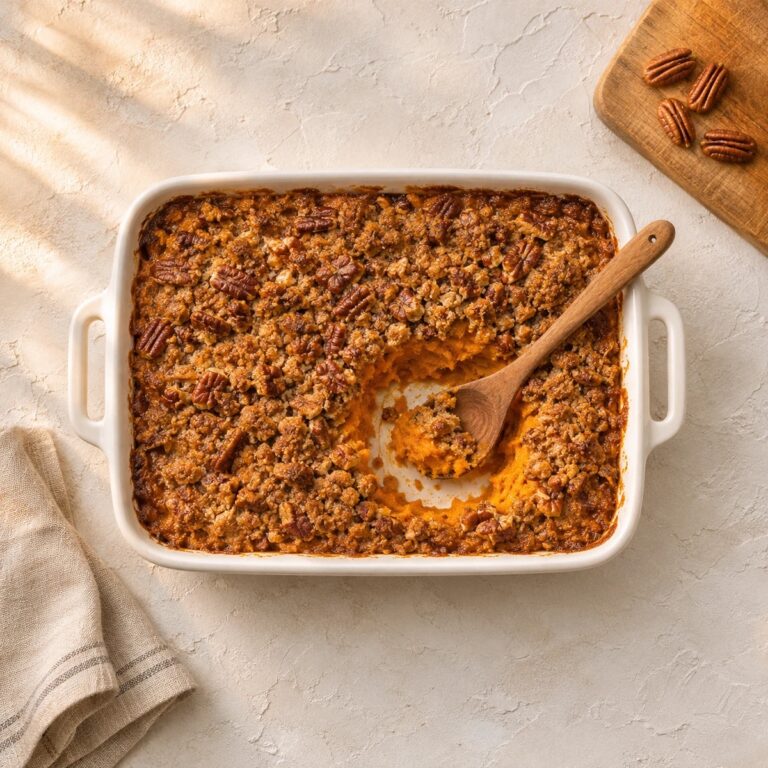
Pour the gravy over sliced roast turkey and mashed potatoes, and spoon some over stuffing too. It is also good over warm buttermilk biscuits and on the next day’s turkey sandwiches.
Round out the table with mac and cheese, a loaf of garlic bread and a pot of butternut squash soup to start. For dessert, a slice of sweet potato pie or pumpkin pie finishes the holiday meal, and glazed ham is a good second main for a larger crowd.
Make Ahead
Make the giblet stock and chop the giblets up to 1 day ahead. Refrigerate the strained stock and the chopped giblets in separate covered containers, and reheat the stock until hot before you whisk it into the roux. Make the gravy itself on the day you serve it, because it needs the fresh pan drippings and tastes best right away.
Storage and Reheating
Let the gravy cool, then pour it into a covered container and refrigerate it within 2 hours. Giblet gravy keeps for 1 to 2 days in the refrigerator. Reheat it gently in a saucepan over low heat, stirring often, until it is steaming hot throughout and reaches 165°F. Add a splash of water or stock if it has thickened in the refrigerator.
Freezing
For longer storage, freeze cooled gravy in an airtight container for up to 2 months. Thaw it in the refrigerator overnight and reheat it in a saucepan, whisking well, because the fat can separate a little. Add a splash of stock or water if needed.
Frequently Asked Questions
What if I forgot to save the pan drippings?
You can make giblet gravy with butter instead. Melt ½ cup of unsalted butter and whisk the flour into it to make the roux, then continue with the stock as written.
Can I make giblet gravy ahead of time?
Make the stock and chop the giblets up to a day ahead, and keep them in the refrigerator. Finish the gravy on the day you serve it, since it needs the fresh pan drippings and tastes best straight from the pan.
Why is my gravy lumpy?
The stock was probably added too quickly. Pour the gravy through a fine-mesh strainer to remove the lumps, then stir the giblets back in. Next time, add the stock a splash at a time and whisk after each addition.
Do I have to use the liver in giblet gravy?
No. The liver adds a deeper flavor, but you can leave it out for a milder gravy. If you use it, add it only for the last 15 minutes, so it stays tender instead of turning dry and crumbly.
Can I make this gravy gluten-free?
Yes. Skip the flour and thicken the gravy with a cornstarch slurry, made from ¼ cup of cornstarch and ¼ cup of cold water, as described in the variations above.
How do I fix gravy that is too thick or too thin?
For thick gravy, whisk in a splash of hot stock or water until it loosens. For thin gravy, simmer it for 2 to 3 more minutes, stirring often, so some of the liquid cooks off and it thickens.
How long does leftover gravy last?
Leftover gravy keeps for 1 to 2 days in the refrigerator when stored in a covered container. Reheat it until it is steaming hot and reaches 165°F.
Final Thoughts
This giblet gravy turns the small bag inside the turkey into a rich, savory sauce that tastes like a classic holiday dinner. It takes a little more time than opening a jar, but the deep flavor is worth every minute.
A slow simmer for the stock, a liver that goes in at the end, a roux cooked until golden and a gravy whisked until smooth are what make it work. Once you have made it, it becomes a dependable part of the holiday table.
Did your gravy end up on the turkey, the mashed potatoes or the stuffing first? Leave a comment and tell me who asked for a second ladle.
If you try this recipe, please leave a star rating along with your comment below. It takes a few seconds and helps other readers find the recipe.

Giblet Gravy
This giblet gravy is a rich, savory sauce made from a stock of simmered turkey giblets, onion and celery, whisked into a golden roux of pan drippings. It is smooth and glossy, with tender bits of chopped giblet in every spoonful. Ready in about 1 hour 45 minutes, this giblet gravy is a must-have for Thanksgiving, Christmas dinner and Sunday roasts, or anytime you crave a deeply meaty sauce.
Ingredients
- 1 turkey giblet set (heart, gizzard and liver)
- 1 turkey neck, if it came with the giblets
- 4 cups (950 ml) water
- 1 medium onion, quartered
- 1 celery stalk, chopped
- ½ cup (120 ml) turkey pan drippings, fat and browned juices
- ½ cup (62 g) all-purpose flour
- Salt and black pepper, to taste
Instructions
- Rinse the heart, gizzard and neck under cold water. Keep the liver in the refrigerator for later. Quarter the onion and chop the celery.
- Put the heart, gizzard, neck, onion and celery in a medium saucepan and cover them with the 4 cups of water. Bring it to a simmer over medium heat, then reduce the heat to low, cover and simmer for 1 hour, until the heart and gizzard are tender when pierced with a fork. Skim off any foam in the first 10 minutes.
- Add the liver to the pot and simmer for the final 15 minutes, until it is cooked through and no longer pink in the center.
- Pour the stock through a fine-mesh strainer into a liquid measuring cup and discard the onion and celery. Skim the fat from the top and add water if needed to make 4 cups. Chop the heart, gizzard and liver into small pieces, pick the meat from the neck and chop it too, and set the giblets aside.
- Heat the pan drippings in a large saucepan over medium heat. Whisk in the flour to make a smooth paste and cook for 2 minutes, whisking constantly, until it smells toasty and turns light golden.
- Pour in the hot stock a splash at a time, whisking until smooth after each addition, then add the rest in a steady stream.
- Bring the gravy to a simmer, whisking constantly, and cook for 5 minutes, until it coats the back of a spoon.
- Stir in the chopped giblets and season with salt and black pepper to taste. Serve hot.
Notes
- Giblets: The set usually has the heart, gizzard and liver, and the neck often comes in the same package. Thaw frozen giblets in the refrigerator, in cold water or in the microwave, never on the counter. No giblets? Use a turkey neck and a few wings instead.
- Pan drippings: Use ½ cup of fat and browned juices from the roasting pan. If you have less, add melted butter to make ½ cup. For a version without drippings, use ½ cup of unsalted butter.
- Liver: Add it for the final 15 minutes so it stays tender. It is optional; leave it out for a milder gravy.
- Stock: Strain it, skim the fat and measure 4 cups, adding water if the stock cooked down. Keep it hot so it blends into the roux.
- Smooth gravy: Add the stock a splash at a time and whisk constantly. If lumps form, pour the gravy through a fine-mesh strainer.
- Make ahead: Make the stock and chop the giblets up to 1 day ahead and refrigerate them separately. Make the gravy on the day you serve it, since it needs the fresh drippings.
- Storage: Refrigerate within 2 hours in a covered container for 1 to 2 days. Reheat until steaming hot and 165°F, adding a splash of water or stock. Freeze for up to 2 months and whisk when reheating.
- Nutrition: Values are estimates for about ½ cup (1 of 8 servings), assuming the drippings are about 60% fat, before the salt you add at the end.
Nutrition Information:
Yield: 8 Serving Size: about ½ cupAmount Per Serving: Calories: 146Total Fat: 10gSaturated Fat: 3gCholesterol: 68mgSodium: 68mgCarbohydrates: 6gFiber: 0gSugar: 0gProtein: 8g