
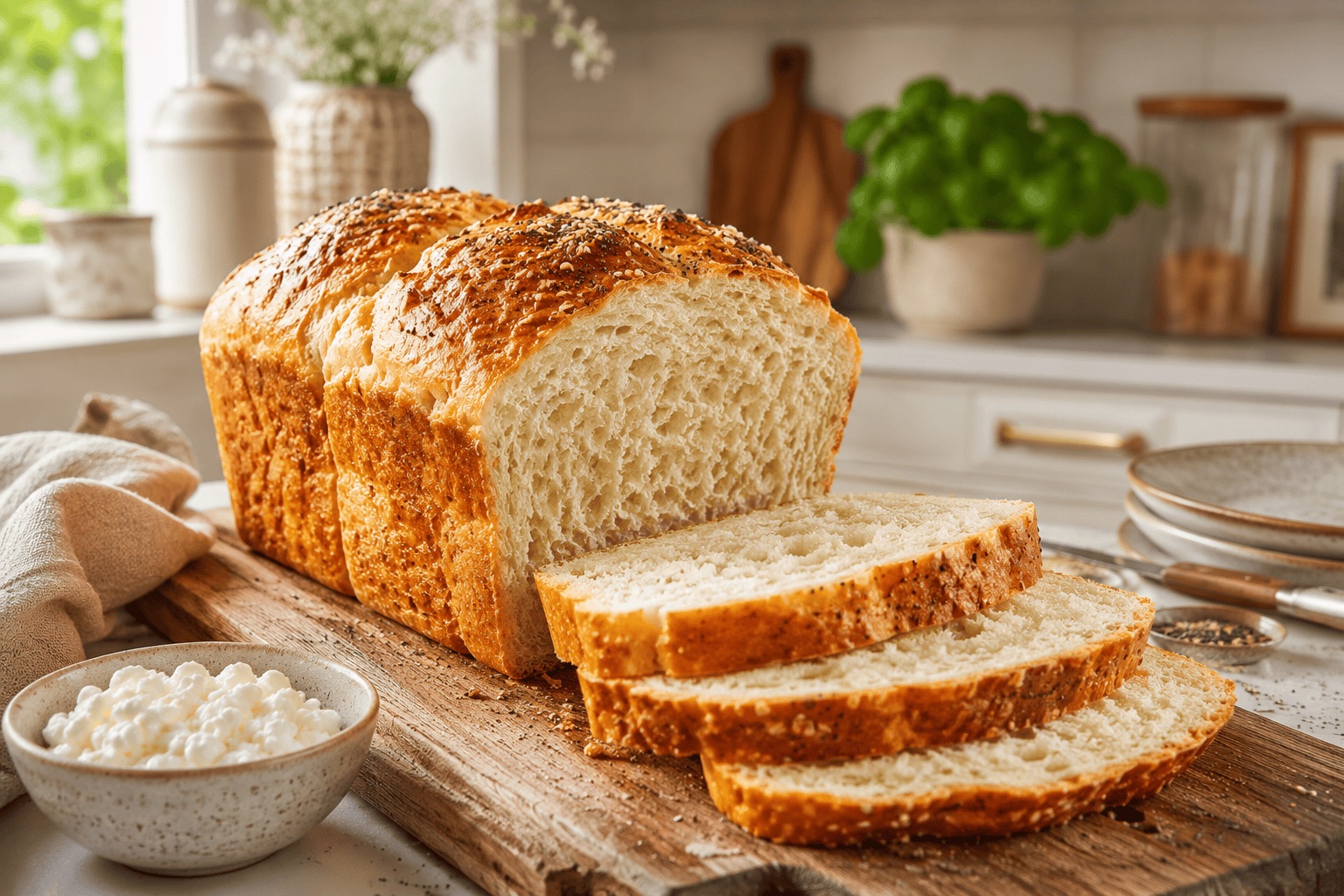
Cottage Cheese Bread
Cottage cheese bread is one of those recipes that surprises you the first time you try it. It bakes up soft, tender, and pleasantly moist, with a subtle tang and a fine crumb. The cottage cheese adds protein and richness without making the loaf heavy or dense.
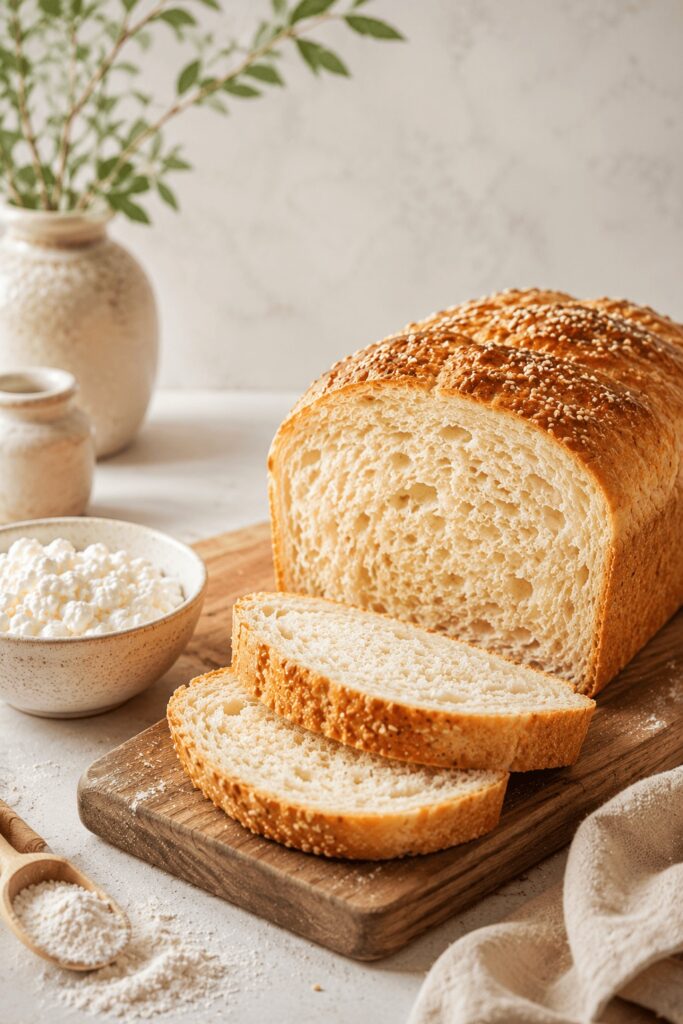
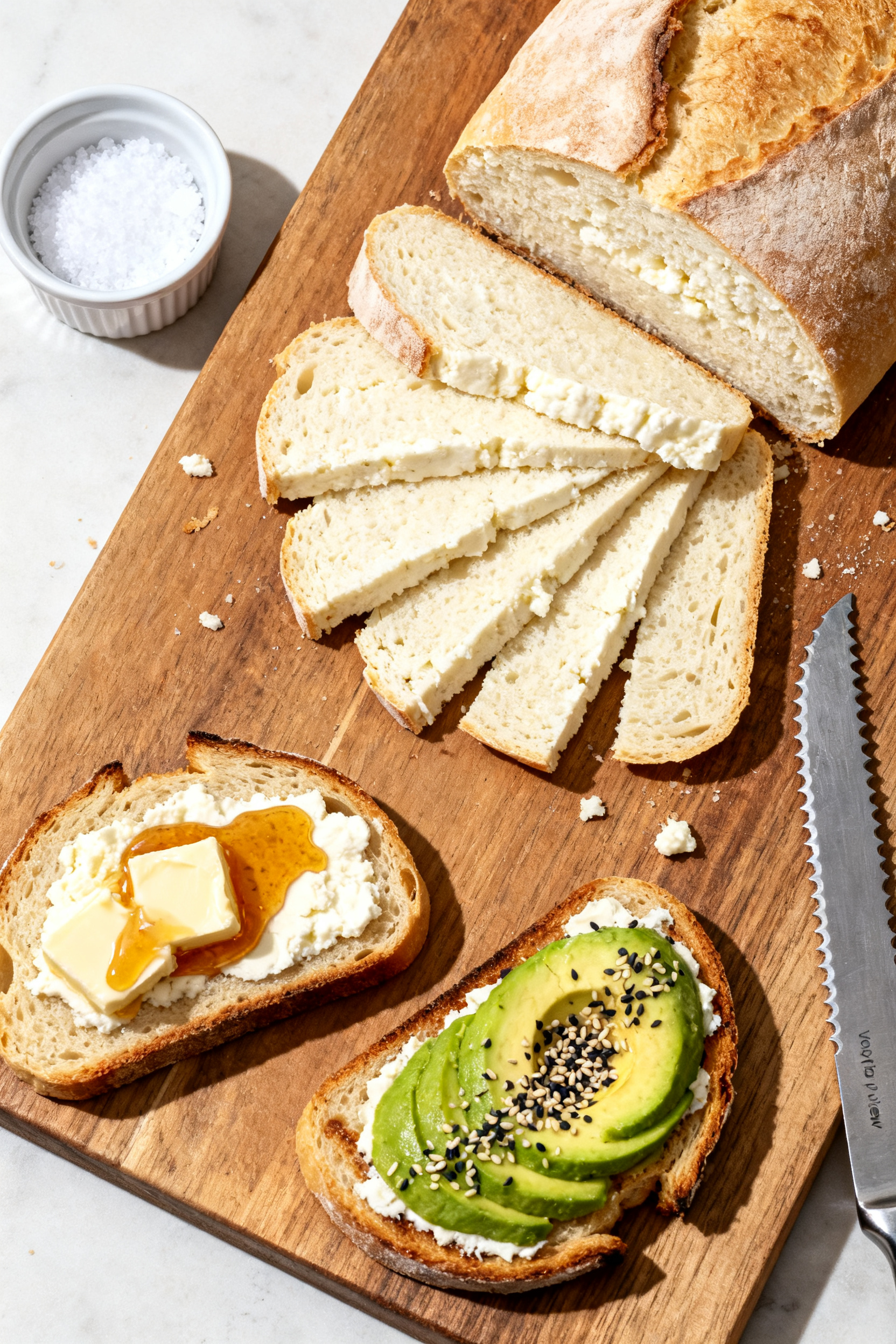
It’s perfect for toast, sandwiches, or just warm slices with butter and honey. If you like simple, reliable recipes that taste like home, this one belongs in your rotation.
What Makes This Special
This bread stands out because it blends the comfort of a classic sandwich loaf with the nutrition of cottage cheese. The cheese melts into the dough, leaving a velvety, slightly enriched texture instead of visible curds.
It browns beautifully, slices cleanly, and stays soft for days.
- Great texture: Soft crumb, tender crust, and a little extra moisture.
- Protein boost: Cottage cheese adds satisfying protein without extra fuss.
- Versatile flavor: Mild and slightly tangy, it pairs with savory or sweet toppings.
- Beginner-friendly: Forgiving dough that’s easy to handle and shape.
Ingredients
- 3 cups (360 g) bread flour (or all-purpose flour, see Alternatives)
- 1 cup (225 g) cottage cheese (full-fat or low-fat; small curd preferred)
- 1/2 cup (120 ml) warm water (about 105–110°F/40–43°C)
- 2 tablespoons (25 g) granulated sugar (or honey)
- 2 tablespoons (28 g) unsalted butter, softened (or 2 tablespoons neutral oil)
- 2 1/4 teaspoons (7 g) instant or active dry yeast
- 1 1/4 teaspoons fine salt
- 1 large egg (optional, for richer dough)
- Milk or water for brushing (optional, for a soft or shiny crust)
How to Make It
1. Prep the cottage cheese: If your cottage cheese is very wet, drain it briefly in a fine-mesh sieve for 5–10 minutes. You want it thick and spoonable, not watery.
2. Warm the liquids: Gently warm the water until it’s comfortably warm to the touch. Cold water slows yeast, hot water can kill it.
3. Mix the base: In a large bowl, combine the warm water, sugar, and yeast.
Stir and let it stand for 2–3 minutes if using active dry yeast. If using instant yeast, you can proceed immediately.
4. Add the dairy and fat: Stir in the cottage cheese, butter, egg (if using), and salt until mostly smooth. It’s fine if tiny curds remain.
5. Bring in the flour: Add about 2 1/2 cups of the flour and mix with a spoon or dough whisk until a shaggy dough forms.
Gradually add the remaining flour as needed to get a soft, slightly tacky dough.
6. Knead: Turn the dough onto a lightly floured surface and knead for 7–9 minutes (or 5–7 minutes in a stand mixer on medium-low). The dough should become smooth, elastic, and just a bit tacky but not sticky.
7. First rise: Place the dough in a lightly oiled bowl, turning once to coat. Cover and let it rise in a warm spot until doubled, about 60–90 minutes, depending on room temperature.
8. Shape the loaf: Gently deflate the dough.
Pat it into a rectangle, then roll it up tightly from the short side. Pinch the seam and tuck the ends under. Place seam-side down in a greased 9×5-inch (23×13 cm) loaf pan.
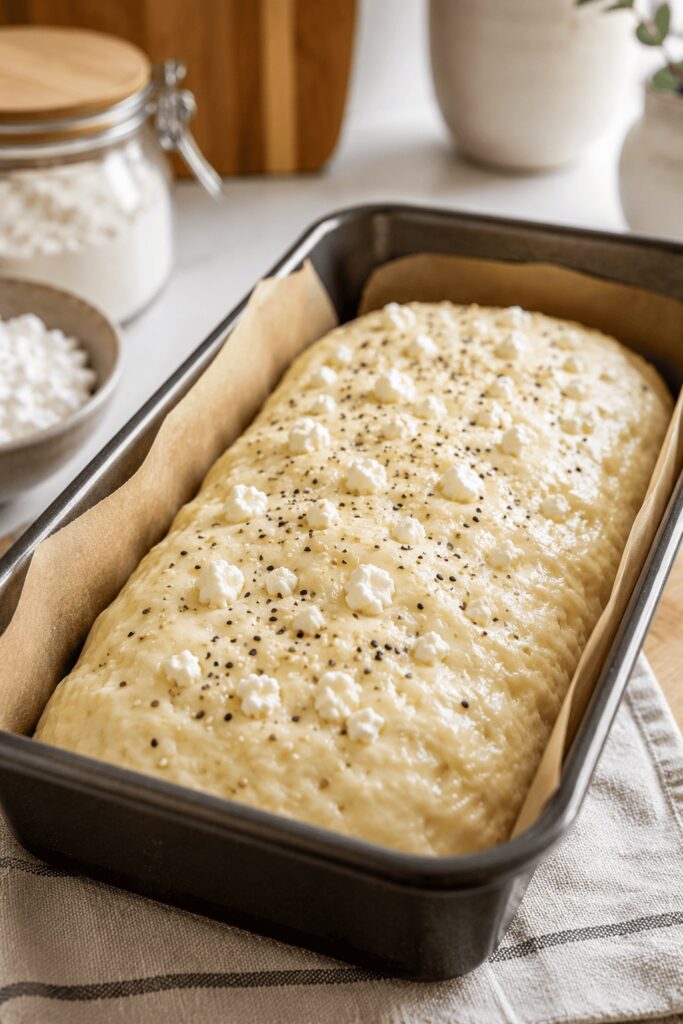
9. Second rise: Cover and let the loaf rise until it crowns about 1 inch above the rim of the pan, 35–60 minutes.
It should spring back slowly when pressed with a fingertip.
10. Preheat and bake: Preheat the oven to 350°F (175°C). For a softer crust, brush the top lightly with milk. Bake for 30–38 minutes, until the top is golden and the internal temperature reaches about 190–195°F (88–90°C).
11. Cool properly: Remove the loaf from the pan and cool on a rack for at least 1 hour before slicing.
This sets the crumb and prevents gumminess.
How to Store
- Room temperature: Wrap in a clean tea towel or store in a bread box for 2–3 days. Avoid the fridge, it dries bread out.
- Freezing: Slice, wrap tightly, and freeze for up to 2 months. Reheat slices in a toaster or warm oven.
- Reviving: If the crust softens, re-crisp in a 325°F (165°C) oven for 8–10 minutes.
Health Benefits
This loaf offers more protein than a standard white sandwich bread, thanks to cottage cheese and egg.
Protein helps keep you fuller, which can support balanced eating. The dairy also brings calcium and B vitamins, adding a small nutritional lift to your everyday toast.
Choose whole-milk cottage cheese for a richer texture, or low-fat to reduce calories while keeping protein high. You can also swap in part whole wheat flour for more fiber.
With smart toppings, like avocado, turkey, or almond butter, this bread becomes a more complete, satisfying snack or meal.
Common Mistakes to Avoid
- Using overly wet cottage cheese: Excess liquid can make the dough sticky and hard to shape. Drain if needed.
- Overflouring: Adding too much flour leads to a dense crumb. Aim for slightly tacky dough and trust the knead.
- Underproofing or overproofing: If the loaf is too tight, it won’t rise well; if it’s too puffy, it may collapse.
Look for slow spring-back when gently pressed.
- Slicing too soon: Hot bread smells amazing, but cutting early compresses the crumb. Let it cool to set.
- Skipping salt: Salt controls yeast activity and boosts flavor. Don’t leave it out.
Alternatives
- Flour swap: Use half bread flour and half whole wheat for a heartier loaf.
Add 1–2 tablespoons extra water if needed.
- Sweet version: Add 1 teaspoon vanilla and 1/2 teaspoon cinnamon, plus 1/2 cup raisins. Brush with a little honey-butter after baking.
- Savory version: Mix in 1/2 cup shredded cheddar and 2 tablespoons chopped chives or dill. Sprinkle sesame or poppy seeds on top.
- No egg: Omit the egg for a simpler dough.
Add 1–2 tablespoons extra water if the dough seems stiff.
- Active dry vs. instant yeast: Both work. If using active dry, bloom in warm water with sugar for a few minutes before mixing.
- Gluten-free approach: Use a quality gluten-free bread flour blend with xanthan gum, and increase hydration slightly. Expect a more batter-like dough; rise and bake in the pan without shaping.
FAQ
Can I use large-curd cottage cheese?
Yes.
Large curds will break down during mixing and kneading. If they’re very wet, give them a quick drain so the dough isn’t overly sticky.
Do I need a stand mixer?
No. Hand-kneading works well.
Just be patient and resist the urge to add too much flour. A bench scraper helps manage stickiness.
Why is my loaf dense?
Common causes include too much flour, under-kneading, or cutting the rise short. Aim for a soft, slightly tacky dough and wait for a proper double on the first rise.
Can I make this as rolls?
Absolutely.
Divide into 12 equal pieces, shape into balls, place in a greased 9×13-inch pan, and let rise until puffy. Bake at 375°F (190°C) for 16–20 minutes.
How do I know it’s fully baked?
The top will be deep golden, the loaf will sound hollow when tapped, and an instant-read thermometer should read around 190–195°F (88–90°C) in the center.
Is there a way to add more flavor?
Try a tablespoon of honey, a spoon of malt syrup, or a mix-in like herbs, grated cheese, or toasted seeds. A brush of melted butter after baking adds richness.
Can I reduce the sugar?
Yes.
The sugar mainly helps browning and yeast activity. You can cut it to 1 tablespoon or replace it with honey without issues.
What’s the best way to slice it?
Cool completely, then use a long serrated knife. For even slices, turn the loaf on its side and use gentle, sawing strokes.
Final Thoughts
Cottage cheese bread is simple, soft, and surprisingly satisfying.
It brings a little extra protein to your plate without complicating the process. Bake a loaf on the weekend, enjoy it all week, and tweak the add-ins to match your taste. It’s the kind of everyday bread that feels special yet stays easy and dependable.

Cottage Cheese Bread
Ingredients
- 3 cups (360 g) bread flour (or all-purpose flour, see Alternatives)
- 1 cup (225 g) cottage cheese (full-fat or low-fat; small curd preferred)
- 1/2 cup (120 ml) warm water (about 105–110°F/40–43°C)
- 2 tablespoons (25 g) granulated sugar (or honey)
- 2 tablespoons (28 g) unsalted butter, softened (or 2 tablespoons neutral oil)
- 2 1/4 teaspoons (7 g) instant or active dry yeast
- 1 1/4 teaspoons fine salt
- 1 large egg (optional, for richer dough)
- Milk or water for brushing (optional, for a soft or shiny crust)
Instructions
- Prep the cottage cheese: If your cottage cheese is very wet, drain it briefly in a fine-mesh sieve for 5–10 minutes. You want it thick and spoonable, not watery.
- Warm the liquids: Gently warm the water until it’s comfortably warm to the touch. Cold water slows yeast, hot water can kill it.
- Mix the base: In a large bowl, combine the warm water, sugar, and yeast. Stir and let it stand for 2–3 minutes if using active dry yeast. If using instant yeast, you can proceed immediately.
- Add the dairy and fat: Stir in the cottage cheese, butter, egg (if using), and salt until mostly smooth. It’s fine if tiny curds remain.
- Bring in the flour: Add about 2 1/2 cups of the flour and mix with a spoon or dough whisk until a shaggy dough forms. Gradually add the remaining flour as needed to get a soft, slightly tacky dough.
- Knead: Turn the dough onto a lightly floured surface and knead for 7–9 minutes (or 5–7 minutes in a stand mixer on medium-low). The dough should become smooth, elastic, and just a bit tacky but not sticky.
- First rise: Place the dough in a lightly oiled bowl, turning once to coat. Cover and let it rise in a warm spot until doubled, about 60–90 minutes, depending on room temperature.
- Shape the loaf: Gently deflate the dough. Pat it into a rectangle, then roll it up tightly from the short side. Pinch the seam and tuck the ends under. Place seam-side down in a greased 9×5-inch (23×13 cm) loaf pan.
- Second rise: Cover and let the loaf rise until it crowns about 1 inch above the rim of the pan, 35–60 minutes. It should spring back slowly when pressed with a fingertip.
- Preheat and bake: Preheat the oven to 350°F (175°C). For a softer crust, brush the top lightly with milk. Bake for 30–38 minutes, until the top is golden and the internal temperature reaches about 190–195°F (88–90°C).
- Cool properly: Remove the loaf from the pan and cool on a rack for at least 1 hour before slicing. This sets the crumb and prevents gumminess.
Printable Recipe Card
Want just the essential recipe details without scrolling through the article? Get our printable recipe card with just the ingredients and instructions.


